

Strait of Hormuz fees debate highlights legal and regional tensions
As Iran pushes for a new transit fee system and Oman explores possible frameworks to ease maritime tensions, legal interpretations, regional cooperation, and demands for transparency remain central to any viable solution for one of the world’s most strategic shipping routes.



 Messenger
 Whatsapp
 Threads
 Email
Email
 Print
Print
 X
X
 Facebook
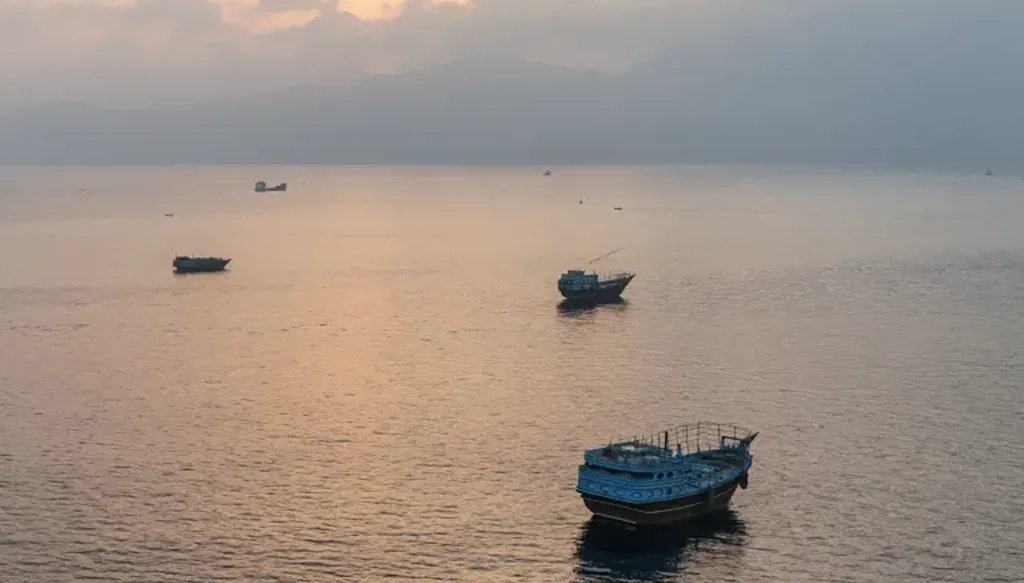


It appears that the Sultanate of Oman, by publishing emergency transit maps in the Strait of Hormuz, is attempting to contribute to resolving the shipping crisis in the strait in a way that does not put it in confrontation with its Western allies or with its Iranian ally.
In doing so, Muscat is implicitly supporting the achievement of an agreement on freedom of passage, one that ensures the protection of international law and maritime freedom of navigation, while also meeting Iranian demands.
If the Sultanate had previously confirmed the free nature of transit, and that future arrangements in the Strait of Hormuz would not include imposing any fees on the passage of ships, then the possibility of generating financial revenues may take other names and mechanisms, similar to the Turkish experience in the Bosporus and Dardanelles straits.
Moreover, Iran’s insistence on establishing a new navigation system in the waters of Hormuz that guarantees its sovereignty and interests is pushing the Sultanate of Oman to intensify its efforts to resolve the Hormuz dilemma. Kazem Gharibabadi, Iran’s Deputy Foreign Minister and a member of the negotiation team, stated that his country is ready to address the issue of forming a new navigation system in the Strait of Hormuz even without the participation of the Sultanate of Oman.
Likewise, Ali Akbar Velayati, advisor to the Supreme Leader, sent in a statement an angry message to Muscat, saying: “Submitting to external pressures will distort Oman’s respected image in the eyes of Iranians.”
Iran also proposes imposing fees on ships passing through the Strait of Hormuz in order to generate revenues that could reach 40 billion US dollars annually. According to discussions held between Iran, the Sultanate of Oman, and other regional parties, Tehran has proposed these fees in exchange for providing “security, safety, and environmental services.”
Asian experiences
Fear of renewed conflict in Hormuz has led the Sultanate of Oman, according to what was revealed by the New York Times, to present an official proposal to Washington regarding the possibility of imposing transit fees on shipping companies for the passage of their vessels through the strait. The Omani proposal is based on the system applied in the Malacca and Singapore straits in Southeast Asia, which stipulates that these fees are officially optional, while Tehran insists they should be mandatory.
Iran also cites the Turkish experience; although Ankara signed the 1936 Montreux Convention on the regime of the straits, it imposes fees for a number of logistical services in the Bosporus and Dardanelles straits, including maritime piloting, towing and rescue, health services, lighthouse operation, and environmental protection. In 2022, Ankara adopted a system for the annual updating of these fees, so that they are adjusted according to the inflation index on July 1 of each year, reaching today about 6.7 US dollars per net ton.
Legal interpretation requires transparency
An analysis by the “Middle East Forum” indicates that the Iranian interpretation of other fee systems imposed on vital waterways is incorrect. The Strait of Hormuz is governed by a more stringent legal framework. Like other straits such as the Bosporus and Malacca, it is a natural strait used for navigation between areas of the high seas or exclusive economic zones.
Even if Tehran attempts to impose a non-traditional legal interpretation, this interpretation is likely to be firmly rejected. Any project to impose fees on the Strait of Hormuz would require cooperation from Oman and approval from Arab Gulf states, Asian energy buyers, insurance companies, shipowners, and naval powers.
If Iran were to propose a limited service-fee structure for managing traffic flow, environmental protection, maritime pilotage, emergency response, or maritime safety, it would still need to demonstrate transparent accounting, non-discrimination against other countries, including Israel, and regional coordination. However, the Iranian authorities show neither the willingness nor the capacity to uphold such transparency.
Disclaimer: The opinions expressed by the writers are their own and do not necessarily represent the views of Annahar.