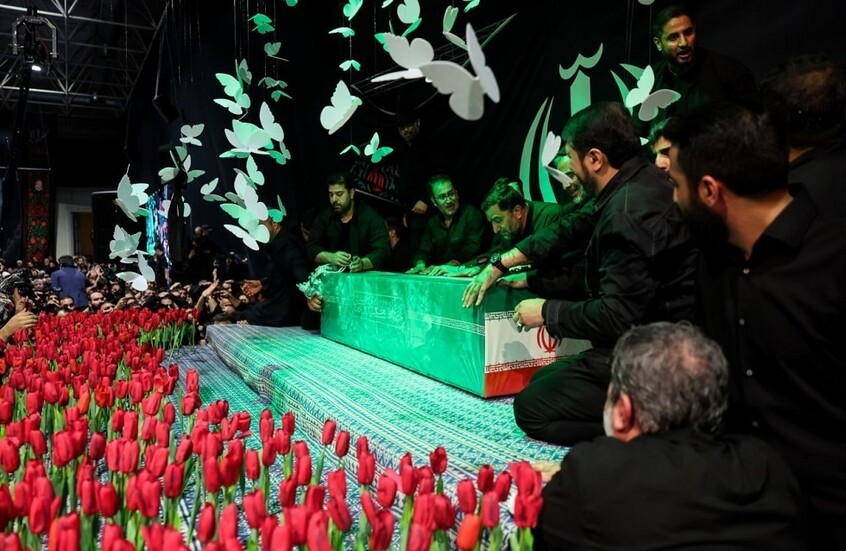
Ali Khamenei’s funeral procession: The symbolism behind the journey across Iraq and Iran
The planned week-long procession from Tehran through Qom, Najaf, Karbala, and ending in Mashhad highlights deep religious symbolism and political messaging across Iran and Iraq.



 Messenger
 Whatsapp
 Threads
 Email
Email
 Print
Print
 X
X
 Facebook
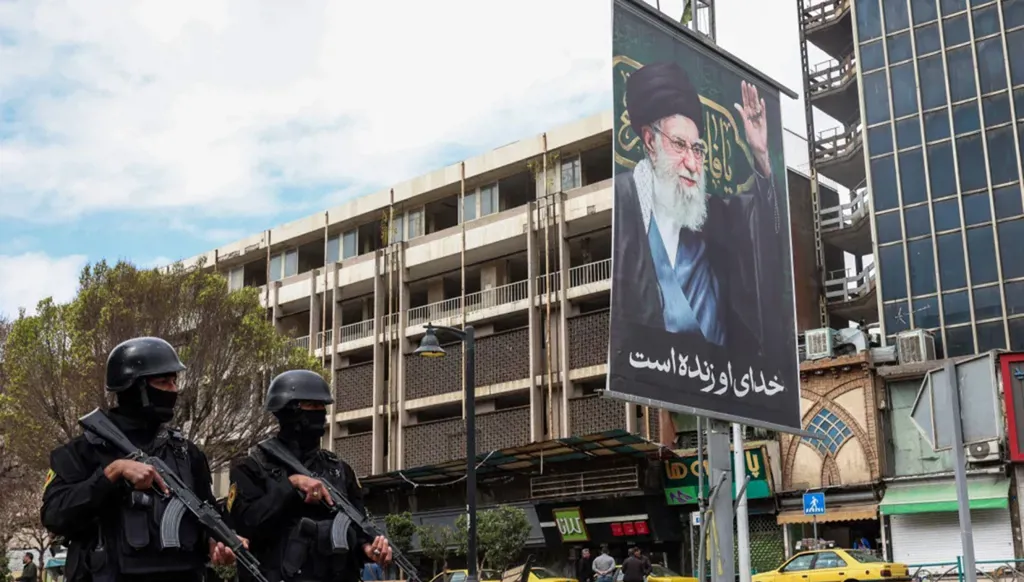


The world is expected to witness one of the largest funerals in modern history, the funeral of the former Iranian Supreme Leader Ali Khamenei. The ceremonies are expected to last for about one week and will move from Tehran to Qom, then to Najaf and Karbala in Iraq, with the final stage and burial taking place in Mashhad, Khamenei’s hometown.
These locations carry political and religious meanings. What are they?
Tehran: the start of the funeral from the heart of the state
The funeral ceremonies of Iranian Supreme Leader Ali Khamenei begin in the capital, Tehran, as it is the center of the state and its political and military institutions. The events start on Friday July 3 with official ceremonies dedicated to receiving foreign delegations and diplomatic figures. This step gives the funeral a formal protocol dimension that reflects the presence of the Islamic Republic on the international stage and emphasizes the continuity of its institutions during a sensitive transitional phase.
After that, public farewell ceremonies are opened on Saturday and Sunday at the Imam Khomeini Prayer Hall, one of the most important official gathering sites in Iran. On Monday, the capital will witness the main funeral procession in its streets. Tehran represents the longest stage of the funeral, lasting four days, combining official attendance and public participation in a scene carrying political, religious, and symbolic dimensions.
Qom: the station of religious legitimacy
On Tuesday, the body is transferred to the city of Qom, which is considered the center of the seminary system in Iran and one of the most important sources of religious legitimacy for the regime. The passage of the funeral through this city gives it a seminary dimension that reflects the connection between the position of the Supreme Leader and religious leadership alongside political leadership.
Qom symbolizes the close relationship between the Islamic Republic and the religious institution that has been one of the pillars of the system since its establishment. The fact that burial does not take place there reflects Tehran’s desire to give the final burial site a broader popular symbolism.
Najaf and Karbala: the transnational Shiite dimension
On Wednesday, the funeral reaches Iraq, where mourning ceremonies are held in Najaf and Karbala, a stop that carries religious and regional dimensions beyond Iran’s borders. Najaf is one of the most important centers of Shiite religious authority in the world and the city where Khamenei spent part of his religious studies years.
As for Karbala, it represents a central symbol in the Shiite conscience due to its association with the event of Ashura and the martyrdom of Imam Hussein. Through these two stops, Iran seeks to give the funeral a transnational dimension, linking Khamenei’s farewell to major religious symbols and to the network of relations that the Islamic Republic has built in the region.
Mashhad: the final station and burial
The funeral ceremonies conclude on Thursday July 9 in the city of Mashhad, Khamenei’s hometown, where he will be buried near the shrine of Imam Reza, the eighth Imam in Twelver Shiism and one of the most important religious shrines in Iran.
The choice of Mashhad combines both personal and religious dimensions. It is the city where Khamenei was born, and at the same time one of the most prominent pilgrimage destinations in the Shiite world.
This makes his grave part of a religious landscape visited by millions of pilgrims each year and gives it symbolism that goes beyond the political framework.