

America’s democratic system in permanent trial
Between a contested Constitution, a fractured public trust, and an economy that both divides and binds, American democracy endures not as a settled model but as an ongoing struggle over what it means to be self-governing.



 Messenger
 Whatsapp
 Threads
 Email
Email
 Print
Print
 X
X
 Facebook
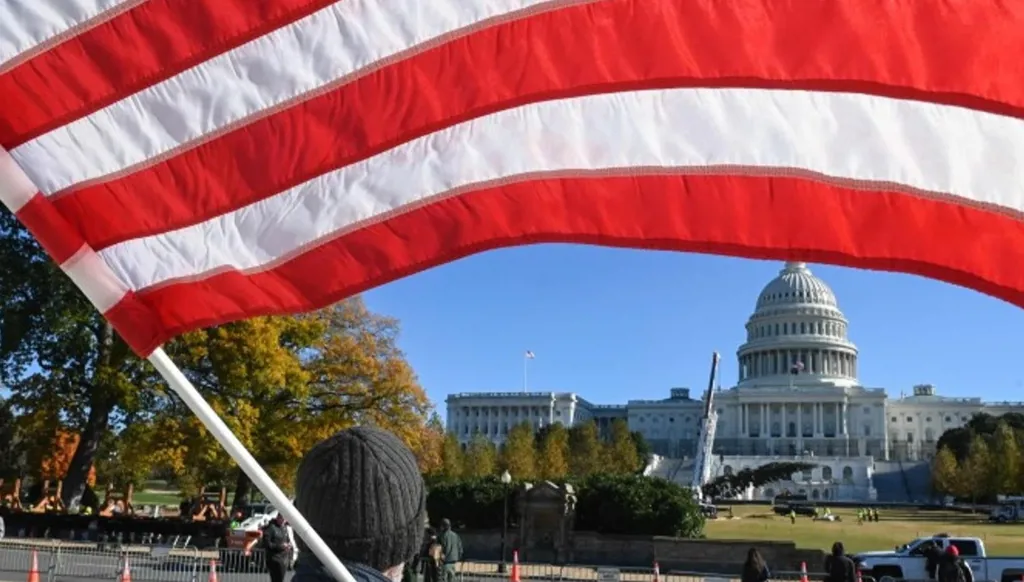


At a moment when the American political system appears strained between polarizing forces that are tearing it apart, rising populism and institutions approaching a state of fragility, and a left that has lost its reference points and sense of direction, the question arises: does the United States still possess the real foundations of the democracy, freedom, and constitutionalism it claims to embody? The answer is not binary, but rather an ongoing debate at the very core of American identity itself.
Sacred text or political weapon?
There is no country in the Western world whose people hold their constitutional document in the same reverence as Americans do for their Constitution of 1787. In their collective consciousness, it is closer to a sacred text, almost like a Bible. Yet this apparent reverence conceals a deep tension: like all sacred texts, the Constitution has become a battlefield of interpretation.
The Supreme Court, historically seen as the guardian of rights and the guarantor of the separation of powers, has in recent years turned into an institution with an openly ideological character. Its rulings on abortion, guns, and elections have revealed that interpreting the Constitution is not an objective science, but a political choice dressed in legal form.
Nevertheless, the Constitution remains a symbolic bond that should not be underestimated. When Americans disagree, they argue in its language rather than outside it. In an era of populism, this is a sign of relative institutional resilience.
Democracy: a past to be mourned, or a project to be built?
The question of the future of American democracy is not an academic luxury; it is the most urgent geopolitical question, not only for the United States, but one that is reshaping the entire structure of the international order.
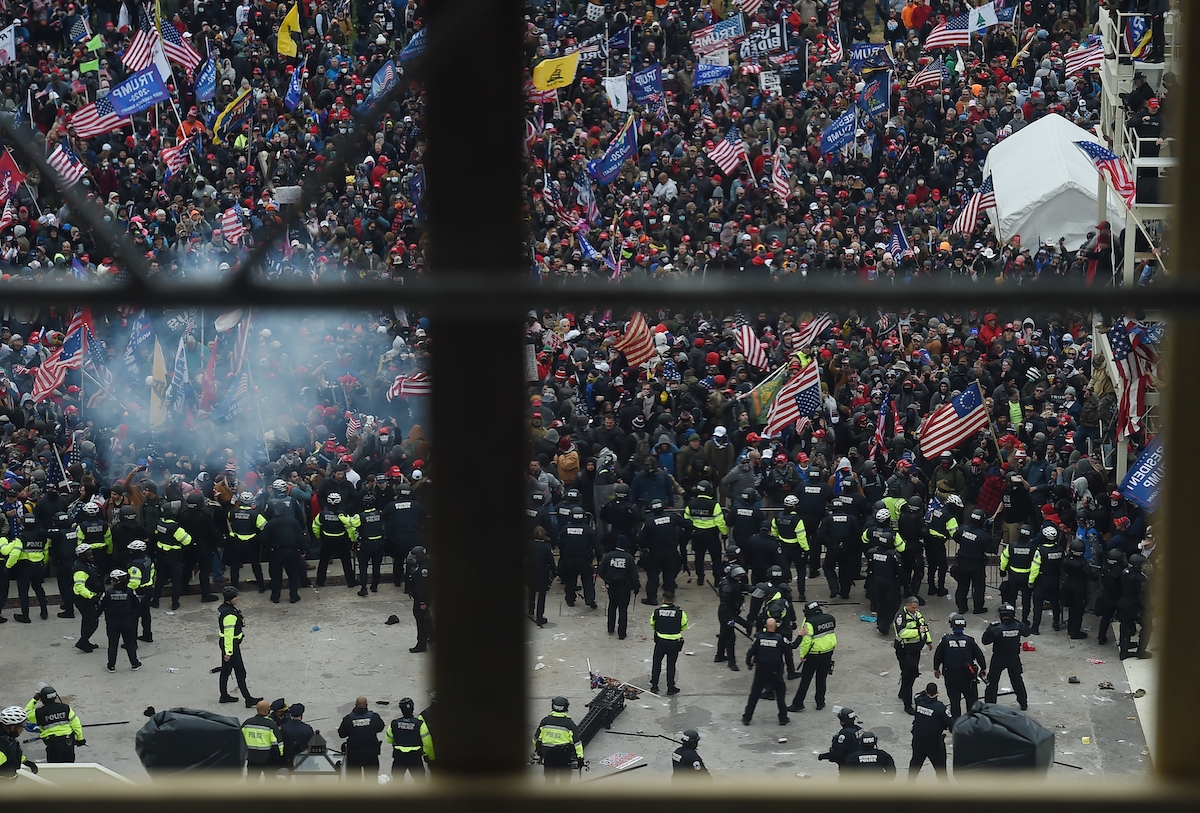
What the attack on the US Capitol revealed goes deeper than a passing crisis: at least one third of Americans do not trust the results of the electoral process, and this alone is enough to shake the foundations of any democratic system, no matter how established it may be.
Yet American civil society possesses a remarkable capacity for self-renewal, as seen in social movements such as civil rights, climate activism, and social justice. These movements show that American democracy has never been a finished product, but rather a permanent workshop of conflict.
National identity and the economic model: the hidden link
What most analysts overlook is the economic root of American nationalism. In the United States, attachment to national identity is not primarily nourished by ideological discourse, but by the lived experience of the American economic model.
It is true that this model contains deep and vast structural injustices: widening wealth inequality, the fragility of the working class, and limited social safety nets. Yet at the same time, it provides a real gateway to social mobility and a model of individual success unmatched in strength and intensity in most parts of the world.
The middle class, especially the upper middle class, sees the American system as a living implicit contract: hard work leads to advancement, and ambition is not a hereditary privilege but a possible path. Despite its real fractures, as long as this implicit contract remains alive in the collective consciousness, the connection to American identity remains strong.
An endless debate, and this is what makes it American
American national identity is a fundamentally dynamic concept. It is not formed through consensus but through conflict and contestation between interests and arguments. There is no arbiter who defines the correct doctrine or the best option; instead, there is a fierce social, legal, media, and intellectual struggle.
While ethnic and religious tensions intensify in certain currents, a growing sensitivity to justice and equality deepens in parallel ones. Despite the risks carried by this tension, many Americans see it as the clearest evidence that American democracy is still alive, with all the pain and vitality that life entails.
The Constitution is a weapon, freedom is a weapon, interests are a weapon, and knowledge is a weapon. All of them are tools in this contest. Democracy, meanwhile, is its open arena. Thus, the wager, in all its complexity, is that the game must remain “in play.”
Disclaimer: The opinions expressed by the writers are their own and do not necessarily represent the views of Annahar.
Read more in our 250th Anniversary of the United States dossier :