From oil to algorithms: The new model for US–Middle East cooperation
As America marks 250 years, its influence in the Middle East is no longer anchored in oil or arms alone, but in a complex web of capital, data, technology, and strategic interdependence shaping the global order.



 Messenger
 Whatsapp
 Threads
 Email
Email
 Print
Print
 X
X
 Facebook


On the 250th anniversary of the establishment of the United States, economic relations between the United States and the Middle East appear to be at a historic turning point.
The region, which for a long time entered American calculations through oil, wars, and maritime routes, is no longer reduced today to a barrel of crude oil, a military base, or an arms deal. It has become a space where energy intersects with artificial intelligence, sovereign investments intersect with security, and trade intersects with the competition between the United States and China over the shaping of the twenty first century.
The figures clearly reveal this transformation. Total goods trade between the United States and the Middle East and North Africa reached about 146.5 billion dollars in 2025, including 89.6 billion dollars in United States exports to the region, compared with 56.9 billion dollars in imports from it. This gave Washington a trade surplus of 32.6 billion dollars. This means that the region has become a profitable market for the United States, especially in the sectors of aircraft, equipment, food, technology, defense, and services.
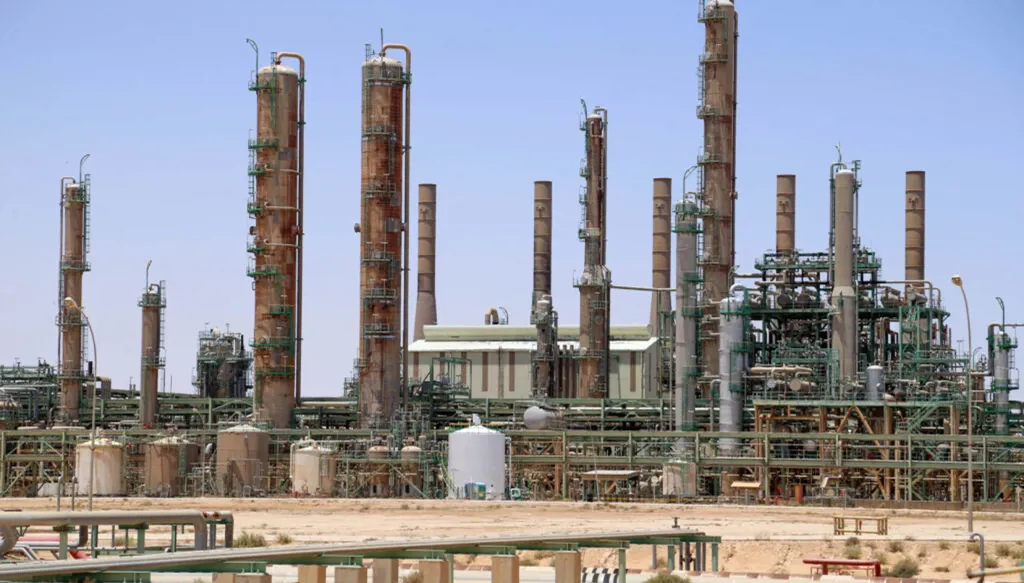
As for oil, which was the core of the relationship in the twentieth century, its role as a direct dependency factor has declined. In 2025, United States crude oil imports from the Arabian Gulf represented only 8 percent of total United States crude imports, which stood at 6.2 million barrels per day.
However, this decline does not mean a decline in the importance of the Gulf. Washington no longer needs Gulf oil as it did in the 1970s or 1990s, but it still needs the stability of global prices. Any disruption in the Strait of Hormuz or in the production of Gulf bordering countries immediately has a negative impact on inflation, shipping costs, energy costs, and the mood of the American voter.
Here lies the paradox: the United States has become less dependent on Middle Eastern oil, but it has not become less interested in its economy. The relationship has shifted from “oil in exchange for security” to a more complex formula: “security in exchange for investment, technology, and geopolitical positioning.”
Weapons remain one of the pillars of this arrangement. Between 2021 and 2025, more than half of arms imports in the Middle East came from the United States, at 54 percent, according to the Stockholm International Peace Research Institute.
But the most important new development does not come from oil or weapons, but from semiconductors and data centers. In 2025, the “Stargate” project in Abu Dhabi, United Arab Emirates, emerged as a major initiative expected to begin operating its first phase in 2026 with a capacity of 200 megawatts, as part of a plan that could reach up to five gigawatts. It involves American companies such as OpenAI, Oracle, Nvidia, and Cisco. Saudi Arabia also announced major commitments in this context, including plans by the Saudi company DataVolt to invest 20 billion dollars in data centers and energy infrastructure linked to artificial intelligence inside the United States.
This shift is highly significant. Gulf states want to move from exporting raw energy to hosting the global computing economy. The United States wants to keep Gulf artificial intelligence within the American orbit, away from Chinese influence. As a result, the US Gulf economic relationship is no longer centered on oil tankers alone, but on chips, servers, electrical power, data security, and determining who controls the infrastructure of the global artificial intelligence system.
In the background, China stands as a third actor that is present in every calculation. China has become the largest trading partner of the Gulf Cooperation Council countries, with approximately 173 billion dollars in Gulf exports to China and 129 billion dollars in imports from it in 2023, according to sector estimates.
This reality places Washington before a clear challenge: it cannot prevent the Gulf from engaging with China, but it is trying to pull Gulf digital and strategic infrastructure away from the Chinese sphere of influence.
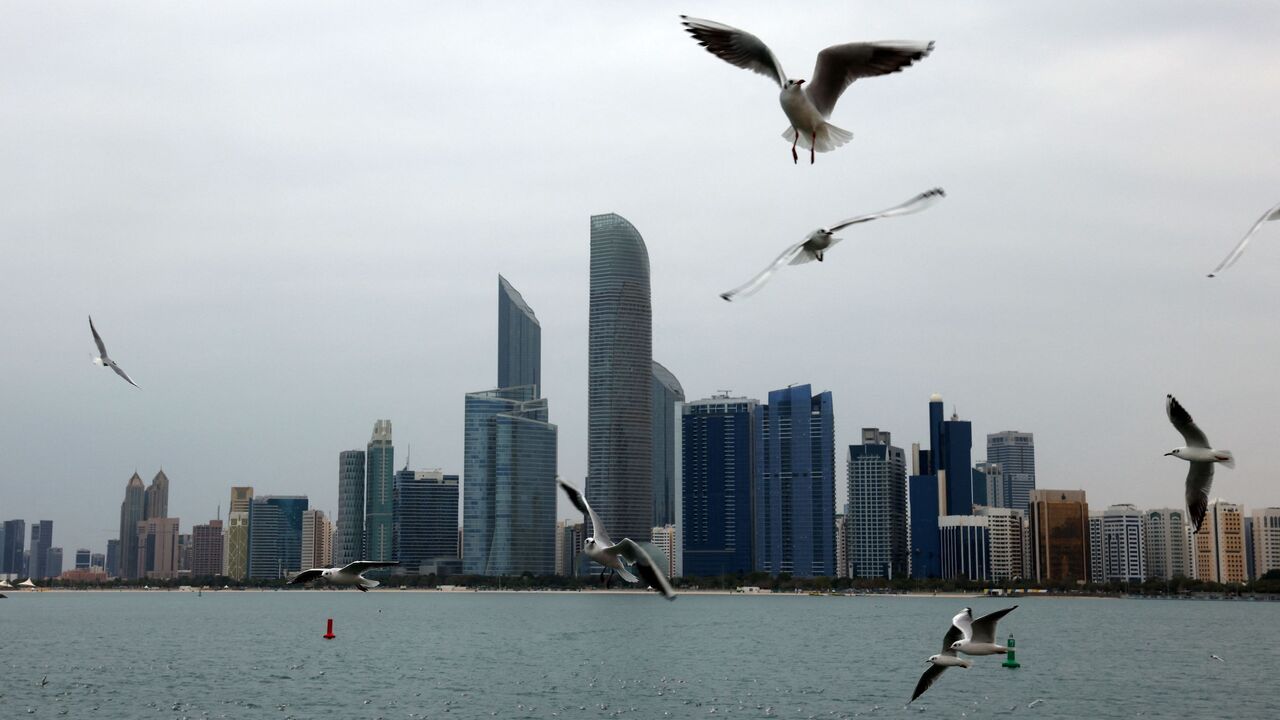
The importance of the Gulf is increasing further due to its sovereign wealth funds. These funds today manage nearly 6 trillion dollars, representing more than 40 percent of the total assets of sovereign wealth funds globally. As a result, the role of Gulf countries as global investors in technology, energy, real estate, sports, infrastructure, and artificial intelligence has surpassed any traditional role. Gulf capital has become part of the American economy itself, not merely money used to purchase American products.
Washington uses trade as a tool of political influence. It is linked to free trade agreements with several Middle Eastern countries, including Israel, Jordan, Morocco, Bahrain, and Oman. These agreements are not measured only by their trade volume, but also by their political function: consolidating alliances, tying local economies to American standards, and encouraging the adoption of controlled models of economic openness within the region.
However, the relationship is not stable and free of tensions. Middle Eastern countries, particularly those in the Gulf, have become more capable of political diversification alongside economic diversification. They buy weapons from Washington, sell energy to Asia, invest in the United States and Europe, negotiate with China, and build a digital economy. Meanwhile, the United States, in its 250th year, has had to deal with a Middle East whose relationships with its rivals are increasingly interconnected.
The conclusion is that the Middle East has not left the center of American strategy, but it has changed its position within it. In the twentieth century, the American question was: who secures the oil? Today the question is broader: who secures energy, shipping routes, capital, semiconductors, data, and markets? Therefore, US Middle East economic relations on the 250th anniversary of the United States appear as a reflection of a deeper global transformation: from an oil economy to a computing economy.