

Israel at a crossroads: The internal and regional battle shaping its future
Examining the intersection of domestic political change, judicial power struggles, ideological shifts, and regional ambitions in contemporary Israel.



 Messenger
 Whatsapp
 Threads
 Email
Email
 Print
Print
 X
X
 Facebook
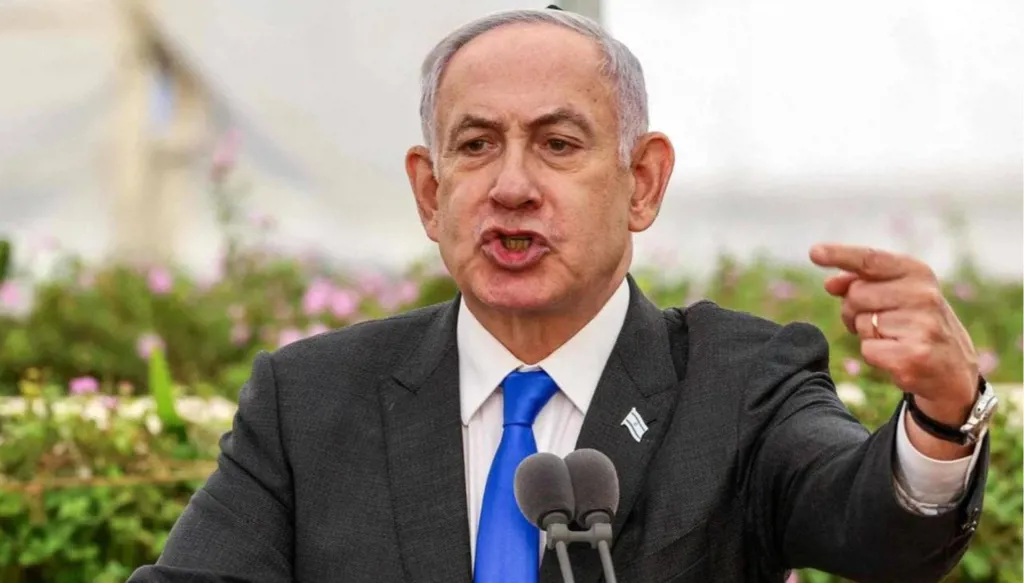


Israel, at this stage, under the continued dominance of the far-right nationalist and religious camp since 2009, which was further strengthened after the 25th Knesset elections (late 2022), stands at a critical and pivotal moment in its history. This moment may determine its future, its self-perception, and the nature of its relationship with its society and its surrounding environment for decades to come.
The manifestations of this moment can be identified in two internal situations and two external ones.
On the internal level, the first situation is represented by the Netanyahu government’s attempt to complete a “regime overhaul” by marginalizing the judiciary, including the Supreme Court and legal oversight over the government, and placing it under the dominance of the executive branch. This would undermine or weaken the principle of separation of powers as a fundamental pillar of democratic systems.
This is especially significant given that in Israel the executive branch (the government) emerges from the legislative branch (formed by a governing majority in the Knesset). If this step succeeds, it would lead to the concentration of the three branches of power in the hands of the prime minister, which explains why Israelis from other political currents have begun to view Netanyahu as a dictator.
The second situation is the attempt to reinforce Israel’s character as a Jewish religious state over its character as a secular and liberal state within a democratic system for its Jewish citizens. This process is an extension of the second major transformation that took place in Israel, which led to the displacement of the Labor Party, the successor of Mapai since 1968, with its social democratic character and founding role in Israel. This resulted in the rise of the Likud Party, a nationalist right-wing party, to power in 1977.
On the external level, the first situation can be seen in Israel’s adoption, under the current government, of an approach aimed at eliminating the Palestinians from the political equation from the river to the sea, following a “no Fatah state and no Hamas state” logic, neither in the West Bank nor in Gaza.
It should also be noted that Netanyahu’s government passed a Basic Law defining Israel as the nation state of the Jewish people, which placed Palestinian citizens of Israel in a lower status in 2018. This means that this political “elimination” also threatens the position of Palestinian citizens of Israel despite their citizenship in the state.
While the second (external) situation consists of Israel’s pursuit of establishing itself as a major regional power in the Levant and the wider Middle East, along with its attempt to reshape the region according to an Israeli model. This means generalizing Israel’s defining characteristic as a Jewish state across the region, so that the surrounding countries become pre national entities containing sectarian and ethnic groups.
This can be described as a form of “reverse normalization,” meaning that instead of the region normalizing relations with Israel, Israel seeks to normalize the region according to its own model, so that it comes to resemble it. This is of course accompanied by efforts to undermine Iranian influence and limit Turkish influence in the Levant, as well as the establishment of buffer zones along the borders with neighboring Arab states, particularly Lebanon and Syria, under the pretext of preserving Israel’s national security.
It should also be noted here that the two internal situations run in parallel with and complement the two external ones. In other words, the internal transformation of Israel is aligned with a transformation of its external position, both in its relationship with the Palestinians and with neighboring states, as well as at the international and regional levels.
What should be emphasized is that these developments or objectives are not new. They originated with the birth of the Zionist movement and its successor, Israel, as part of its colonial and racist ideology, which involved the nationalization of religion and the religious framing of nationalism.
However, their peak emerged after the 1967 occupation and intensified with the rise of the nationalist and religious right to power in the second “turning point” in 1977, as previously mentioned. They became further entrenched under Netanyahu’s leadership across three periods (1996–1999, 2009–2021, and 2022 to the present) and were further consolidated as a result of the consequences of the “Al Aqsa Flood” operation in late 2023.
However, the intertwining of the internal and external dimensions in the Netanyahu–Smotrich–Ben Gvir government’s attempt to transform Israel’s nature and position is not universally accepted, neither within Israel nor at the regional or international level, as can be seen on several fronts, particularly in the United States, both officially and among the public. This weakens its strength, momentum, and legitimacy internally and externally.
This helps explain the emergence of influential voices in Israel and abroad that speak about the linkage between Israeli domestic extremism and Israeli external extremism toward the Palestinians. These voices do not spare Netanyahu, viewing him as seeking to turn Israel into an authoritarian and religious state, and into a dictator who monopolizes all powers, thereby contributing to the fragmentation of Israeli internal consensus and planting the seeds of civil war.
It is also worth recalling that before this war, Netanyahu was on the verge of the end of his political career due to the escalation of opposition protests against the “regime overhaul.” However, the “Al Aqsa Flood” and the subsequent war on Gaza weakened this trajectory by unifying much of the Israeli political spectrum around confronting an external threat.
This later enabled Netanyahu, after weakening Hamas and Hezbollah, degrading Syria’s military capabilities, and the war against Iran, to strengthen his position and extend his political lifespan at the expense of the opposition. But until when? That is what upcoming developments ahead of the next Knesset elections at the end of this year will determine.
Disclaimer: The opinions expressed by the writers are their own and do not necessarily represent the views of Annahar.