

Between Turkey and Israel: Beirut amid a shifting regional balance
Turkey has quietly initiated several steps revealing it is not ready to surrender to Israeli dominance and leave the field open to its influence.



 Messenger
 Whatsapp
 Threads
 Email
Email
 Print
Print
 X
X
 Facebook
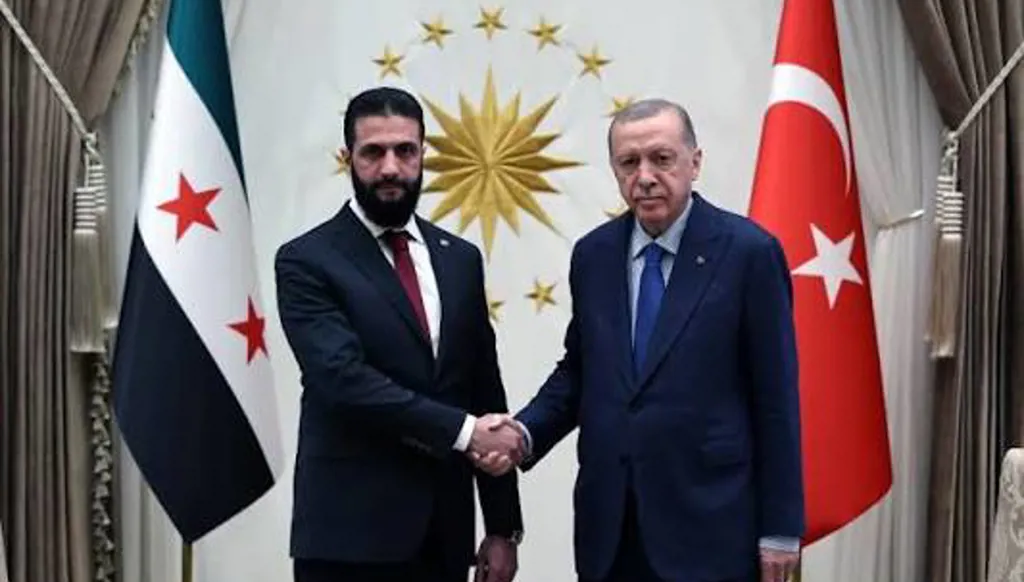


Reactions in Beirut were limited to the surprise statement made a few days ago by Turkish President Recep Tayyip Erdoğan, in which he declared that Turkey's security begins in Beirut and Damascus. However, observers of the region's dramatic developments did not dismiss the remark as a slip of the tongue. Instead, they attached considerable significance to it, viewing it within the context of a rapidly shifting regional landscape.
Since the dramatic fall of Bashar al-Assad's regime and the rise to power of Turkey's allies in Syria—developments that coincided with Israel inflicting major blows on Hezbollah in Lebanon—Tel Aviv has taken two strategic steps.
The first was effectively abandoning the truce agreement with Lebanon, commonly known as the November 27 Agreement, after launching preemptive strikes against Hezbollah's military infrastructure and its support network to prevent the group from rebuilding its capabilities.
The second involved launching extensive strikes against the remnants of the Syrian army by targeting military camps, airports, and missile depots, while simultaneously advancing ground forces into areas south of Damascus.
The Israeli message
Ankara understood that Israel's campaign was not solely aimed at weakening Syria's remaining military capabilities, but also at drawing clear limits to any potential Turkish expansion into Syria. This became particularly evident after reports that Israeli warplanes struck sites deep inside Syria that Turkey had reportedly intended to use as future military bases.
Although Ankara appeared to absorb the forceful Israeli message—that it was effectively barred from quickly filling the vacuum left by Iran's setback in Damascus and Beirut—it continued sending signals that it was not prepared to back down.
While it paused any direct expansion deeper into Syria, Turkey soon began responding through political and diplomatic moves that reflected its rejection of the new reality being imposed by Israeli military power.
Regional dimensions
Turkish affairs expert Dr. Muhammad Noor al-Din told Annahar that Erdoğan's statement that Turkey's security begins in Beirut carries significant implications for the region.
"He is expressing, first, that Turkey's patience has run out in the face of Israel's expansion, which has crossed all red lines. It also signals that Turkey sees itself as directly concerned with developments that are reshaping the regional balance, and that it will not remain on the sidelines but is prepared to cooperate with Syria, Iran, and other regional powers in confronting these developments," he said.
According to Noor al-Din, the statement also reflects Ankara's desire for Iran not to emerge from its confrontation with Israel and the United States weakened or defeated. Instead, Turkey wants Iran to remain resilient and capable of maintaining a balance of power, given the strategic implications for Turkey's future position and regional role.
Against this backdrop, Turkey has quietly and gradually taken several steps to demonstrate that it is not prepared to yield to what it views as Israeli attempts to reshape the region, particularly in ways that could ultimately encircle Turkey through Beirut or Damascus.
These steps include:
- Repeatedly voicing objections to Israel's approach in Lebanon.
- Revealing contacts with Hezbollah by inviting one of the group's delegations to participate in a conference supporting the Palestinian cause held recently in Istanbul.
- Reports circulating in Beirut suggesting that the recent Syrian outreach to Lebanon—including Syrian Foreign Minister Asaad al-Shaibani's visit to Beirut, his packed schedule of meetings, and his subsequent visit to Tripoli—was coordinated with Ankara.
According to these reports, the visits carried a clear message that both Damascus and Ankara have reservations and concerns regarding the tripartite agreement document signed in Washington.