

Lebanese Forces leader Samir Geagea: Framework Deal opens path to Hezbollah disarmament
Geagea says the agreement could restore Lebanon's sovereignty by linking a full Israeli withdrawal to ending Hezbollah's military presence.



 Messenger
 Whatsapp
 Threads
 Email
Email
 Print
Print
 X
X
 Facebook
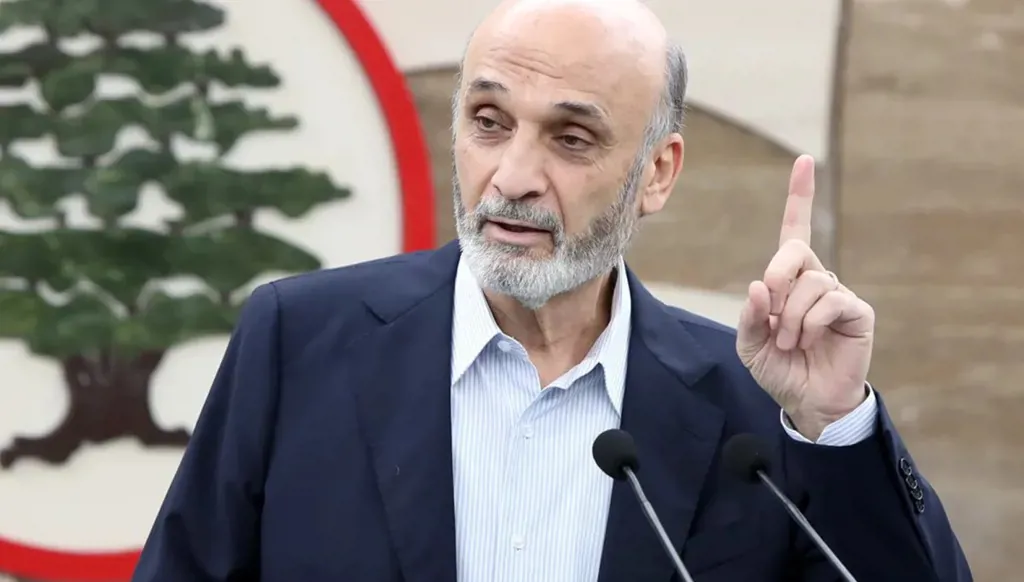


The head of the Lebanese Forces party, Samir Geagea, affirmed that "the framework agreement opens the door to restoring an effective state and ending the chronic conflict that has drained Lebanon for decades. It also establishes a clear equation based on a full Israeli withdrawal and ending the military reality imposed by Hezbollah."
In an interview with the Italian newspaper Corriere della Sera, Geagea said that "the tangible change brought about by the agreement between Lebanon and Israel lies in the serious effort to close the southern borders, which for six decades have been used, under various pretexts, to turn Lebanon into a theater of conflict, war, and destruction."
"What is happening today represents a strategic transformation that shifts Lebanon from a formal state to an effective one. The state effectively collapsed when the southern borders became open to armed organizations, whereas the framework agreement now opens the way to restoring state authority and ending the chronic conflict that has exhausted Lebanon for decades."
He added that "the path outlined by this agreement ultimately leads to Israel's withdrawal, the dismantling of Hezbollah's military and security structure, and Lebanon's transition from the logic of perpetual war to one of stability and full state sovereignty. This agreement opens a serious and credible path toward ending illegal weapons."
Geagea said: "Throughout the previous phase, Hezbollah sought to convince its community that Iran would succeed, through an understanding with the United States, in securing Israel's withdrawal from Lebanon without the party having to surrender its weapons. However, the framework agreement has completely dismantled this narrative and dispelled the illusion the party sought to create in order to preserve its weapons and contain discontent within its community."
He continues, "the reality is that Israel's presence in southern Lebanon is a direct consequence of the war initiated by Hezbollah. It was Hezbollah that drew Lebanon into the confrontation, and it was Hezbollah that brought Israel into Lebanese territory."
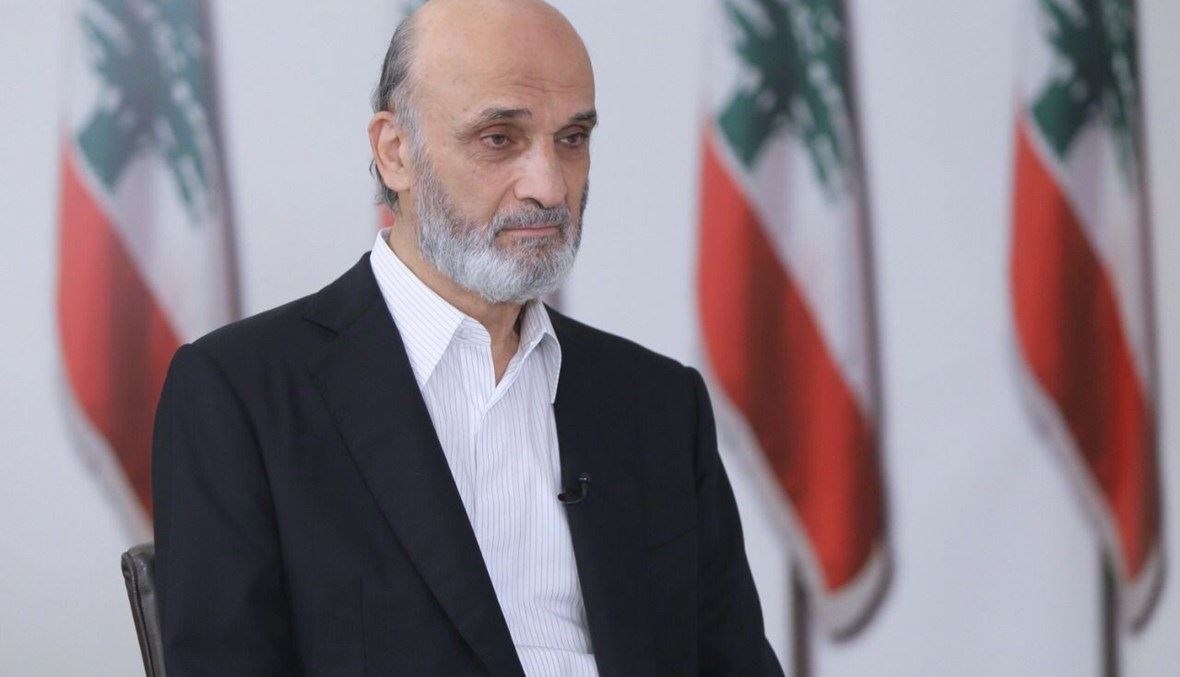
Geagea continued: "Today, the framework agreement establishes a clear equation based on a full Israeli withdrawal and ending the military reality imposed by Hezbollah. This equation is solely Hezbollah's responsibility because, had it not decided to enter the ' support for Gaza' war and later expand it under the banner of 'supporting Tehran,' there would be no Israeli presence inside Lebanese territory. The party has therefore become the main obstacle to completing Israel's withdrawal, as it bears responsibility for the continued displacement of southern residents and the prolongation of the crisis."
Regarding the domestic conditions required for Hezbollah's weapons to come fully under the authority of the state, Geagea said: "In my estimation, most of the political conditions are now in place. There is a President of the Republic committed to the principle of exclusive state control over weapons, a Prime Minister who shares the same approach, a ministerial and parliamentary majority that supports this option, and a cross-sectarian popular majority that wants to end the era of war, chaos, destruction, and displacement. Furthermore, the Lebanese state has made a historic decision to enter negotiations despite the accusations of treason launched by Hezbollah, confirming that political decision-making is beginning to free itself from the guardianship of weapons."
He added: "The next stage requires moving from issuing decisions to implementing them. Government decisions have been courageous and pivotal, but their success depends on translating them into action by enforcing the state's monopoly over weapons across all Lebanese territory."
Geagea continued: "First, we must remember that the framework agreement was sponsored by the United States, the only party capable of ensuring its implementation and overseeing its various stages. Under this agreement, Israel committed to two main points: first, a complete withdrawal once the illegal military reality represented by Hezbollah is brought to an end; and second, reaffirming that it has no territorial ambitions in Lebanon."
He added: "This position is not new, and history confirms it. Israel withdrew from southern Lebanon in 2000 and only returned following confrontations triggered by Hezbollah, whether during the July War in 2006 or after the events of October 8, 2023, which led to the latest confrontation. Linking Israel's withdrawal to ending illegal weapons has therefore become part of the current political reality."
"It is important to stress that the demand for the exclusivity of weapons in the hands of the state is not an Israeli demand but a Lebanese one, enshrined in the Taif Agreement more than three decades ago, as it represents the natural foundation for building an effective state capable of extending its sovereignty across all its territory."
Asked about the political, financial, and operational requirements needed for the Lebanese army to fully extend the state's authority in the south and contribute to sustainable security arrangements, Geagea reiterated that the Lebanese army "enjoys national consensus and legitimacy unmatched by any other institution. No other body commands the same level of trust to protect the borders and extend the state's authority. There is no doubt that the army needs greater support, better armament, and enhanced logistical capabilities."
"However, the primary challenge is political rather than military. Once there is a clear political decision to implement the constitution, the laws, and government decisions, the army, with its personnel, competence, and experience, has the ability to carry out the mission quickly and effectively and impose the state's authority throughout all Lebanese territory."