

Iraq sets September 30 deadline for armed factions to disarm amid rising tensions
Baghdad says there will be no extensions or exceptions as Prime Minister Ali al-Zaidi faces a critical test of state authority ahead of his Washington visit.



 Messenger
 Whatsapp
 Threads
 Email
Email
 Print
Print
 X
X
 Facebook
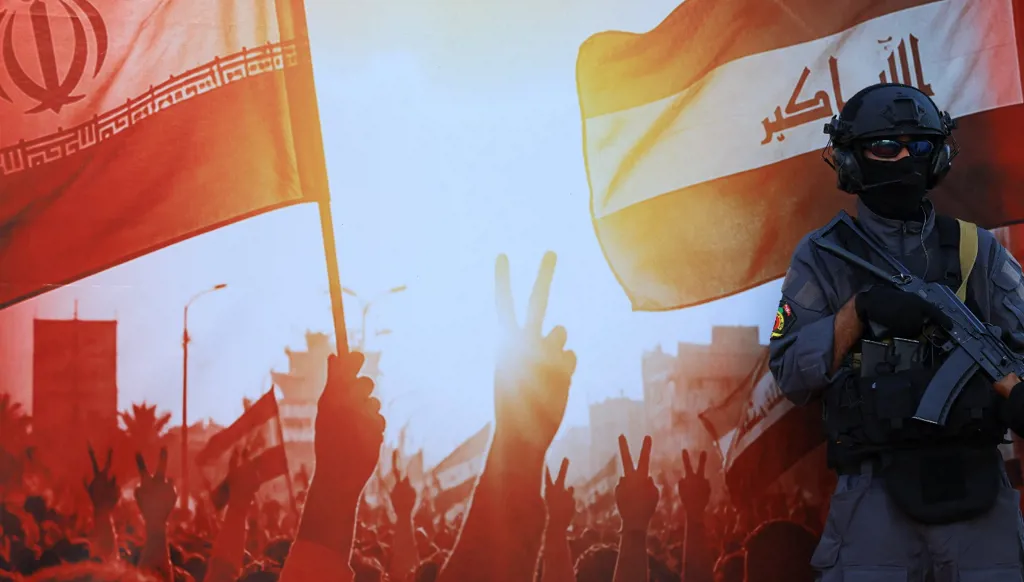


Iraq has entered a politically and security-sensitive phase after the government set September 30 as the final deadline for armed groups operating outside the state's framework to hand over their weapons and disband.
The move comes as the withdrawal of the international coalition forces nears completion, placing Prime Minister Ali al-Zaidi before a decisive test of the state's ability to monopolize arms and assert sovereignty over security decisions, particularly ahead of his upcoming visit to Washington.
While Baghdad insists the deadline will neither be extended nor include any exceptions, major armed factions continue to reject calls to surrender their weapons, raising the possibility of political and security escalation if no settlement is reached before the deadline.
Last Deadline for Factions
Iraqi government spokesperson Haider al-Aboudi announced on Monday that September 30 will be the final date for handing over weapons, stressing that any arms remaining outside state control after that date will be classified as "irregular weapons" and dealt with by the competent authorities in accordance with the law. The announcement reaffirmed the government's commitment to the timeline and its refusal to grant extensions or exemptions.
According to informed Iraqi sources quoted by Annahar, al-Zaidi informed the leaders of the armed factions, as well as the political forces within the Coordination Framework that support them, that the deadline will expire on September 30.
Any group that refuses to surrender its weapons or continues operating outside the official security institutions after that date will be considered in violation of the law and will face state action without exception, regardless of its political influence or the nature of its backing.
The sources added that the government believes the era of uncontrolled weapons must come to a definitive end, viewing the state's monopoly on the use of force as one of the fundamental pillars of state-building and the rule of law.
The decision extends beyond the security sphere, touching on one of Iraq's most complex issues since 2003: the existence of armed groups with independent military arsenals and organizational structures outside state institutions. Some of these factions are linked to influential political forces in parliament and government, preventing previous administrations from fulfilling repeated pledges to place all weapons under state control.
The sensitivity of the decision has increased following the public rejection by several armed factions—including Kataib Hezbollah, Harakat al-Nujaba, and Kataib Sayyid al-Shuhada—of demands to disband or surrender their weapons. The emergence of new formations in recent years, serving as organizational fronts for more influential factions, has further complicated the government's task.
Test for Iraqi State Authority
Sources say the government's determination to implement the decision could lead to direct confrontation with factions that refuse to comply, particularly if authorities move to execute arrest warrants or confiscate weapons caches. They stress that the government insists the law will be applied equally, without political or partisan considerations, and that all Iraqis should fall under a single army and security institution governed by the constitution and existing laws.
They add that al-Zaidi is relying on several internal and external factors that could provide a stronger opportunity than previous governments had to resolve the issue. These include broader political consensus within state institutions to end the presence of weapons outside the official framework, growing public support for strengthening state authority, and international—particularly American—backing, which links continued security, military, and economic cooperation with Baghdad to reinforcing the principle that only the state should possess arms.
The move also coincides with the restructuring of Baghdad's security relationship with the international coalition following the agreement to end the coalition's mission and transition to bilateral cooperation arrangements.
This places the Iraqi government before a historic test of its ability to manage security independently and prevent any unofficial actor from making decisions on war and peace or using force outside constitutional frameworks.
Post-Deadline Scenarios
Military adviser Major General Jawad al-Dalhi told Annahar that the possibility of confrontation between the Iraqi state and some armed factions has become more likely if those factions continue to reject government decisions and refuse to surrender their weapons, while al-Zaidi remains committed to restricting arms to the state.
He said Iraq is at a pivotal stage, with the government making it clear that there will be no place for weapons outside the security institutions after the deadline, while some factions continue to insist on retaining their arms, placing both sides on a path that could lead to confrontation unless a political breakthrough is achieved in the coming period.
Al-Dalhi added that previous Iraqi governments were unable to resolve the issue because of complex political and security circumstances, but current conditions appear different due to stronger domestic political will to reassert the state's monopoly on arms, alongside clear international support for strengthening official institutions and upholding the rule of law.
He warned that any retreat by the government in implementing the decision would undermine state authority and perpetuate the problem of uncontrolled weapons. Conversely, enforcing the decision would constitute a real test of the government's ability to apply the law equally to all parties without exception.
He concluded that the preferred outcome remains reaching political settlements that would lead to the voluntary surrender of weapons.