

Lebanon’s beaches at the center of rising social restrictions and cultural exclusion
From public shores to private resorts, growing local rules on dress, behavior, and access are turning Lebanon’s summer coastline into contested spaces where inclusion, and exclusion, are increasingly defined by identity.




 Messenger
 Whatsapp
 Threads
 Email
Email
 Print
Print
 X
X
 Facebook
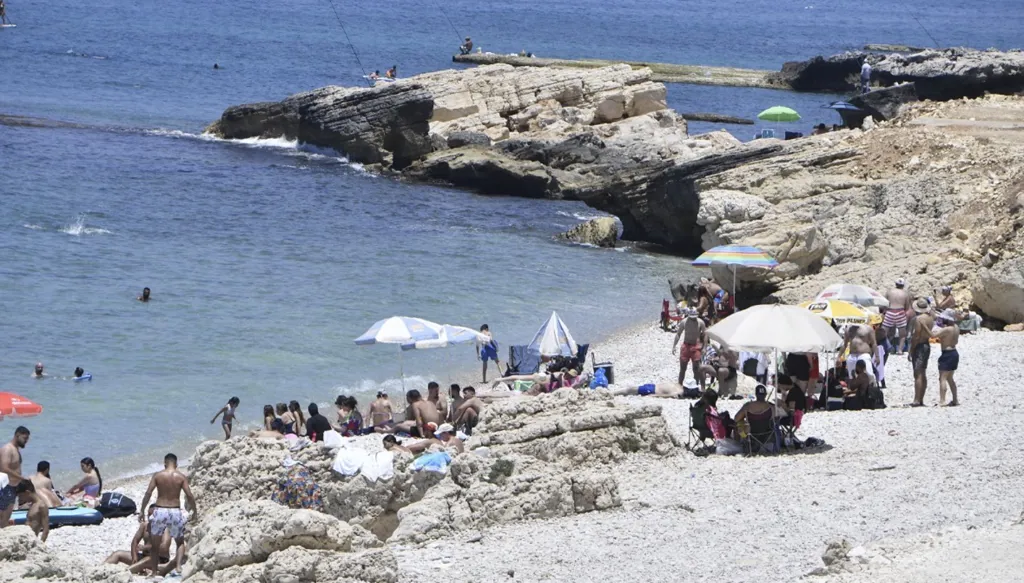


With the arrival of the summer season, the implications of these practices go beyond debates over individual freedoms, reinforcing a reality that compels citizens to remain within their own regions or to visit areas that socially or sectarianly resemble them, as other places do not accept them as they are. In this way, the “rules” governing access to beaches, markets, and resorts contribute to deepening isolation and sectarianism in a country that is meant to be a shared space for all its citizens.
The "Saida Swimwear" Incident
In several countries once considered more religiously strict than Lebanon, “religious police” institutions have been abolished in recent years after being accused of harming individuals and offending citizens. In Lebanon, however, a form of “de facto religious policing” persists, embodied by local youths who present themselves as guardians of their areas’ traditions and religious commitments.
A prominent example occurred in 2023 on Saida’s beach, where youths and a religious figure attacked a woman wearing swimwear. Since then, Saida’s beach has largely been free of what they described as “improper beachwear,” as well as alcohol in the city and along the shoreline.
Saida’s Mayor, Mustafa al-Hijazi, notes that the city’s beach is only about 2.5 kilometers long, explaining that “most visitors are low-income citizens who cannot afford access to private resorts in nearby areas, and their concerns and customs must be respected as much as possible.”
He told Annahar that “there is a project underway to develop the beach and transform it into a tourist destination starting next week. Once completed, a public area will be designated, welcoming visitors from all regions.”
Municipal Conditions?
It was particularly notable when, last year, the municipality of Jbeil announced conditions for access to its public beach. In an early-season statement titled “Red Lines on the Blue Line,” it outlined a set of organizational measures aimed at regulating behavior on the beach to ensure visitor comfort and environmental safety. At the time, a ban on swimming except in designated swimwear sparked controversy, as it was seen by some as targeting veiled women. Are these conditions still in effect?
Ziad Kallab, legal advisor to Jbeil municipality, confirms to Annahar that these measures remain in effect, explaining: “Last year, we clarified, and we reiterate now that we do not prohibit veiled women from accessing the sea; however, they are required to wear the recognized ‘burkini’ swimwear. If a veiled woman feels more comfortable swimming outside the Jbeil area, that is her choice, but Jbeil welcomes everyone.”
At the beginning of this season, it was notable that other municipalities, such as Batroun and Tabarja, issued similar conditions for beach access, which Kallab views as an adoption of Jbeil’s measures from the previous year.
Private Resorts: Different Restrictions
In the absence of clear regulations from the relevant ministries, each resort management sets its own conditions for guests. Some resorts prohibit veiled women from entering and swimming, others allow entry but not access to the pool, while some go further by banning foreign domestic workers accompanying families from entering altogether. These measures appear incomprehensible and unjustified, particularly in countries that rely on tourism to support their economy. They are often justified on the grounds that resorts are private property, where municipalities and official authorities do not intervene.
The main issue with these resorts is their encroachment on public property, namely the beach, which in some cases leaves no access for the public. It is known that the latest legislation exempting these resorts from fees required them to provide public pathways to the sea, a condition that has not been met due to de facto powers surrounding each resort.