

Political reactions intensify as southern Lebanon sees continued field escalation
Developments around the framework agreement between Lebanon and Israel continue to unfold amid escalating political positions and renewed field tensions in southern Lebanon.



 Messenger
 Whatsapp
 Threads
 Email
Email
 Print
Print
 X
X
 Facebook


Although the clashes witnessed in the southern border region between Israeli forces and “Hezbollah” in the past hours reflected the fragility that characterizes the field situation and makes it vulnerable to deterioration and large-scale escalation at any moment, this does not obscure the importance gained by the initial preparations to begin implementing the provisions of the framework agreement between Lebanon and Israel, starting with the two pilot areas. This quickly and strongly responds to campaigns challenging the agreement and threatening to bring it down. In reality, the deeper and more serious facts contradict those campaigns, revealing the weakness of the calculations of their proponents and exposing the superficiality of their bets on reviving previous experiences to overturn the agreement, which can no longer be relied upon given the changes in the circumstances of the current agreement and its conditions.
There was no clearer indication of the collapse of calculations and bets aimed at overturning or obstructing the agreement than the strong supportive position announced by the Gulf Cooperation Council in favor of the framework agreement between Lebanon and Israel, while some Lebanese figures opposed to the agreement and to direct negotiations with Israel claimed that part of their justification for opposition was linked to warm relations they had with Gulf countries. Accordingly, attention and focus have recently begun to move beyond monitoring reactions to the agreement and toward awaiting the procedural details of its implementation, which constitute the decisive test of the seriousness and credibility of the Lebanese authorities on one hand, and the genuine commitment of both the United States and Israel to ensuring the success of the agreement and enabling the Lebanese authorities to respond through actions to the harsh and violent campaigns led against it by opponents of the agreement and their Iranian allies.
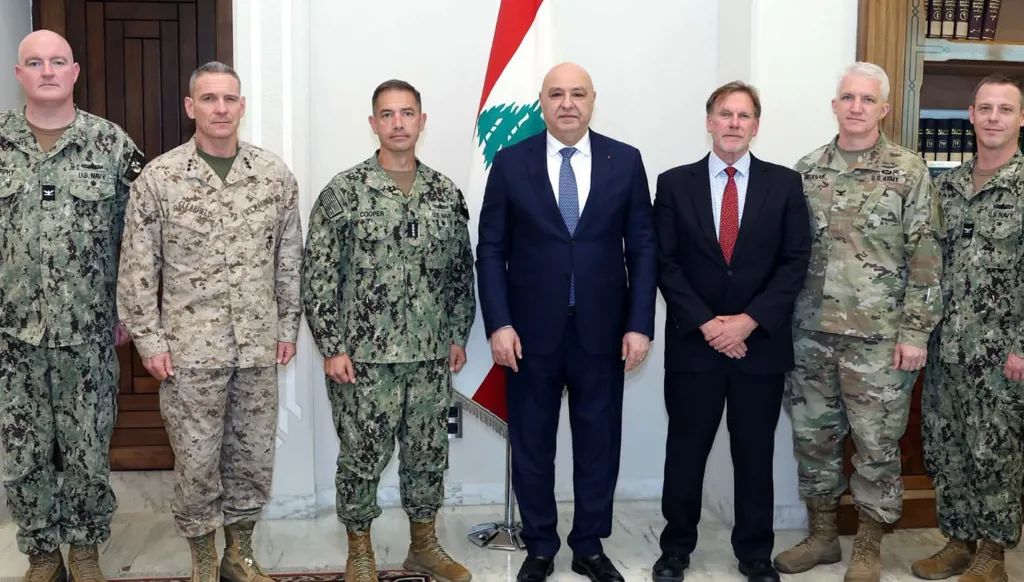
In this context, the visit of the commander of the U.S. Central Command’s Central Region, Admiral Brad Cooper, to Lebanon coming from Israel, gained significant importance, as he is expected to provide clarifications on the mechanism for implementing the framework agreement between the two countries, which will be carried out under American supervision.
Cooper’s mission in Lebanon was framed as facilitating the implementation of the agreement. He was received by President Joseph Aoun at the Baabda Palace, in the presence of the U.S. Chargé d’Affaires in Beirut Keith Hanigan and the head of the mechanism team General Joseph Clearfield.
During the meeting, discussions focused on the preparations related to the start of implementing the framework agreement that was approved as a result of Lebanese American Israeli negotiations in Washington.
Aoun thanked Admiral Cooper for the attention shown by U.S. President Donald Trump toward Lebanon in order to achieve security and stability in the country, stressing the determination of the Lebanese state to extend its authority through its armed forces up to the southern international border.
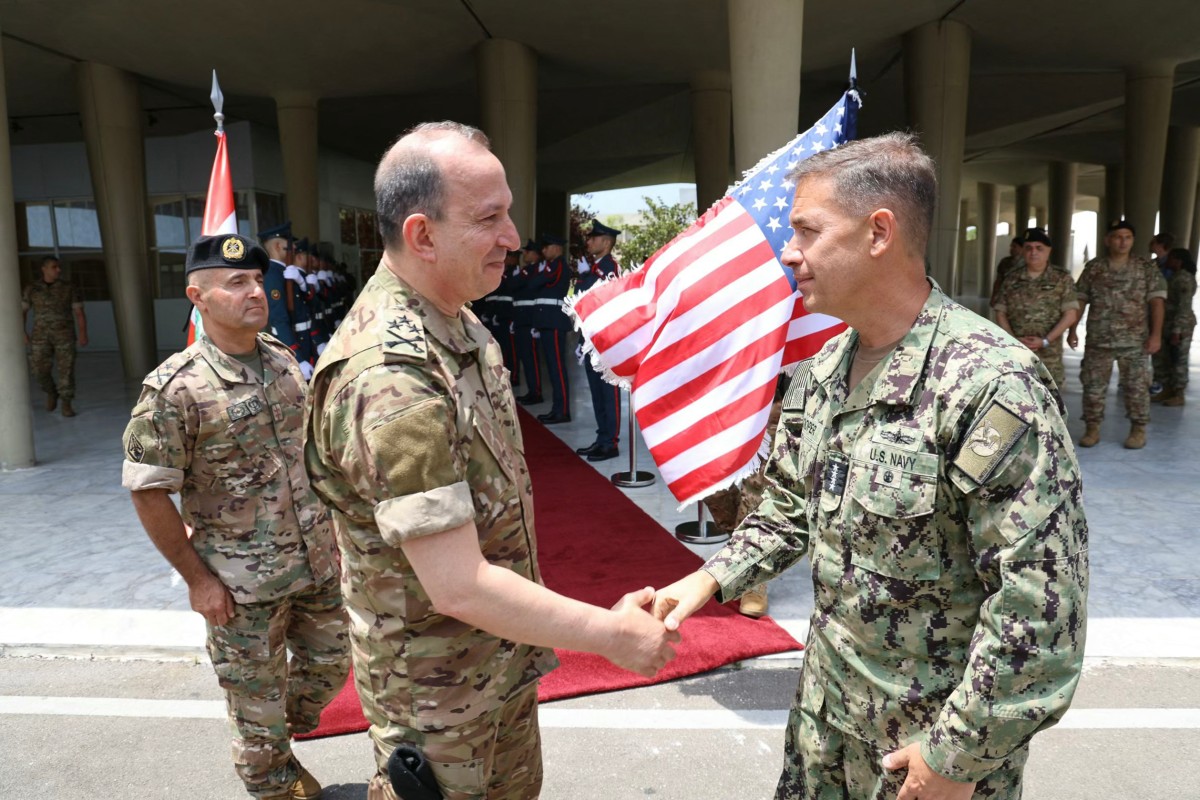
During Cooper’s visit and that of his accompanying delegation to Yarze, Lebanese Army Commander General Rodolph Haykal discussed with him developments in Lebanon and the region, as well as the importance of ensuring the success of the mechanism for implementing the security annex of the framework agreement, in addition to ways to enhance cooperation in the future. General Haykal expressed his gratitude for U.S. support, stressing the need to continue cooperation between the two armies in a way that preserves Lebanon’s security and stability.
The Israeli newspaper Haaretz, citing Israeli military sources, revealed that the Israeli army has identified three villages in southern Lebanon to begin withdrawing from: Froun, Al Ghandouriah, and Zawtar Al Sharqiyah. The sources explained that Israeli forces are not permanently deployed in Zawtar Al Sharqiyah, while they are stationed permanently in the towns of Froun and Al Ghandouriah, making withdrawal from them more dependent on upcoming field steps. Haaretz reported that the U.S. administration is considering establishing a mechanism to monitor the ceasefire in Lebanon, similar to the mechanism applied in the Gaza Strip, as part of efforts to ensure the implementation of understandings and monitor any potential violations.
Regarding the implementation of the framework agreement signed between Lebanon and Israel, Israeli Defense Minister Yisrael Katz affirmed that the Israeli army will continue its presence in southern Lebanon for a long period and will not withdraw before Hezbollah is disarmed. He said that Israel has no territorial ambitions in Lebanon but considers that securing its northern borders requires stripping Hezbollah of its weapons before any military withdrawal.
Katz also expressed skepticism about the Lebanese army’s ability to carry out this task, saying that “the Lebanese army will not suddenly turn into lions attacking Hezbollah.”
Positions on the framework agreement
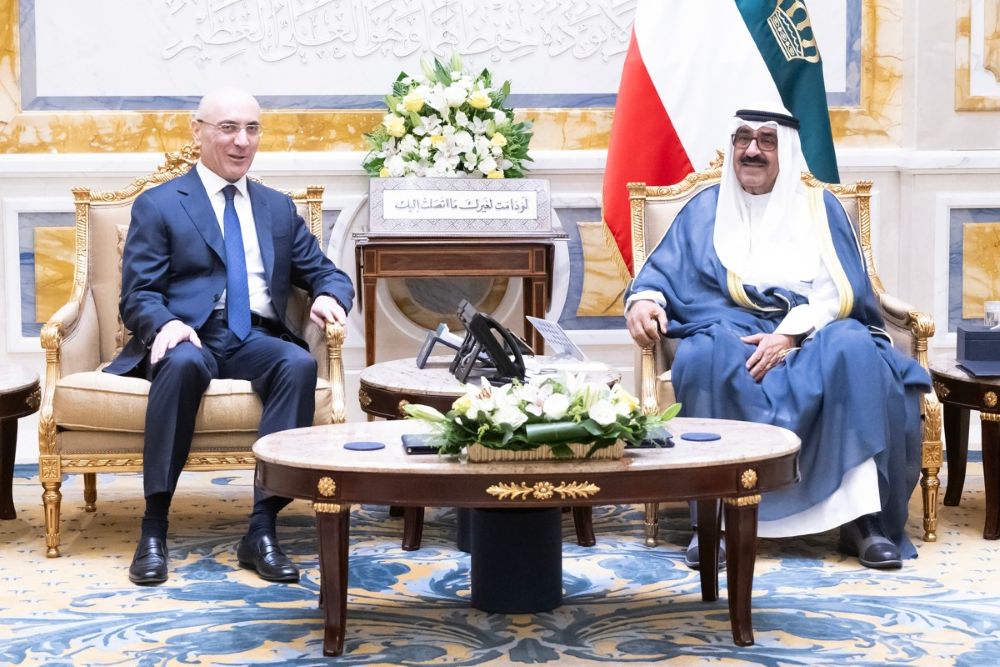
Meanwhile, within the broader scene related to reactions to the agreement, the Secretary General of the Gulf Cooperation Council, Jasem Mohammed Al Budaiwi, welcomed the content of the framework agreement and the Lebanese and American efforts aimed at restoring Lebanon’s sovereignty and ensuring Israel’s withdrawal from its territory. He affirmed the Gulf Cooperation Council’s support for the Republic of Lebanon in regaining its full rights and extending its sovereignty over all its territory, in a way that helps confine the decision of war and peace to legitimate state institutions, and enables the Lebanese people to live in security, stability, and prosperity.
As for Hezbollah, it continued its escalatory campaign against the agreement. The Deputy Head of the party’s Political Council, Mahmoud Qamati, described the agreement as “born dead and impossible to implement,” stressing that the party “will not allow its implementation.” Qamati said that the party does not see the agreement as worthy of taking to the streets, adding: “We will not carry out a large popular mobilization, and we do not want at all to create any internal problem in Lebanon.”
As for the former leader of the Progressive Socialist Party, Walid Jumblatt, he continued his criticism of the framework agreement and wrote on “X”: “As a reminder, the armistice agreement is a cornerstone in the relations between the Lebanese state and Israel, and it is an integral part of the Taif Agreement. It was mentioned in the presidential oath speech and reaffirmed in the ministerial statement. However, senior negotiators, along with a select group of advisors in Baabda and a number of specialists in the Serail, chose to ignore it, if not remove it altogether.”
On the field level, Israeli media reported that Hezbollah targeted a site inside which senior officers of the Israeli army were present in southern Lebanon. This came after a series of Israeli operations, most notably the detonation of a long tunnel in Majdel Zoun, where several houses in Majdel Zoun and Mansouri were damaged as a result of the massive explosions carried out by the Israeli army on Sunday evening.