

Inside Lebanon's 'pilot zones': The new phase of Israel's gradual withdrawal
How the controversial "experimental areas" emerged from Washington negotiations, why Hezbollah and Amal reject them, and what they could mean for southern Lebanon.



 Messenger
 Whatsapp
 Threads
 Email
Email
 Print
Print
 X
X
 Facebook
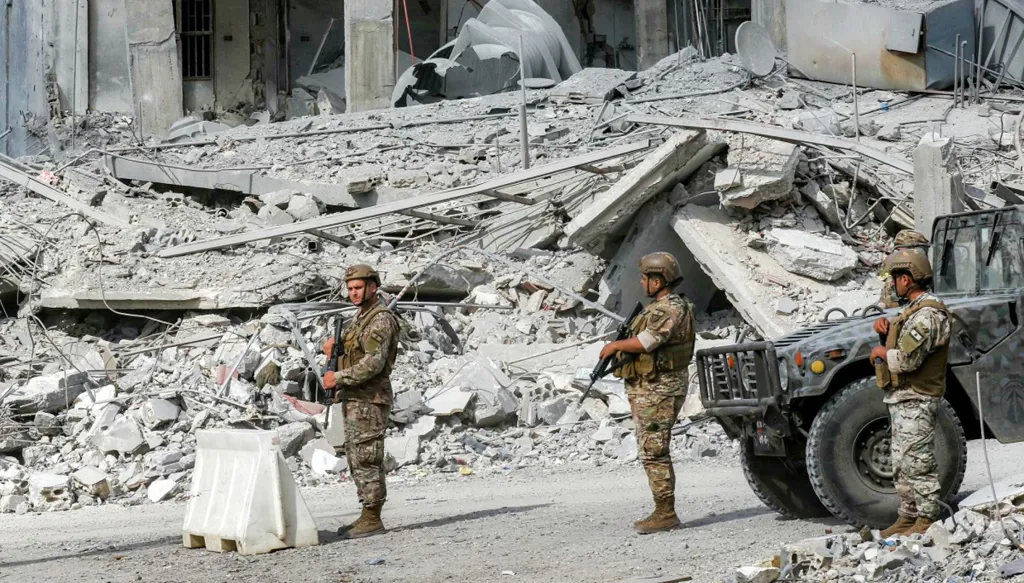


The issue of the experimental areas has been the subject of extensive internal debate in Lebanon, as well as during the direct negotiations held in Washington before the framework agreement was announced. Supporters of the agreement view these areas as a practical translation of Israel's gradual withdrawal from occupied Lebanese territory, while opponents—most notably the Amal Movement and Hezbollah—firmly reject the concept.
Phase One
The term "experimental" or "model areas" first emerged during the two rounds of direct negotiations in Washington between Lebanon and Israel, which aimed to launch a gradual Israeli withdrawal from occupied Lebanese territories.
According to the Lebanese negotiating delegation, the initial proposal designated the city of Bint Jbeil as the first experimental area because of its symbolic importance and its proximity to the border. However, the Israeli side, backed by Washington, rejected the proposal. A second proposal focused on the Nabatieh area, where, at the time, no towns in the district were under occupation except Beaufort Castle.
Nevertheless, the Israeli army moved beyond that proposal and launched a ground incursion toward Ali al-Taher Hill, which it failed to capture despite repeated attempts.
The situation remained unchanged until the ceasefire agreement reached in mid-June under the US-Iranian memorandum of understanding. The agreement resulted in the first near-complete ceasefire since March 2, despite continued Israeli violations.
The agreement signed during the latest round of negotiations in Washington ultimately included a clause establishing experimental areas as zones for a gradual Israeli withdrawal. After the identity of the first experimental area remained confidential, Annahar revealed that Zawtar would be the first location, followed by Israel's announcement that West Zawtar and Froun would serve as the initial experimental areas.
The surprise was that Froun, located adjacent to Ghandouriyeh in the Bint Jbeil area, is not under occupation, unlike parts of West Zawtar, where most of the town has already been liberated. The stated objective is for Israel to withdraw while the Lebanese Army enters these areas to dismantle Hezbollah's military infrastructure.
Based on the situation on the ground, the primary objective does not appear to have been achieved. Froun, for example, is not occupied, and its residents have already returned to their heavily damaged homes. Some have even taken refuge in a local school because of the extensive destruction caused by Israeli airstrikes during failed attempts to capture the town.
Moreover, Hezbollah, which opposes the Washington agreement, has made clear that it will not cooperate in the experimental areas, arguing that it is not bound by either the agreement or its consequences. While the group welcomes the deployment of the Lebanese Army south of the Litani River, it has stated that it will not carry out any field measures requested by Israel.
Residents of the liberated towns are also expected to reject searches of homes that were spared Israeli raids and are unlikely to cooperate with measures they believe serve Israeli interests.
This position is consistent with the firm opposition of Parliament Speaker Nabih Berri to both the agreement and the concept of experimental areas. Berri had previously declared that "experimental areas are not in my vocabulary," insisting that Lebanon's official position remains unchanged: complete Israeli withdrawal, the return of displaced residents, the release of prisoners, and only then the beginning of reconstruction.
The situation shifted, however, after the agreement was signed, even though the second phase of the experimental areas is expected to include Bayada. The timetable for that phase remains dependent on Israel's decisions.
General Hallal: Pilot Zones as a Negotiating Tool
Retired Brigadier General Bahaa Hallal describes experimental areas as a negotiating tool, noting that similar models exist in other contexts, although they differ from the Lebanese case.
In a conversation with Annahar, he explains that "the concept of experimental areas does not derive from their geographic location, but from the function they perform. The criterion that defines them is their experimental role, not the geographical nature of the location."
He argues that they are "more a negotiating tool than a settled legal concept. Their legitimacy and effectiveness depend on the clarity of their objectives, the transparency of the criteria used to select them, and respect for national sovereignty and the legal framework governing the negotiations."
Regarding the inclusion of areas that are not under occupation within the experimental framework, Halal says: "Including a village or area that is not under direct occupation as an experimental area raises an important geostrategic issue, particularly if it is neither a point of border dispute nor a major operational hub."
According to Halal, this opens the door to several possible interpretations, including testing security arrangements in a relatively stable environment, which could be considered a legitimate objective, or—as in the current Lebanese case—reflecting Israeli military and political considerations, or even indicating a broader negotiating strategy aimed at reshaping the security landscape under conditions of Israeli occupation.