

Inside Iran’s political divide over war, dialogue, and power
Hardline resistance to negotiations and growing reformist pressure reveal widening fractures in Iran’s leadership and its approach to the West.



 Messenger
 Whatsapp
 Threads
 Email
Email
 Print
Print
 X
X
 Facebook
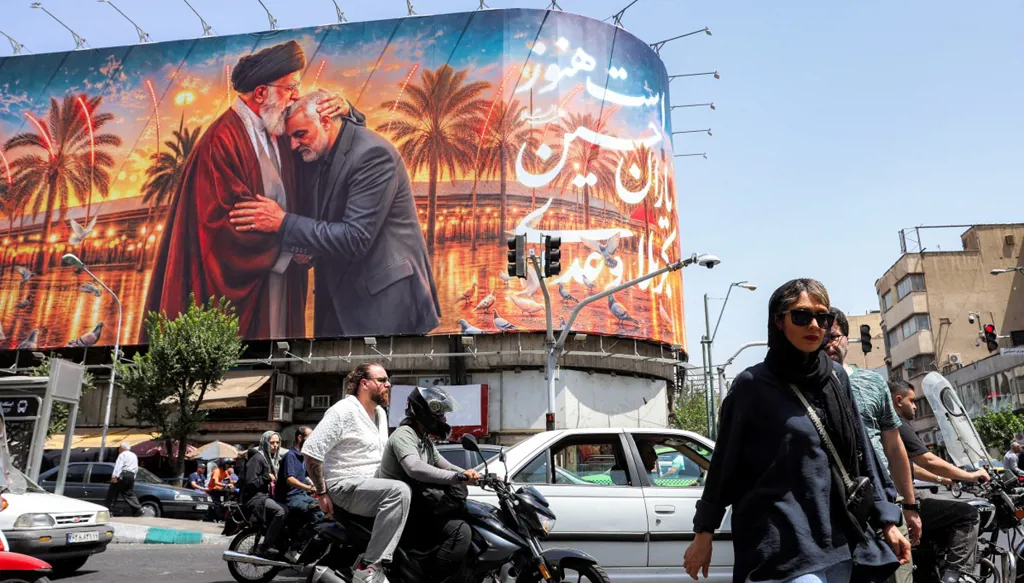


Although it is a policy of political maneuvering, the Iranian Supreme Leader, Mojtaba Khamenei, announcing his approval of the memorandum of understanding with the United States, based on the Iranian president's pledge to assume responsibility for protecting the rights of the people, indicates that Iran's religious establishment continues to preserve the duality of the "infallible" and the "guilty." As a result, the conservative camp cannot be blamed if the agreement with the United States fails, while the reformists, represented by Iranian President Masoud Pezeshkian, can be held responsible because they have consistently advocated dialogue with the West.
Therefore, even though the Supreme Leader and the president both hold political office, neither is immune from making mistakes. Yet, in a paradox that reflects the crisis of political thinking and the duality of power in Iran, praise is reserved for the former, while condemnation is directed at the latter.
Cursing Pezeshkian During Ashura Mourning Ceremonies
The Supreme Leader's statement was almost tantamount to giving the green light to vilify the Iranian president at a time when the streets are effectively dominated by hardliners during the Ashura commemorations. Mohammad Ali Bakhshi, one of the eulogists in the city of Rey, even threatened to assassinate President Masoud Pezeshkian and the Secretary of the Supreme National Security Council from the pulpit, declaring, "Mr. President, if the Supreme Leader's conditions are not met, we know what to do, and we will slaughter you and your father."
As a reformist, the president appears to be facing this intimidation alone, at a time when no one seems to respect the voices of the millions who elected him, as though democracy carries no weight compared with the authority of the Supreme Leader, who himself attained his position through established constitutional procedures. Defending himself, Pezeshkian said, "Go ahead and curse me. The more they curse me, the more God will absolve my sins."
This presents a picture far removed from the idealized image of authority in Iran often held in the Arab world. While the Ashura commemorations are meant to honor the struggle of justice against oppression, the scene in Iran instead reflects the triumph of one faction over another in the name of political authoritarianism. Nor is this an isolated incident. At another Hussein mourning gathering, a eulogist named Seyed Reza Narimani delivered remarks that appeared to strip the elected president, as the representative of the people's will, of any real significance, as though he were negotiating with the Americans independently of the Iranian nation. He said, "His Eminence the Supreme Leader has stated that he opposes negotiations and any agreement. He also made it clear in his statement that this is a matter between the President of the Islamic Republic of Iran and the President of the United States, and that the rest of us are merely observers."
Neither War nor Dialogue
It is clear that the conservative camp in Iran welcomes neither the prospect of war, despite its repeated claims of being fully prepared for it, nor dialogue with the West. This stems from concerns about preserving its political base and the rhetoric from which it derives political benefit, as well as its ability to capitalize on sanctions and the suffering of the Iranian people, much as arms dealers profit from the outbreak of wars. There also appears to be concern that the reformists' vision could succeed, giving them greater influence in Iran's political life in the coming period.
This was reflected in a report by the Khabar Online news agency, which stated that opinion polls show that 70 percent of the public wants the war to end in a way that preserves the country's dignity, while more than 80 percent want reconstruction and economic development rather than the continuation of a state of war or remaining in a situation that is neither war nor peace.
The agency also reported that hardliners have been particularly active in recent days, doing everything possible to obstruct the course of negotiations between Iran and the United States. It noted that hardline member of parliament Mahmoud Nabavian appeared on state television at a time when the country is in greater need than ever of preserving national unity and cohesion, where he disclosed what he claimed were confidential communications attributed to Supreme Leader Mojtaba Khamenei concerning the Iranian American negotiations. The apparent aim was to create the impression that the country's highest leadership, embodied by the Supreme Leader, rejects the option of dialogue, as though the Supreme National Security Council, headed by Pezeshkian, were nothing more than a mere puppet show.
Disclaimer: The opinions expressed by the writers are their own and do not necessarily represent the views of Annahar