

Security annex and US-led talks at center of Lebanon Israel framework debate
Disputes grow over a secret annex shaping security arrangements, pilot zones, and withdrawal plans under US supervision.



 Messenger
 Whatsapp
 Threads
 Email
Email
 Print
Print
 X
X
 Facebook
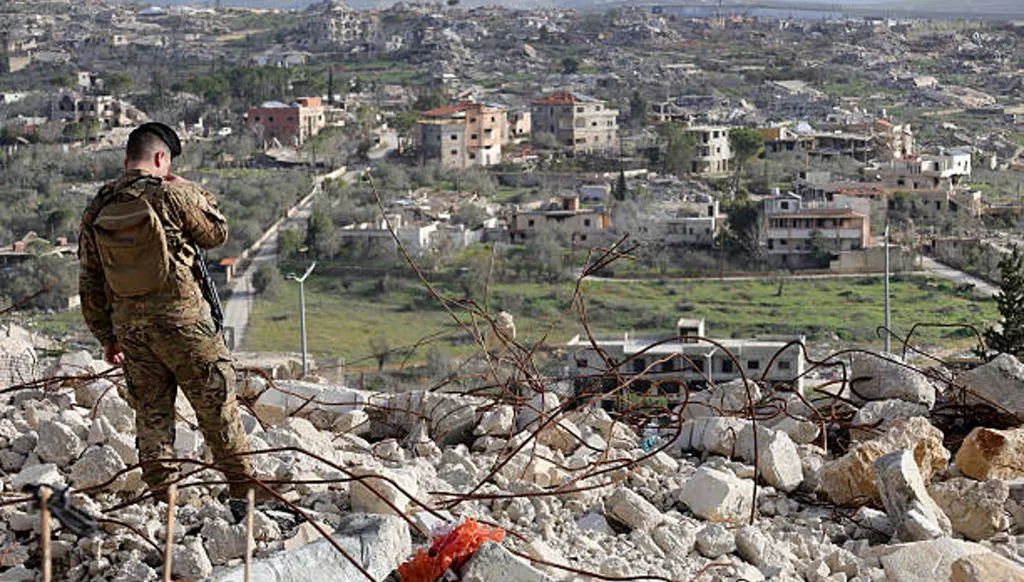


Apart from what Israeli media leaked and what media aligned with the “resistance axis” circulated, there has been no official statement about a secret security annex to the framework agreement signed between Lebanon and Israel in Washington last week.
Instead, there has been total official silence on the matter, which gave credibility to the Israeli narrative promoting the agreement and its annex as an Israeli victory. It also provided a pretext for Hezbollah and its axis to attack the agreement and describe it as a surrender to Israeli terms.
Regarding this narrative, senior sources told Annahar that the security annex does exist. The reasons for not publishing it alongside the agreement are linked to the US State Department’s desire to keep it classified, with the consent of both parties to the agreement, namely Lebanon and Israel. This does not necessarily mean that the secrecy surrounding it reflects terms of surrender.
The same senior sources view Israel’s failure to respect the Washington understanding not to publish the annex as part of the pressure tactics practiced by Tel Aviv against Lebanon, in an attempt to destabilize the internal situation and deepen domestic divisions.
The sources reveal that the reason behind this secrecy is that the annex concerns the security arrangements that are supposed to be implemented to accompany the execution of the framework agreement, specifically the clause related to the two pilot areas that were agreed upon to begin with, leading to the establishment of a timetable for the Israeli withdrawal from the occupied Lebanese territories.
Hence, the Israeli leak claiming that there is no timetable was accompanied by Israeli Prime Minister Benjamin Netanyahu announcing the names of the two pilot areas incorrectly, despite the fact that there is no Israeli presence or occupation in them, which later forced him to deny it.
The sources do not rule out that the security meeting to be held with the participation of the commander of the US Central Command, General Brad Cooper, who arrived in Lebanon after his visit to Tel Aviv at the end of last week, could become a pivotal milestone in agreeing on the security arrangements and the accompanying implementation mechanisms that both the Lebanese and Israeli sides are committed to under the direct executive supervision of Washington. Therefore, the sources say it is too early to judge the security annex before its provisions are fully developed.
This may also explain the position of Parliament Speaker Nabih Berri regarding the Lebanese Army commander Rodolph Haykal, given the central role the army is expected to play in deploying in the areas covered by the Israeli withdrawal.
The success of the pilot areas would accelerate the withdrawal process and remove Israel’s pretext, especially since Israel committed in the framework agreement that it has no ambitions in Lebanon.
However, the challenge facing the Lebanese authorities remains their ability to implement their part of the agreement related to disarmament, which is the core provision in the implementation mechanisms of the security annex.