

Can philosophy still change the world? Edgar Morin and the crisis of modern thought
From ancient Greece to the Arab Renaissance, a reflection on whether philosophy can still answer humanity's biggest questions in an age dominated by science, ideology, and technological change.



 Messenger
 Whatsapp
 Threads
 Email
Email
 Print
Print
 X
X
 Facebook
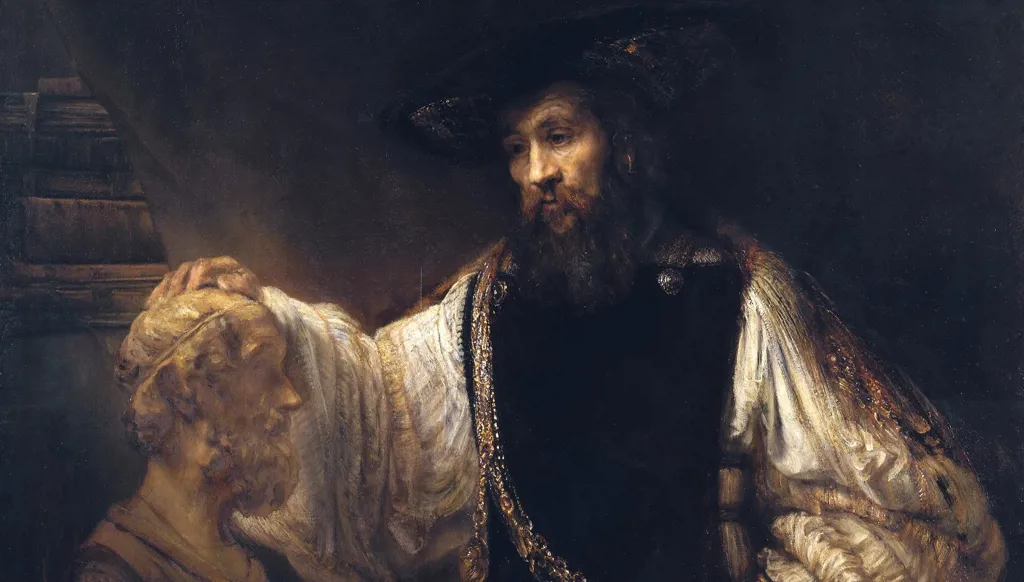


The French philosopher Edgar Morin, who passed away this year at the age of 104, published My Philosophers in 2012, reflecting on the thinkers who shaped his intellectual journey.
In an interview with the French newspaper Le Point, Morin remarked, "How can we surpass Spinoza, Pascal, and Hegel today, whom I find very relevant? Philosophy has a promising future if it does not remain confined within itself as a closed system but instead opens its reflections to the world.
Over the last few centuries, science and philosophy have ignored one another, whereas today we find that every scientific proposition leads to philosophical questions. We are living amidst puzzles, and we need philosophers more than ever."
With these words, Morin outlined his vision for the future of philosophical thought and the role it can still play in the contemporary world. There is little doubt that philosophy faces a profound dilemma in the wake of the revolutionary advances in science and technology since the mid-20th century, as well as the sweeping political, economic, social, and cultural transformations that have reshaped our world.
Throughout its long history, philosophy has sought truth and constructed rational understandings of existence and humanity. Today, however, that role is challenged on one side by religion and ideology, and on the other by the growing dominance of science and its discoveries.
In fact, philosophy achieved remarkable successes during the first half of the 20th century. Marxism evolved into a guiding force for political and social movements that transformed the world for a time, while existentialist and rationalist philosophies profoundly influenced an entire generation. Gradually, however, philosophical thought began to retreat in the face of fundamentalism, ideology, and the sciences, all of which increasingly presented themselves as alternatives to philosophy in explaining the universe and the human condition.
This renewed an old question: What is philosophy? Does it still have a meaningful role in an era of radical transformations in ideas, principles, and values? Is its purpose merely to create and formulate concepts? Is it the bearer of absolute truths and timeless principles detached from historical humanity and its struggles?
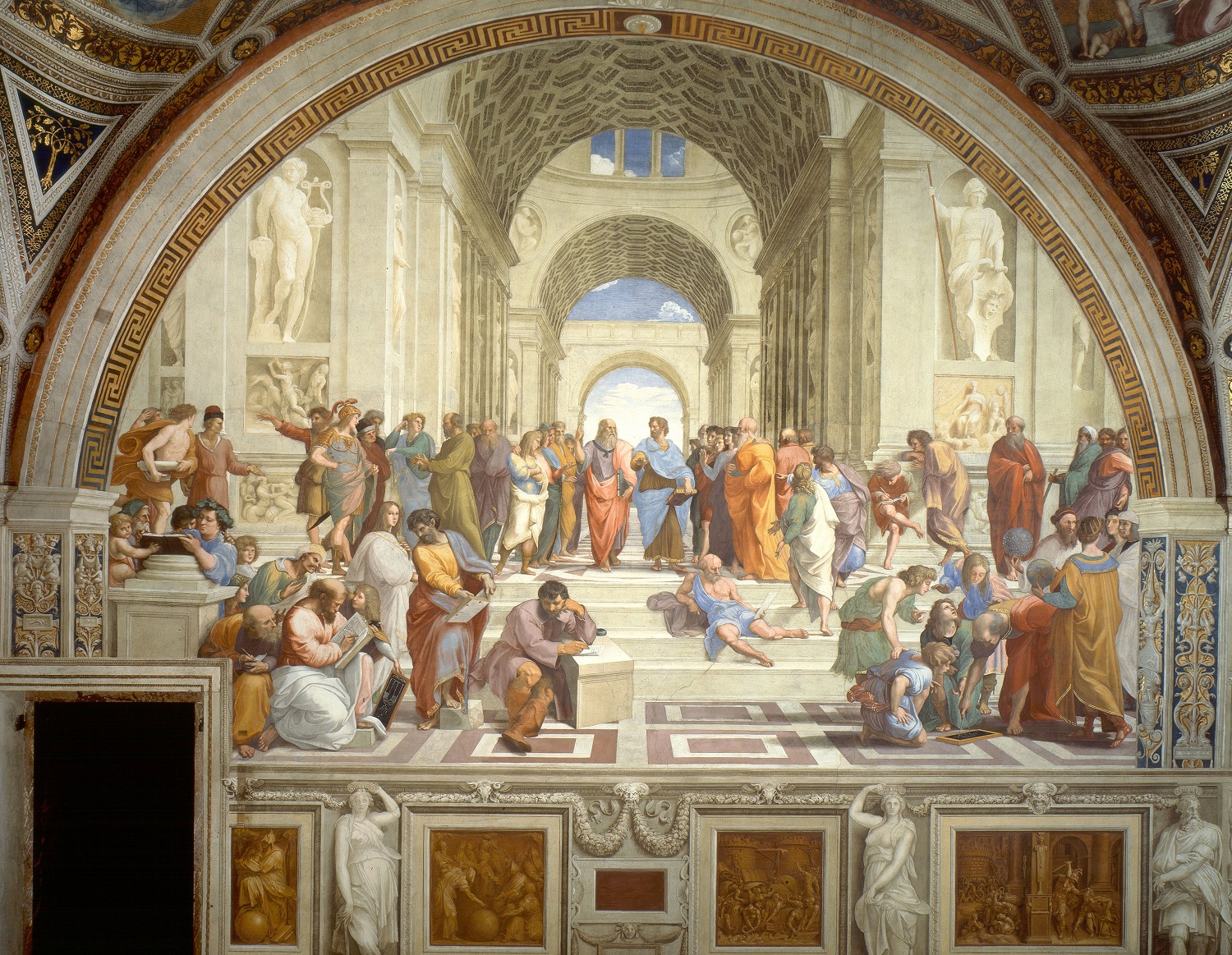
These questions remain pressing today, especially as some continue to defend a philosophy detached from the changing realities of existence and untouched by historical transformation.
Yet history itself demonstrates that philosophy has never truly been detached or neutral. It has always been deeply connected to historical reality and the questions and dilemmas arising from it. A closer look at the history of philosophy reveals its fundamentally historical character and its enduring commitment, from its own unique perspective, to addressing human concerns and responding to the challenges facing humanity at every stage of its development.
Greek philosophy, represented by Socrates, Plato, Aristotle, and others, sought—within the limits of the knowledge available at the time—to formulate the earliest conceptions of truth and distinguish what was essential and permanent from what was transient and changing.
The political writings of Plato and Aristotle drew directly upon the history of the Greek city-states, their political systems, and the social classes competing for power. Even Plato's Republic, despite its utopian vision, addresses themes such as justice, freedom, and the conflict between the rich and the poor, alongside the historical events of his own era.
Modern philosophy likewise emerged from the concerns of its time. Descartes defined the primacy of human reason in opposition to dogmatic theological thinking. Rousseau and Montesquieu advanced the concept of the social contract as an alternative to absolute despotism. Marx and Engels emphasized class justice and social equality in response to the excesses of capitalism. Beginning in the 1990s, Fukuyama and Huntington defended liberalism as the "end of history" and the final destination of social development.
Philosophical Thought and the Arab Renaissance
Philosophical thought was equally present among Arab renaissance thinkers, who grappled with questions of nationality, nationalism, freedom, society, and the state, offering philosophical—or philosophically inspired—responses. This is evident in the contributions of Francis Marrash, Boutros al-Bustani, Farah Antoun, and Shibli Shumayyal to political and social thought, as well as the nationalist ideas developed by Adib Ishaq, Najeeb Al-Azuri, and Ameen Rihani.
At no point in history has philosophy dealt with an abstract human being, an abstract reason, or an abstract society. Even while aspiring toward universal principles, it has always begun with concrete human beings, their struggles, and their particular concerns.
The role of philosophy cannot be reduced to producing concepts. Scientific progress already fulfills that function. Nor can philosophy become a servant of religious doctrine, for that would limit its critical role and bind it to judgments that lie beyond reason. Neither should it become a servant of ideology, since doing so would strip it of its universal character.
Instead, philosophy must engage with the evolving realities of life and seek philosophical responses to the questions arising from human development. This requires philosophy to remain historically engaged, timely, and active.
From this perspective, Arab philosophical thought faces major challenges that differ from those occupying much of contemporary Arab intellectual discourse. It must confront the current regression that reaches even behind the rational achievements of the Arab renaissance, alongside the growing rejection of reason as the primary reference for political and social life.
This regression has coincided with the rise of irrationality, superstition, and the increasing reliance on the past to address contemporary political and social issues. Why did rationalist movements fail to advance in modern Arab thought as they did during Western modernity? Why did they not become deeply rooted in Arab thinking and everyday life? Why did Arab intellectual creativity decline after eight centuries following the flourishing of Averroist rationality? What explains the confrontation between religious and modern rationality at this particular moment in history? Are ISIS and similar movements not the tragic outcome of the failure of Arab rationality?
Philosophical thought must also confront the crisis of identity that threatens to return the Arab world to pre-national and pre-state forms of society, where tribal, sectarian, and ethnic loyalties increasingly overshadow broader national and civic identities.
It is equally tasked with challenging the historical taboos and inherited complexes that obstruct serious inquiry into the causes of the Arab renaissance's failure, the decline of Arab creativity, and the persistence of prolonged backwardness.
Furthermore, philosophy must examine the enduring legacy of political tyranny and the continued failure to separate religion from politics, despite more than a century and a half having passed since the secular ideas advanced by Boutros al-Bustani, Francis Marrash, and Farah Antoun. Why has secularism remained confined largely to intellectual elites?
Finally, philosophical thought must address the failure to achieve class justice and the widening social inequalities that persist nearly a century after the spread of socialist ideas throughout the Arab world.
If Arab philosophical thought succeeds in answering—or even meaningfully approaching—these questions, it will have taken the first genuine step toward integrating with the contemporary world and participating in the transformative changes that lie ahead.