Imam Hussein in Iran: More than just a political symbol

Opinion 29-06-2026 | 11:47

Imam Hussein in Iran: More than just a political symbol

What happens when a deeply spiritual symbol becomes entangled with political authority, so much so that admiration for Imam Hussein is used both to legitimize power and to challenge it from within?


Imam Hussein in Iran: More than just a political symbol
Who Has the Authority to Speak for Imam Hussein?
Smaller Bigger


Imam Hussein does not belong exclusively to anyone. If his mourning is turned into a gateway for Iranian domination, then Imam Ali’s saying applies: a word of truth intended for falsehood.


With the arrival of the anniversary of Ashura, governments expressed concern about any rituals or gatherings that could provoke controversy or threaten public peace.


Since Iran launched the concept of exporting the revolution, it has sought to penetrate Muslim societies in the name of Hussein and his suffering, to the point that associations emerged around the world dedicated to defending members of the Shiite community as a prelude to framing their presence in the form of a political party or sect, in order to employ them in service of the doctrine of the guardian jurist in Iran.


The idealization of the Iranian model


The fascination with the Iranian model began with the outbreak of its revolution and its Islamization after its victory in 1979, along with the resulting eruption of waves of anger and takfiri currents in the Arab world under the slogan of confronting peace with Israel.


This continues to this day, especially after the military confrontation that Iran engaged in with the United States and Israel and the promotion of the image of divine victory. Those fascinated by this model treat Iran as a state supported by heaven and view its leaders in a mythical way, as if they were end of times figures. At other times, the matter is linked to the revolutionary spirit itself, similar to the fascination that surrounded communist revolutionaries such as Che Guevara, as a symbol of rebellion and struggle against injustice and the absence of justice.


We have seen this fascination before with the announcement by the organization ISIS of the establishment of the caliphate state, and young men whose minds were consumed by religious narratives as interpreted for them by their clerics went out to pledge allegiance to the Caliph Abu Bakr al Baghdadi and were then mobilized to travel to fight in Syria and Iraq.


However, the entire scene was being driven by intelligence agencies within the framework of the proxy war strategy adopted by the administration of the US president at the time, Barack Obama.


Imam Hussein inside Iran: a paradox?


There is no dispute that our youth are drawn to the idea of models and inspiring icons. In sociology, there is a concept known as the “imaginary,” which makes our actions possible and understandable and forms part of our ideal beliefs.


But inside Iran itself, which has become an inspiration for some of our youth, is there really no disagreement about the message of Imam Hussein? Of course there is. The authority that appears ideal to us is, in the view of many of its own people, an authoritarian regime.


In Iran, we find those who blend Imam Hussein with political authority. Hujjat al Islam Farqani says: “Whoever loves Imam Hussein cannot but love the martyr leader of the nation, Ayatollah Ali Khamenei.” The cleric and member of parliament Mirzaei says: “There are many similarities between the revolution of Imam Hussein and the Iranian revolution.” So does this mean that whoever opposes Khamenei or revolts against the system of guardianship of the jurist becomes someone who hates Imam Hussein?


But there is another interpretation of Imam Hussein as well. The reformist thinker Ayatollah Soroush Mohallati, referring to the idea that the authority of guardianship of the jurist is not divinely infallible as some clerics claim, says: “One should not prefer corrupt authority over justice, as the Yazidis did.”


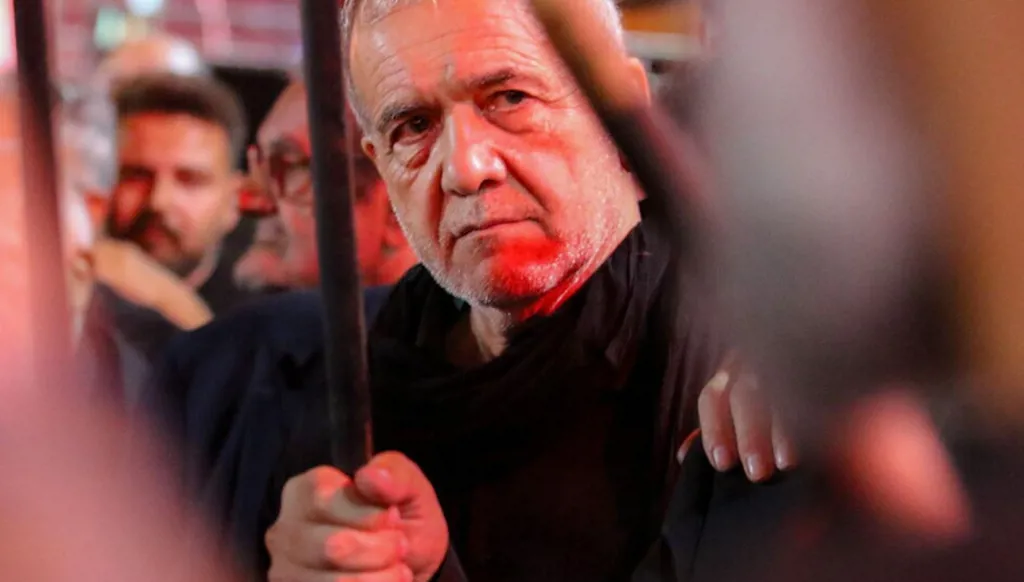
Iranian President Masoud Pezeshkian, in the name of the Imam Hussein revolution, sought to confront his opponents who profit from sanctions and exploit the discourse of victimhood, saying: “We cannot shed tears for Imam Hussein while we witness repression, injustice, poverty, and hunger in society and remain indifferent to these issues.”


It is as if Pezeshkian is accusing some officials of turning Ashura into a political sedative in the name of Imam Hussein’s victimhood, in a way that recalls what the Safavid state did when it elevated Hussaini slogans over the values of justice.


This contradictory image reveals that the idealization of authority in Iran is nothing more than an imagined construct in the minds of our youth, who sought to rebel against their circumstances and search for an inspiring model beyond the limits of their own reality.


Disclaimer: The opinions expressed by the writers are their own and do not necessarily represent the views of Annahar.