

Hormuz and Hezbollah: Why the Iran-Israel conflict is far from over, despite ceasefire
As Washington reassures Gulf allies and Tehran tightens its grip on the Strait of Hormuz, disputes over maritime control and Hezbollah's future reveal a fragile truce that could unravel at any moment.



 Messenger
 Whatsapp
 Threads
 Email
Email
 Print
Print
 X
X
 Facebook
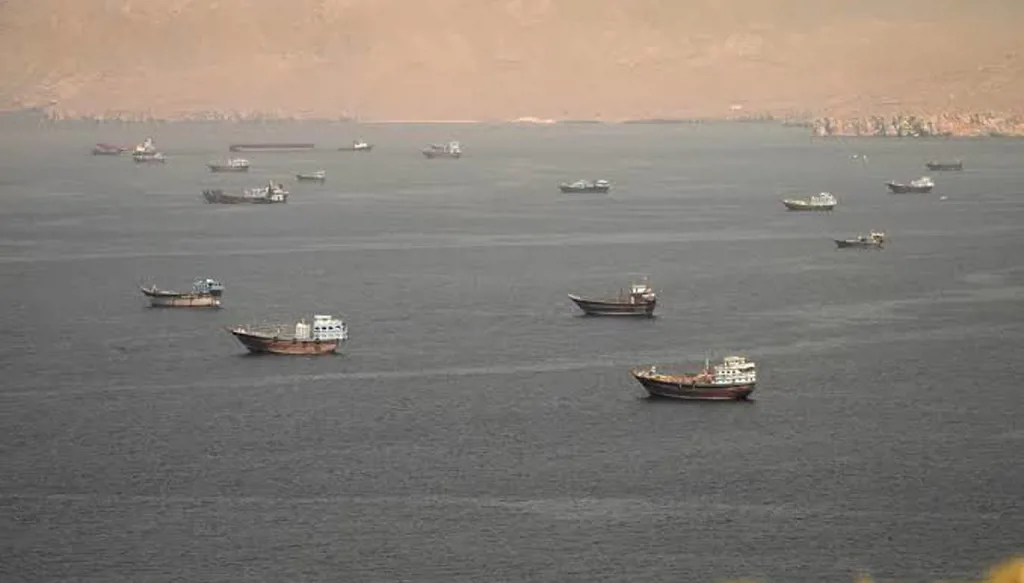


The hours spent by the U.S. Secretary of State with the foreign ministers of the Gulf Cooperation Council countries in Bahrain have only deepened the ambiguity surrounding the American-Iranian "memorandum of understanding," particularly regarding the Strait of Hormuz and Lebanon.
Every provision of the memorandum requires further explanation, with each party presenting its own interpretation, making additional negotiations necessary to separate the facts from the sea of competing narratives. The Gulf states welcomed the "memorandum" as a document that ended the war, but they continue to hold numerous reservations.
Their concerns begin with its failure to address Iran's missile program and the "proxies" supplied by the "Revolutionary Guards" with missiles and drones, and extend to unresolved issues surrounding the nuclear program. Freedom of navigation through the Strait of Hormuz dominated Marco Rubio's discussions with his Gulf counterparts after Iran repeatedly signaled its intention to maintain control over the strait, use it as a political tool, and impose transit fees.
The Bahrain Meeting
What happened during the Bahrain meeting? Rubio's primary objective was to reassure the Gulf countries and ease their concerns over the U.S. understandings with Iran. He reaffirmed Washington's commitment to "ensuring the security and stability of the region" and suggested that the United States would seek, through future negotiations following or alongside a "new nuclear agreement," to address issues left unresolved by the "memorandum."
Regarding the Strait of Hormuz, Rubio reiterated the longstanding U.S. position that imposing transit fees is "unacceptable." However, he stopped short of offering guarantees, despite warning that such a precedent could become an "infection" spreading to international waterways worldwide.
During the meeting, the Omani foreign minister informed participants that Oman is engaged in dialogue with Iran regarding the strait. He stressed that his country does not support imposing transit fees but has established a temporary safe route to facilitate the passage of ships. Iran responded almost immediately. The "Revolutionary Guards" issued a statement emphasizing that the only legitimate transit routes are those determined by Tehran, warning that "necessary measures" would be taken against ships that fail to comply.
Meanwhile, the Iranian foreign minister described his conversation with his Omani counterpart as "fruitful" and reaffirmed that the two countries remain in discussions over the future management and services of the strait. Shortly afterward, a British maritime security agency reported that a ship had been struck in the Strait of Hormuz by an "unknown projectile."
Tehran's response was therefore delivered directly while the U.S. secretary was still in the region, deliberately reinforcing the Gulf states' concerns about Iran's conduct in the next phase despite ongoing efforts to launch a Gulf-Iranian dialogue and promote "reconciliation" between the two sides.
Iranian Attack and U.S. Bombing
Following repeated attacks on commercial vessels, U.S. forces bombed missile and drone warehouses, along with radar sites, on Iran's southern coast. Tehran retaliated by targeting what it described as U.S. military presence points in the region but, in practice, directed drone attacks toward Bahrain.
These military confrontations are likely to continue and could escalate further as Iran's struggle to assert control over the Strait of Hormuz becomes increasingly evident. During the Islamabad negotiations, Tehran achieved its objective of ending the war and securing the lifting of the U.S. blockade. At the beginning of the Lucerne (Switzerland) negotiations, it also obtained the easing of sanctions on its oil exports and the launch of measures to release its frozen assets.
At the same time, Iran is relying on Article Five of the "memorandum of understanding" to continue what has become the "Hormuz battle." The article states that arrangements governing transit and navigation through the strait should be based on talks between the Sultanate of Oman and Iran, while remaining subject to "applicable international law and the sovereign rights of the coastal states of the strait."
Tehran, however, appears to favor bypassing legal considerations in order to establish a new reality on the ground. Tehran scored an important point in its favor on Thursday. Washington, in turn, responded on Friday through direct negotiations between Lebanon and Israel. While Iran believes its position has strengthened in its bid to control Hormuz—supported by the growing number of ships requesting transit permits and the absence of meaningful pressure during current negotiations—it also views the "framework agreement" between Lebanon and Israel as a setback for its regional strategy and a complication for the operational environment in which its "party" in Lebanon functions.
More importantly, the agreement further widens the gap between Iran and the Lebanese state. Tehran may calculate that the agreement will eventually collapse because it is fundamentally unbalanced, and it may even rely on Israel's unwillingness to make concessions to undermine it. Nevertheless, the agreement could also push Iran toward supporting internal violent options threatened by its "party" in response to the deal.
Ongoing War
There is little doubt that these emerging complexities were anticipated, yet they are delaying negotiations toward the final nuclear agreement and naturally slowing Iran's ability to secure the benefits it obtained in Islamabad.
Although both Washington and Tehran continue to accuse each other of violating the ceasefire, they—along with regional states—remain determined to avoid a return to full-scale war. At most, they appear prepared to accept what has become a war between wars.
Between the battle for control of the Strait of Hormuz and the battle over Hezbollah's disarmament, the conflict remains ongoing—a reality that ultimately serves the interests of both Iran and Israel.
Disclaimer: The opinions expressed by the writers are their own and do not necessarily represent the views of Annahar.