

US-Iran conflict escalates with fresh strikes as ceasefire faces collapse
Tehran and Washington trade attacks, shipping in the Strait of Hormuz remains under pressure, and Lebanon's new security deal sparks fresh tensions.



 Messenger
 Whatsapp
 Threads
 Email
Email
 Print
Print
 X
X
 Facebook
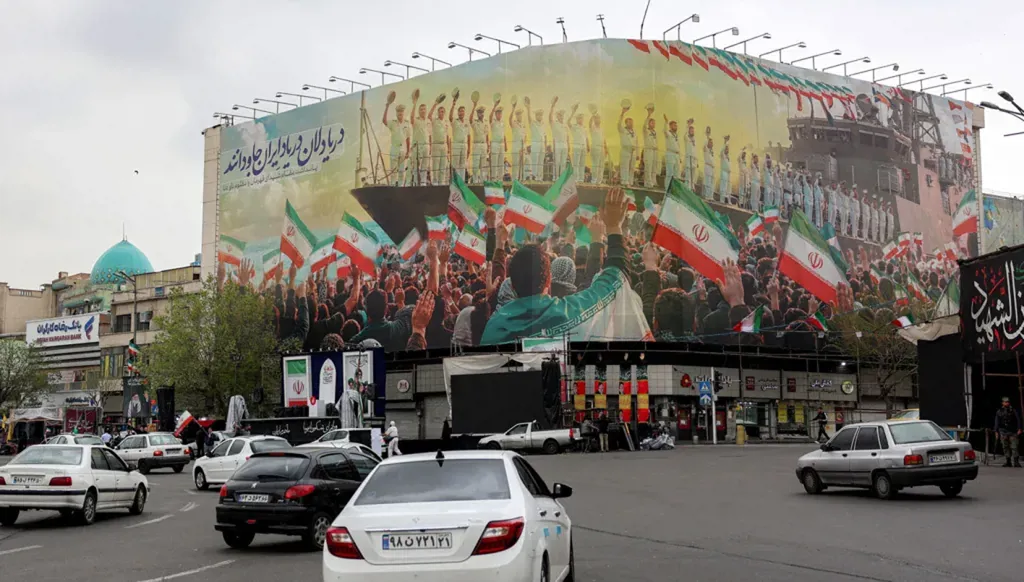


The tension between the United States and Iran resurfaced after both sides exchanged military strikes on Saturday, in an escalation that threatens to shatter the fragile ceasefire and raises fears of a broader regional confrontation.
Strikes, Responses, and Mutual Accusations
The United States launched airstrikes targeting Iranian military sites, saying they were a response to Tehran's attacks on shipping in the Strait of Hormuz. In retaliation, Iran announced strikes targeting American sites in Kuwait and Bahrain.
On Sunday, the Iranian Revolutionary Guard said it had launched attacks against Kuwait and Bahrain in response to the US strikes on Iranian territory, warning that any further American aggression would be met with a "devastating response."
In a statement, the Revolutionary Guard said it had targeted "eight important military sites and infrastructure of the US Army at Ali Al Salem Air Base in Kuwait and the Fifth Naval Fleet in Salman Port in Bahrain," claiming they had been destroyed.
The statement added that "any new aggression under any pretext, even if directed at insignificant targets, will be met with a devastating response."
Trump Warns: Iran Will 'Cease to Exist'
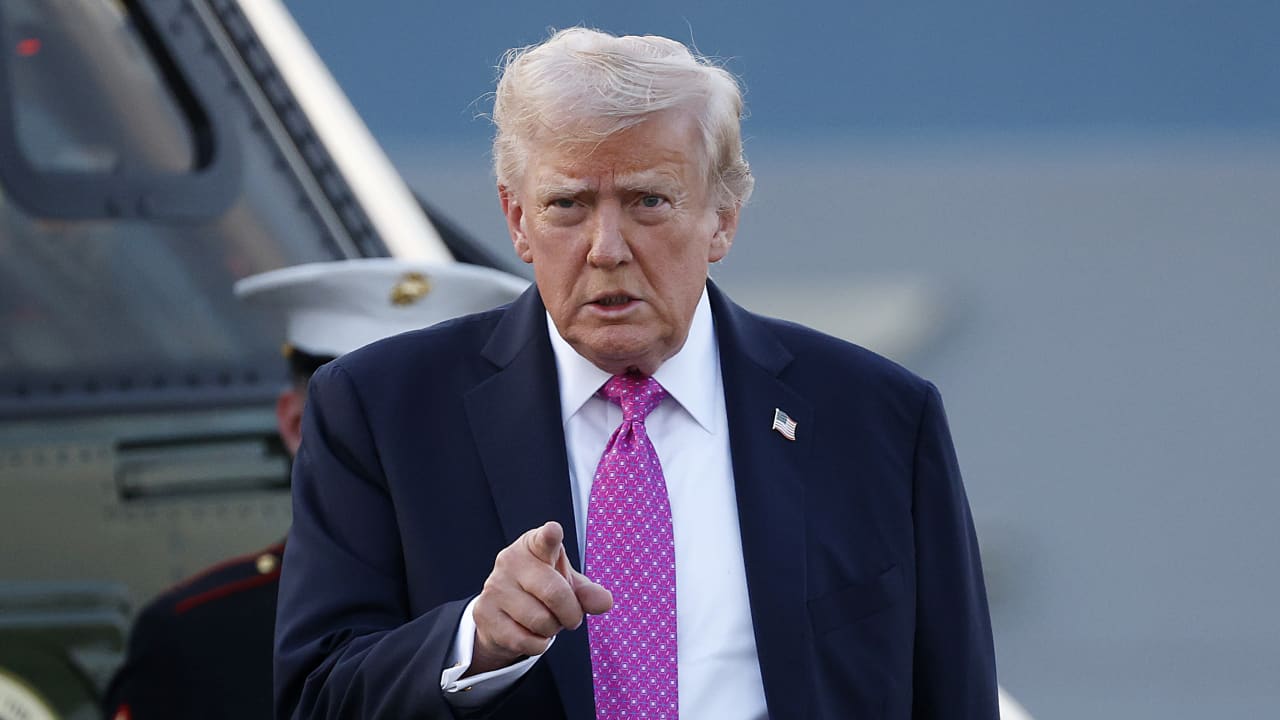
For his part, US President Donald Trump hinted at the possibility of renewed military action, warning that Iran would "cease to exist" if it continued violating the ceasefire.
Writing on the Truth Social platform, Trump said: "America's turning again to the military option means that Iran will cease to exist, and its actions may push Washington to abandon rational behavior."
He added: "US aircraft launched airstrikes on Iranian missile and drone storage sites, and coastal radar sites, violating the ceasefire agreement once again! They are very likely never to learn."
Trump further warned that Iran "will not remain existent" if the United States chooses to escalate, adding: "There may come a time when we fail to act rationally, and we are forced to complete the mission we began successfully militarily. If that happens, Iran will not remain afloat."
Undermining Peace Efforts
Dr. H.A. Hellyer of the Royal United Services Institute in London believes that "Iran is likely to continue its coercive activities in a calculated, low-level manner around the Strait of Hormuz to create constant pressure on international shipping without provoking a wider conflict."
Since the war in the Middle East broke out, Iran imposed a ban on navigation through the Strait of Hormuz, a vital route for global energy supplies, triggering a worldwide economic shock.
Navigation gradually resumed after Washington and Tehran signed a memorandum of understanding last week, launching Pakistan- and Qatar-mediated negotiations aimed at reaching a final agreement within a 60-day period, with the option of an extension.
However, on Thursday, the Revolutionary Guard warned that passage through the waterway would require permission from Iran and adherence to the route it designated, vowing to take "appropriate measures" against ships that fail to comply.
Despite the latest escalation, shipping through the strait continued. According to Kepler shipping data, 29 commercial vessels passed through the waterway on Friday, including 17 that sailed along the coast of Oman. This followed 42 ships on Thursday, down from a peak of 57 on Wednesday.
Oil prices also declined sharply amid hopes that navigation through the strait would continue to recover.
The International Maritime Organization (IMO) announced that the evacuation of ships stranded in the strait since the beginning of the war would resume once "additional assurances" regarding security guarantees are provided.
According to IMO Secretary-General Arsenio Dominguez, 155 ships carrying around 2,500 mariners have been evacuated from the Gulf through the Strait of Hormuz since the operation began on Tuesday.
The evacuation of approximately 600 ships carrying 11,000 mariners was suspended after an attack on one of the vessels.
Meanwhile, inflation in Iran surged to a record high in June as a result of the war, reaching 88.6% year-on-year, according to the country's official Statistics Center.
Lebanese-Israeli Framework Agreement
A day after Israel and Lebanon signed a framework agreement paving the way for a ceasefire on the Lebanese front, Hezbollah Secretary-General Naim Qassem denounced the deal as a "horrific blunder" and a "relinquishment of sovereignty," declaring that Hezbollah would regard it as "nonexistent."
The framework agreement followed five rounds of negotiations between the two countries. It specifically provides for Hezbollah's disarmament in exchange for the gradual withdrawal of Israeli forces from the territories they occupy in southern Lebanon, alongside the deployment of the Lebanese Army beginning in two "experimental" areas.
On Saturday, the Israeli military announced it had carried out an airstrike targeting individuals suspected of being armed in the Nabatieh area of southern Lebanon.
Shortly afterward, Israeli Defense Minister Yisrael Katz said the army had been instructed to prepare for a "prolonged stay" in the areas it currently occupies in southern Lebanon.
He added that "the significant principle established in the agreement is that there will be no Israeli redeployment in southern Lebanon, no withdrawal, as long as Hezbollah is not disarmed throughout Lebanon."
Meanwhile, Israeli Prime Minister Benjamin Netanyahu described the agreement with Lebanon as a "historic" achievement that dealt a blow to Iran and Hezbollah.
He said, "The United States and Lebanon acknowledged Israel's right to maintain a security zone inside Lebanon as long as necessary to protect our security."