

Children of the street: Inside Syria’s hidden economy of begging and survival
Behind traffic lights and mosque entrances, children selling tissues and flowers reveal a deeper crisis of poverty, exploitation, and a generation growing up outside school, protection, and stability.



 Messenger
 Whatsapp
 Threads
 Email
Email
 Print
Print
 X
X
 Facebook
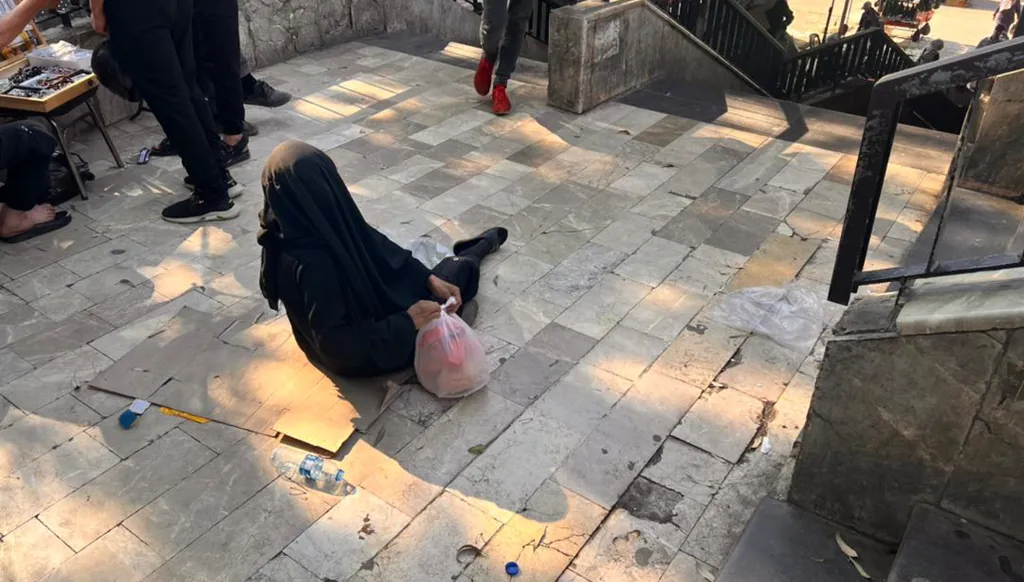


Damascus - Marwa Al-Barghash
At a busy traffic light in the heart of Damascus, a young boy approaches cars carrying a box of tissues, knocking quickly on windows. He sometimes smiles and at other times pleads. He does not extend his hand asking for money as we are used to seeing with beggars; instead, he offers his goods as if he were a street vendor.
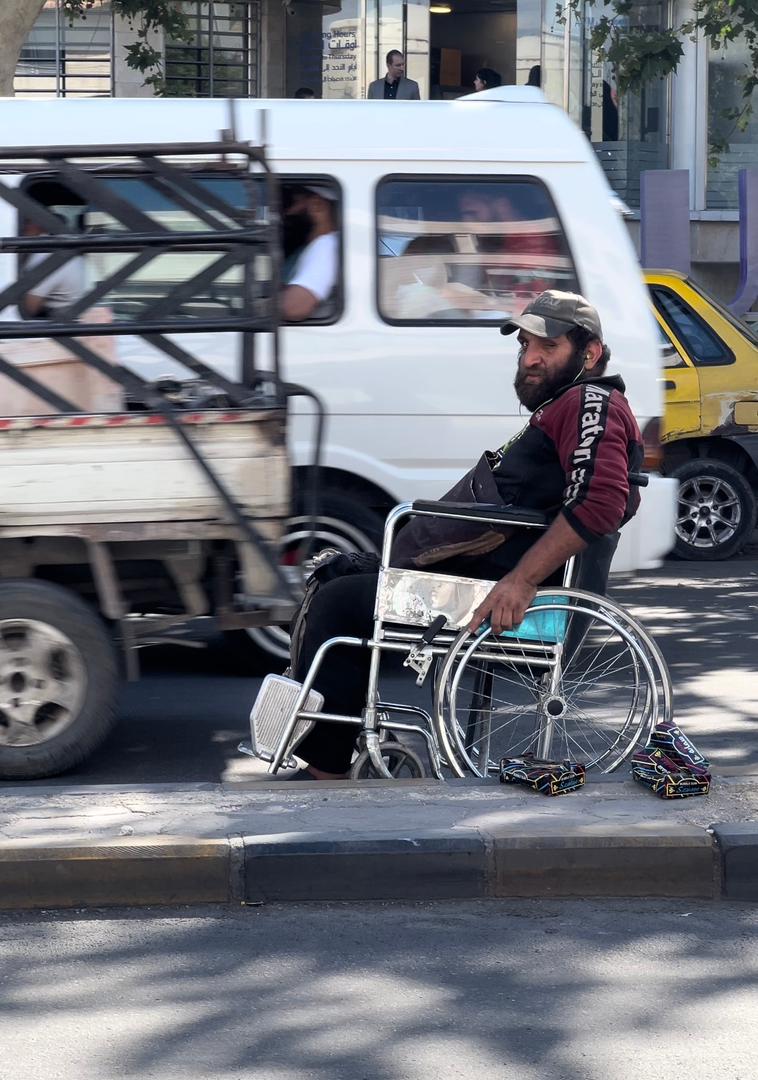
One of the most prominent consequences of the war and the policies of the former regime
Begging did exist in Syrian society before 2011, but it was not anywhere near the scale it has reached during the years of war.
The prolonged war, along with displacement, the loss of breadwinners, economic decline, and the deterioration of living standards, has pushed thousands of families to the brink of poverty. Policies of the former regime and the weakening of social protection institutions during the years of conflict have also contributed to the widening of the phenomenon and the increasing presence of children in the streets, markets, and at traffic lights.
Social specialists argue that the most serious legacy of the war is not only physical destruction, but also the social fractures it has created, producing entire generations raised under exceptional conditions, far from schooling, stability, and protection.
In the past, a beggar was seen as someone in need seeking a basic livelihood. Today, the picture is far more complex.
A beggar is no longer always someone sitting on the pavement asking for money. We now see children selling tissues, chewing gum, flowers, and water, others cleaning car windows at traffic lights, and women holding infants while working the streets and markets.
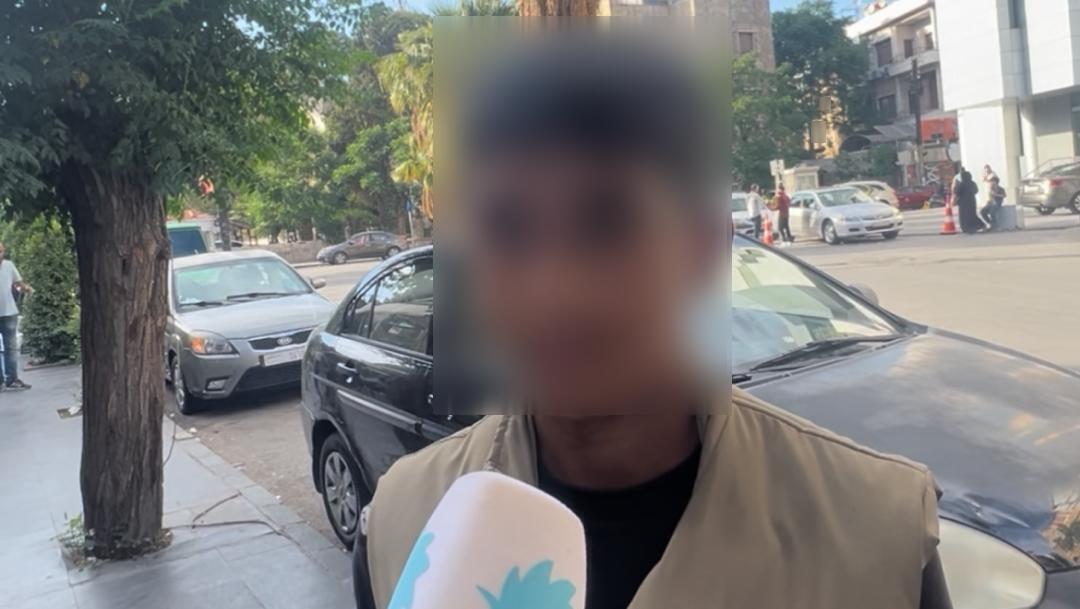
Khazama Al-Najjad, head of the Anti-Begging and Homelessness Office, says in an interview with Annahar: “Begging takes several forms. Some people ask for money directly, while others sell cheap items such as tissues, flowers, water, and chewing gum, especially at traffic lights.”
This shift has led many to ask whether anti-begging campaigns have succeeded in reducing the phenomenon, or whether beggars have simply changed their methods.
Specialists believe that some of the children found in the streets are not engaging in genuine commercial activity so much as they are practicing a new form of begging.
People may hesitate to give money directly to a beggar, but they will often buy a pack of tissues or a flower out of compassion.
In this way, the act of purchasing becomes an indirect form of assistance rather than a commercial exchange.
Over time, the street becomes a steady source of income, and staying there becomes more appealing than returning to school or seeking other alternatives.
They know the streets more than they know themselves
Away from statistics and laws, children remain the most painful face of this phenomenon.
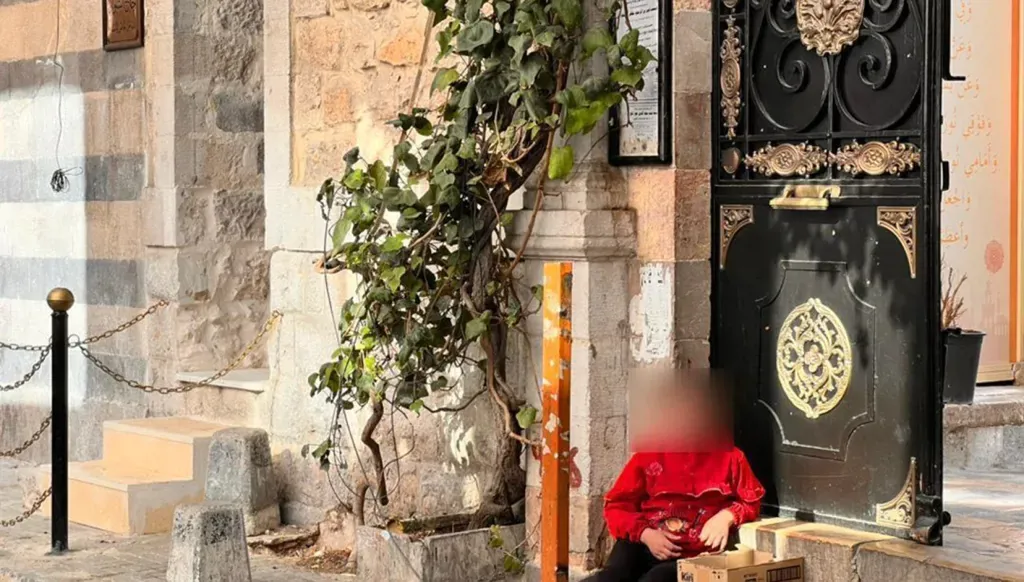
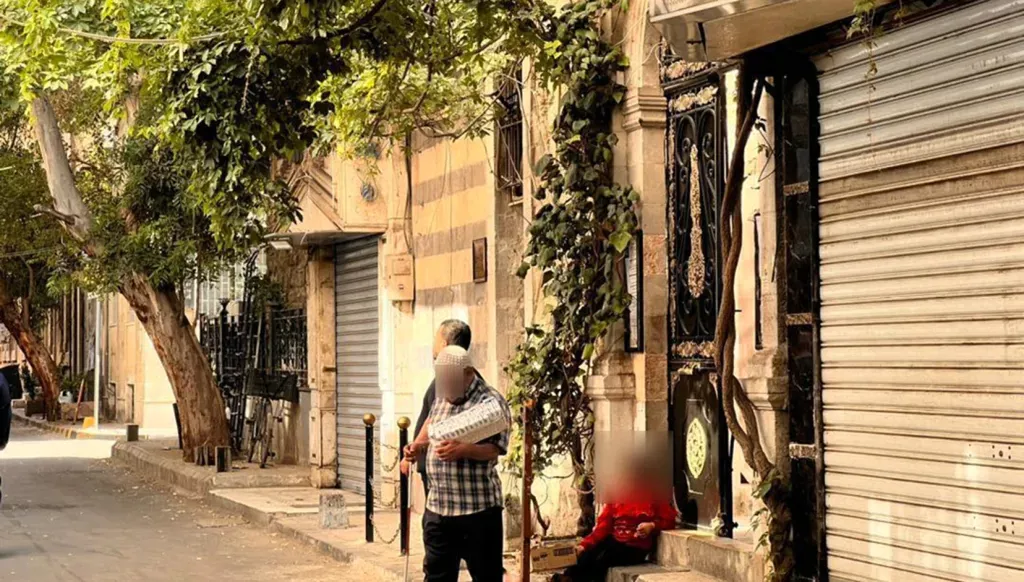
At the entrance of Al-Shalaan Mosque in central Damascus, Annahar met a young girl begging passersby. When asked her name, she said, “My name is Maryam.” When asked her age, she did not know the answer.
She did not know how old she was, what grade she was in, or any basic details about her life.
All she knew was that her father had brought her to the mosque’s entrance. When asked where he was, she replied: “Inside… praying.”
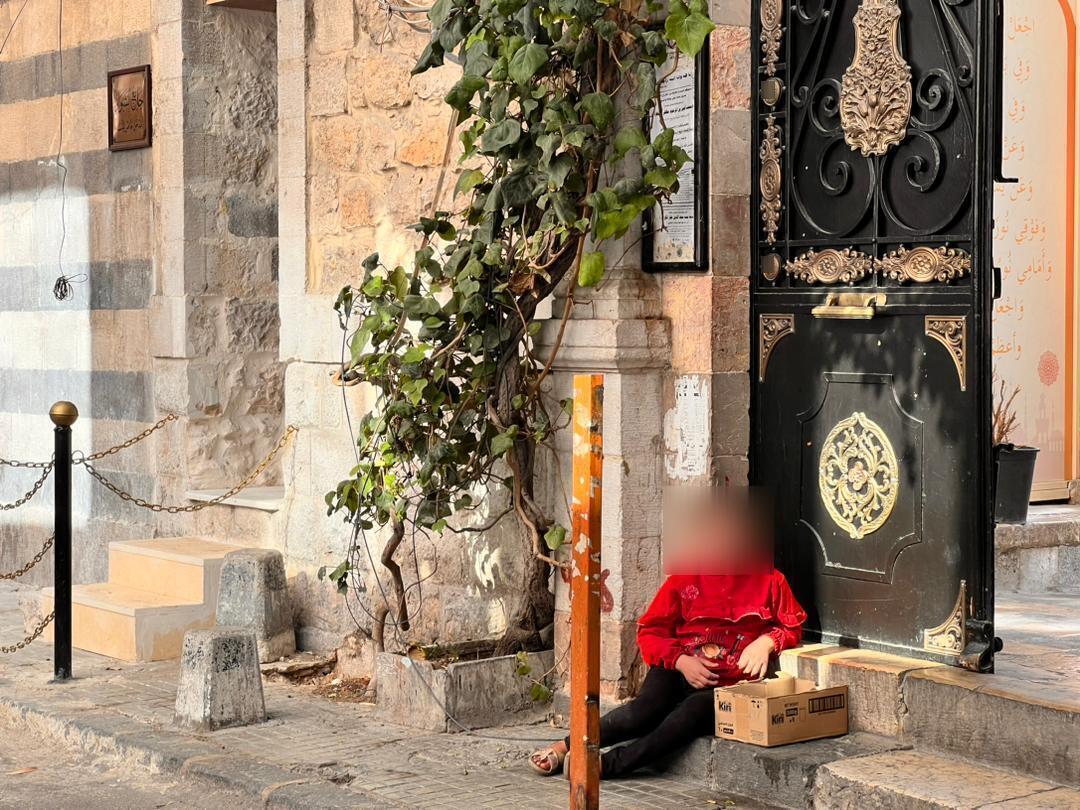
These contradictory answers do not prove the existence of a group exploiting children, but they do reveal the level of fear and ambiguity surrounding many of their lives.
Who is behind the children in the streets?
In the Freedom Bridge area, one of the busiest locations in Damascus, taxi drivers daily observe the movements of beggars and children working in the streets.
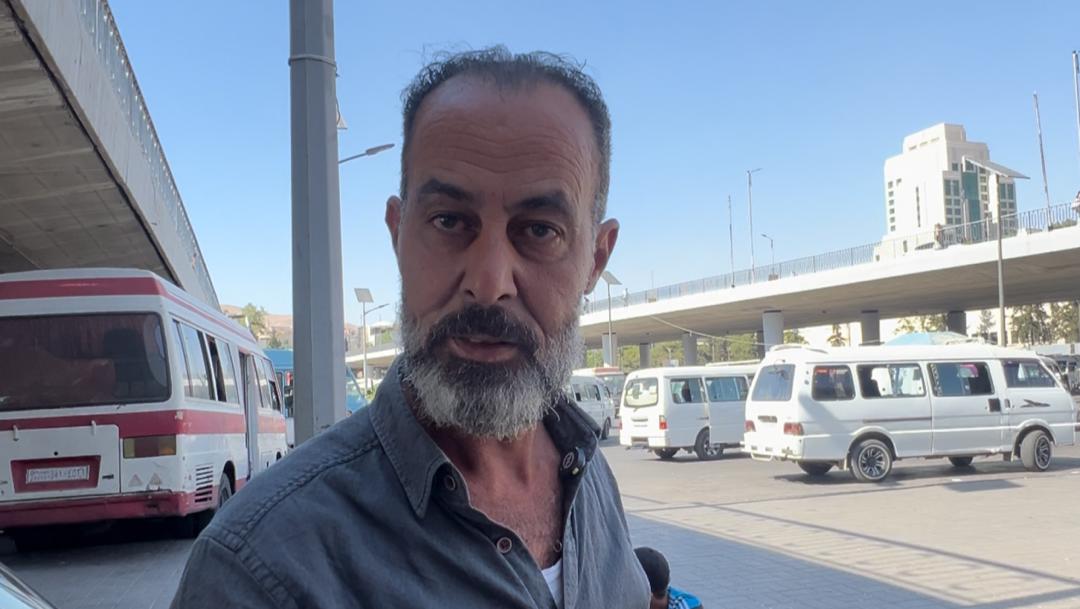
Ahmed Barazi, a public taxi driver, says in an interview with Annahar: “These children and beggars are almost always in the same places. And at the end of the day, we see people coming to take them.”
He recounts an incident in which a passenger was robbed by a young man practicing begging near the Rukn al-Din minibus station. “The man managed to steal about 165,000 liras. We caught him and handed him over to the police, but he later escaped.”
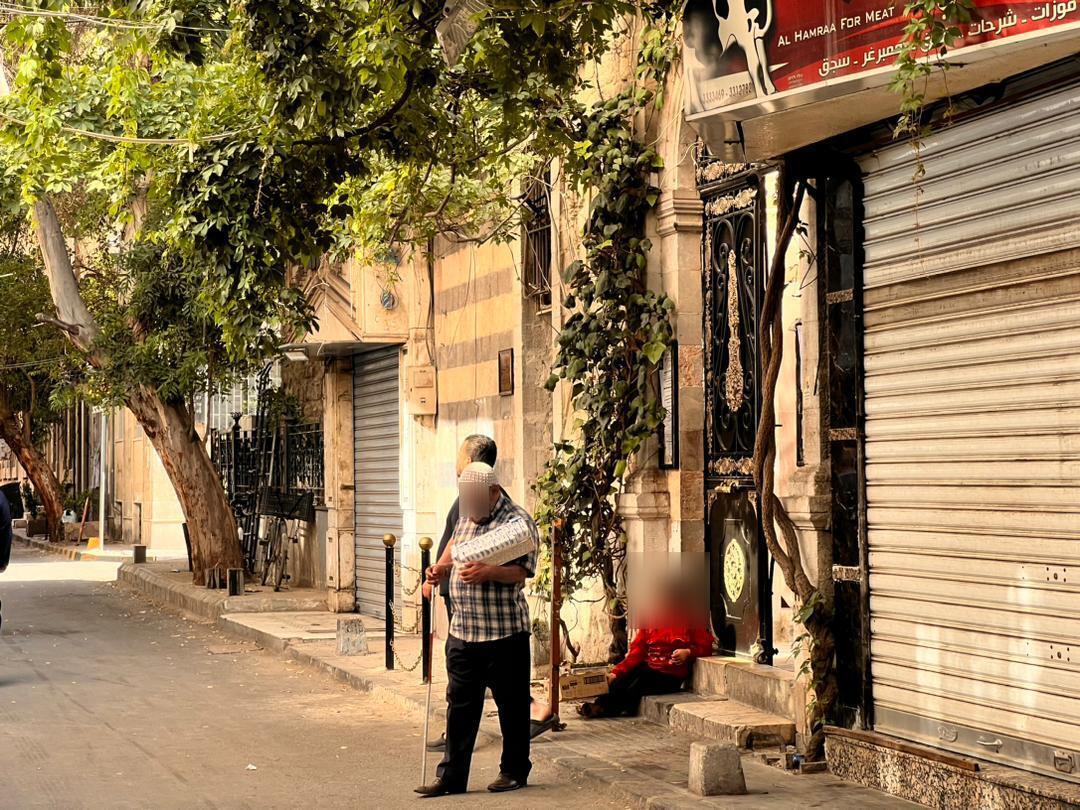
When begging becomes a profession
During the preparation of this investigation, Annahar obtained multiple testimonies suggesting the existence of cases that cannot be explained by poverty alone.
Mohammed Jihad Sharif, a resident of the Barzeh area, tells Annahar: “In our area there was a very luxurious house with a swimming pool, worth billions of liras. Later, we discovered that the owner of the house was begging on Al-Abed Street.”
Annahar was unable to independently verify the ownership of the property, but the account reflects the extent of the doubts now surrounding some cases of begging.
Likewise, a shop owner in the Al-Shalaan area, speaking on condition of anonymity, says that “about four or five years ago, a person was arrested for forcing eight of his own daughters to beg. When they searched his house, they found property, real estate, and large sums of money.”
In turn, a street vendor (who also asked not to be named) tells us that there is “an elderly man over eighty years old who comes almost every day to beg. By the end of the day, he collects large sums, even though he is not in need.”
Shadow economy behind traffic lights
In Sahat Al-Najma in central Damascus, where Annahar conducted its field tour, several shop owners spoke about their daily observations of beggars and street vendors selling flowers and tissues.
Some shop owners say they notice that certain flower and tissue sellers appear to exchange the money they collect at the end of the day, although Annahar was unable to independently verify these accounts.
Despite the lack of official data documenting the scale of money in circulation, the repetition of such accounts reflects a growing belief among segments of the public that some forms of begging have turned into a profitable activity that goes beyond actual need.
At first, people interact with beggars out of sympathy. But with the daily repetition of the scene, and the emergence of stories about beggars owning property or having other sources of income, suspicion begins to spread within society.
The problem is that this suspicion does not harm only fraudsters; it also harms those who are genuinely in need. When society gradually loses trust, it becomes less willing to help those who truly require support. Compassion, over time, turns into permanent indifference.
From crackdown to response
Official authorities say the current approach differs from traditional methods that were limited to temporarily removing beggars from the streets. The goal today is no longer simply to control the phenomenon, but to address its root causes and rehabilitate those involved.
What has the new authority done?
Khazama Al-Najjad, head of the Anti-Begging and Homelessness Office, says in an interview with Annahar that the Ministry of Social Affairs and Labour launched a national campaign to address the phenomenon on 30 November 2025.
She states that “a special committee was formed by decision of the Council of Ministers and the Minister of Social Affairs and Labour, Hind Kabawat, including representatives from relevant ministries and non-governmental organizations.”
According to Al-Najjad, two main centres have been rehabilitated:
• Bab Al-Mousalla Centre for girls under 18, with a capacity of around 120 cases.
• Al-Kiswah Centre for boys under 18, with a capacity ranging between 150 and 200 cases.
She notes that “so far, around 18 field campaigns have been carried out, dealing with approximately 465 cases, most of them children.”
She also confirms that children in these centres receive:
• Accommodation and care
• Medical services
• Psychological support
• Education and literacy programmes
• Legal follow-up
• Support for reintegration into school
Al-Najjad warns that “a child on the street is exposed to exploitation, harassment, addiction, and substance abuse.” She urges citizens to report cases instead of limiting themselves to giving direct assistance.
What does Syrian law say?
Syrian penal law criminalizes certain forms of begging and sets penalties for those who are able to work but engage in it habitually.
Article 596 stipulates that a beggar who is capable of working is punishable by imprisonment with hard labour for a period ranging from one month to six months.
The law also allows for the referral of those in need to welfare or vocational institutions instead of limiting the response to criminal penalties.
However, specialists argue that a legal approach alone is not sufficient, as most cases are linked to complex social and economic conditions.
The importance of the law is not limited to punishing able-bodied beggars; it also extends to protecting children and the most vulnerable groups from exploitation. Specialists believe that legal enforcement must be accompanied by social protection, rehabilitation, and educational programmes, as punishment alone does not address the underlying causes that push many into the streets.
Social experts also emphasize that poverty, unemployment, family breakdown, and displacement remain among the main drivers of the phenomenon, making legal measures only part of the solution, not the complete answer.
In any case, the street is no place for any child. Dr. Zeina Soufi, a mental health and relationships consultant, says in an interview with Annahar: “When we see a child selling tissues or flowers, or someone begging, it is natural to feel compassion. But we must ask ourselves: are we solving the problem, or helping it continue?”
She adds: “A child belongs at home, at school, and in safety—not in the street or at traffic lights.”
Soufi believes that many of the children found in the streets are not making independent choices, but are victims of exploitation or family pressure. She stresses that real help does not come only from buying a flower or a pack of tissues, but from connecting the child to an authority capable of protecting them, educating them, and securing a better future.
Life after the street
Life coach Suha Mahfouz tells Annahar that the first step in treatment begins with rebuilding the child’s self-image. She says: “We need to change the beggar’s perception of themselves and of life. We give them safety, food, shelter, and make them feel they have value.”
She adds: “Changing identity begins with changing the label. If they return to school, we call them students; if they learn a trade, we call them trainees or skilled workers.” She believes that education, vocational training, and psychological support are the key pillars for permanently breaking out of the cycle of begging.

Today, the issue is no longer about a child selling tissues at a traffic light or a girl carrying a bouquet of flowers between cars. It is about the future of an entire generation at risk of school dropout, exploitation, homelessness, and addiction.
At a time when the relevant authorities are trying to address this heavy legacy through centres, campaigns, and rehabilitation programmes, real success remains dependent on tackling the root causes that pushed these children into the streets in the first place.
Removing a child from the pavement is an important step, but what matters more is ensuring they do not return to it. A child who knows the street more than they know their own age does not need a passing act of charity as much as they need a real chance at life, and a society that brings them back to the classroom before the pavement becomes their only future.