

Historic 'Framework Agreement' Brokered in Washington between Lebanon and Israel
Following four days of direct negotiations in the fifth round, Lebanon and Israel signed a 'framework agreement' in the presence of U.S. Secretary of State Marco Rubio in Washington Friday.



 Messenger
 Whatsapp
 Threads
 Email
Email
 Print
Print
 X
X
 Facebook
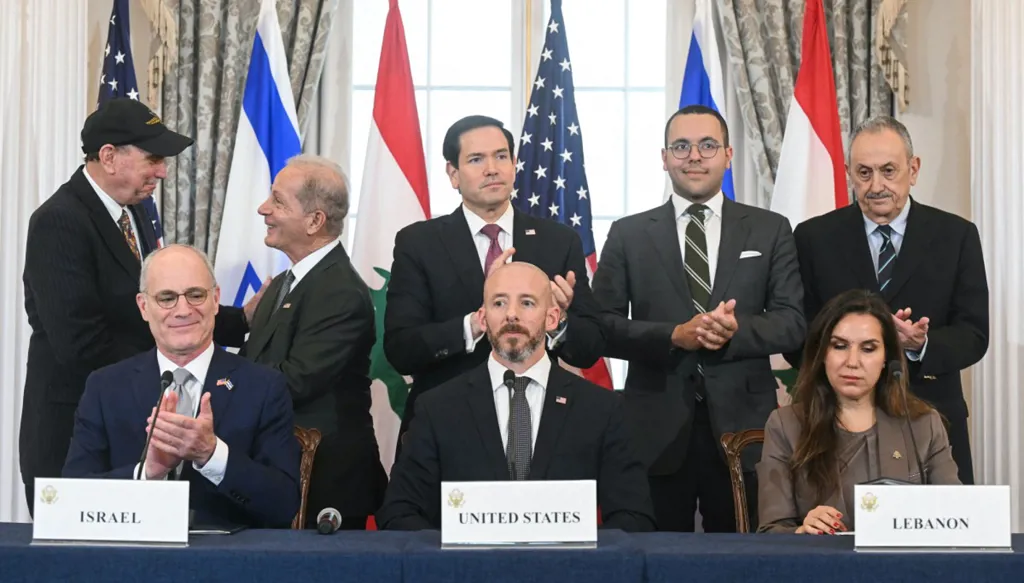


The signing of the framework agreement between Lebanon and Israel, sponsored and brokered by the United States yesterday evening at the U.S. State Department in Washington, marked a historical development, the first of its kind in significance since the signing of the May 17 Agreement in 1983 under former President Amin Gemayel.
Although this framework agreement does not rise to the level of a completed security agreement or peace treaty, the practical framework it establishes between Lebanon and Israel represents a significant event and breakthrough, recorded as a major diplomatic achievement for the U.S., particularly for U.S. Secretary of State Marco Rubio, who invested considerable effort to prevent the fifth round of negotiations from collapsing, extending the talks to a fourth day yesterday, which culminated in the signing of the framework agreement.
While everyone awaited the U.S. State Department's release of the final official text of the agreement to delve into its content and the steps it prescribes, particularly concerning the two pilot zones into which the Lebanese army will enter, liberating them from Israeli occupation on one hand, and disarming Hezbollah and removing its presence from them on the other, attention turned to the essential role the United States is expected to play as a sponsor and guarantor of the agreement, especially in light of expected Iranian interference and attempts to disrupt the agreement by Hezbollah through field interventions and the spread of political and possibly security instability within Lebanon against its authorities.
This will test the direct players, Lebanon and Israel, in precisely implementing the agreement, as it will test America's ability to establish broad regional protection for the agreement, similar to its efforts regarding its agreement with Iran.
Thus, after four days of the toughest negotiation round in Washington, a framework agreement was signed between Lebanon and Israel under U.S. sponsorship on Friday.
U.S. Secretary of State Marco Rubio stated during the signing ceremony, where the flags of the three countries were raised side by side, "We are pleased to announce a framework agreement between the sovereign Lebanese government and of course the Government of Israel, mediated and supported by the United States." He pointed out that this agreement paves the way "for a framework for lasting peace and security."
Rubio later revealed, "We have set out a clear and organized process to restore Lebanon's sovereignty and disarm Hezbollah, and the framework agreement will return Israel to its borders if threats end."
He also revealed, "We will remain fully engaged and allocate significant resources, including $100 million in immediate humanitarian aid to Lebanon in coordination with the United Nations, and the Department of Defense is prepared to provide more than $30 million to the Lebanese army," he further revealed that the agreement establishes a trilateral military coordination group for Lebanon.
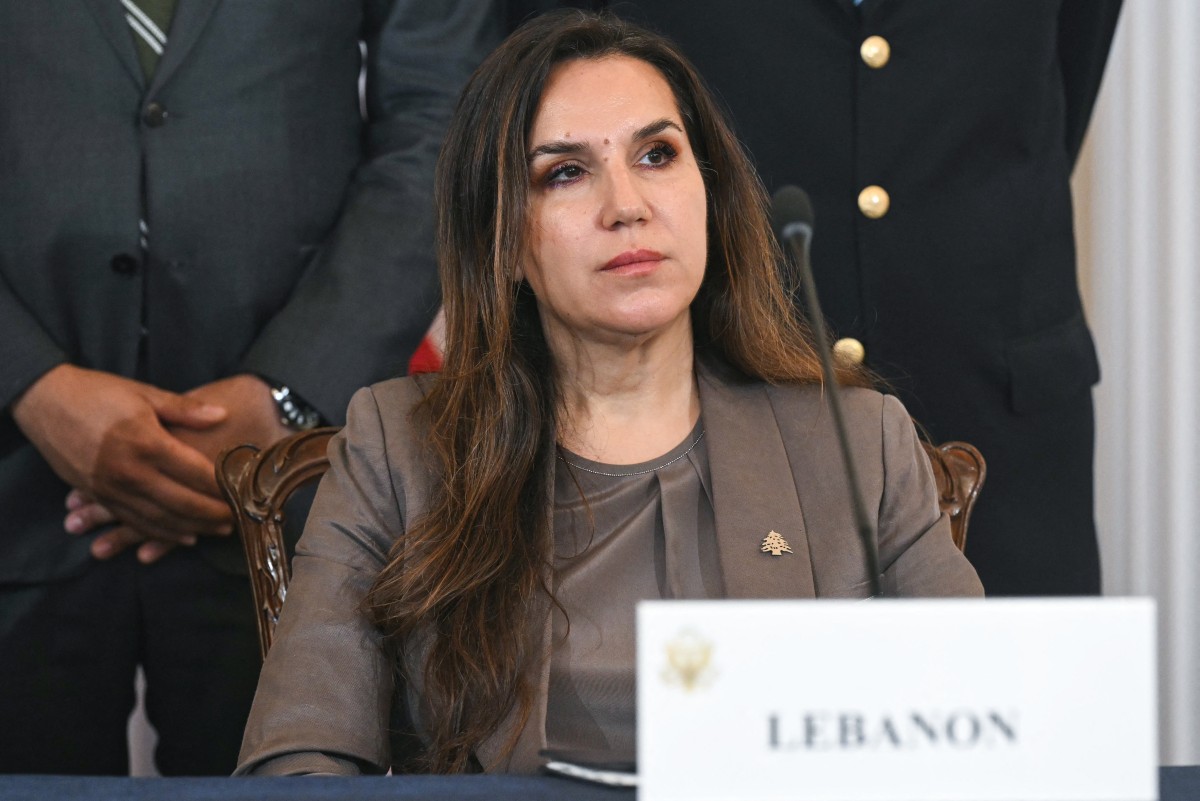
On her part, Lebanese Ambassador to Washington Nada Moawad said: "In the names of Presidents Aoun and Salam, we thank President Donald Trump. Today's signing is a first step in restoring Lebanon's sovereignty." She acknowledged the difficulty of the negotiation rounds, saying: "This meeting was long and tough, and we are grateful to the hosting authority."
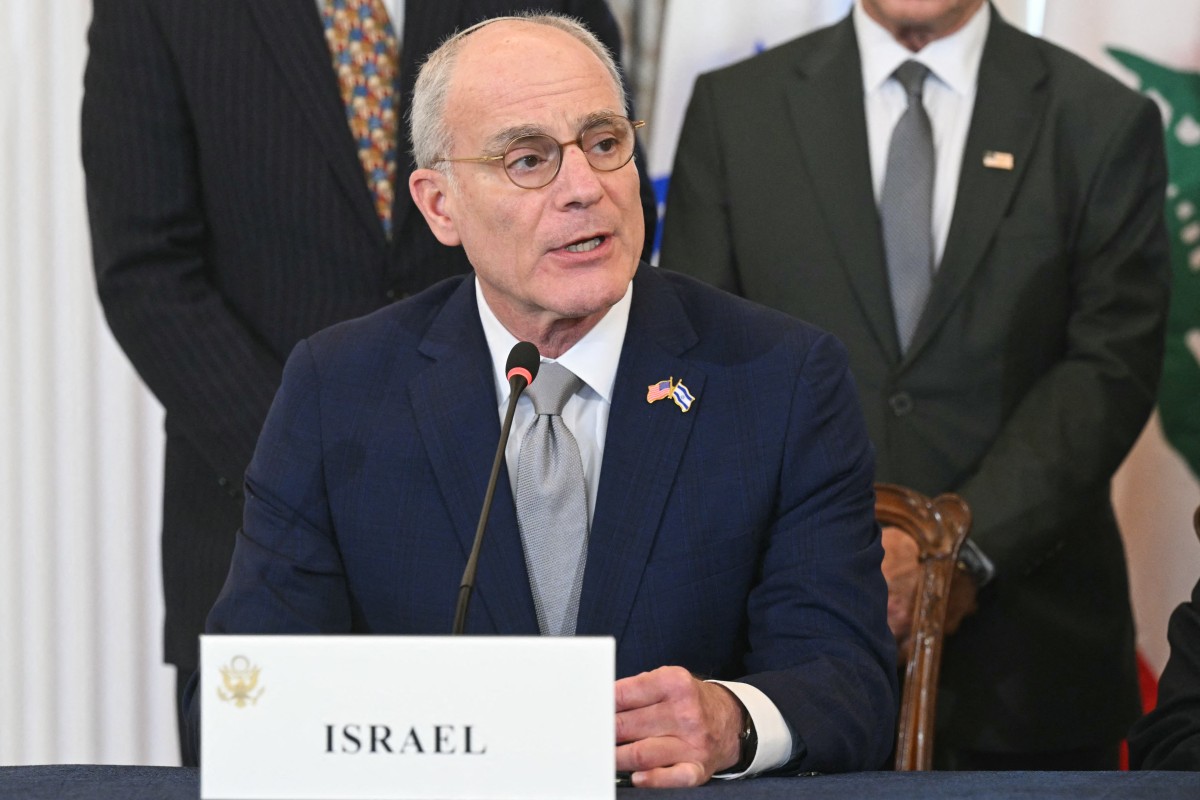
Meanwhile, Israel's ambassador to Washington, Yehiel Leitner, said: "Iran and its arms desire destruction, and we want real peace between Israel and Lebanon. Through this agreement, Iran and Hezbollah are removed from the equation."
An American official informed that Rubio had phoned Israeli Prime Minister Benjamin Netanyahu and Lebanese President Joseph Aoun the previous day to resolve the last differences, and Rubio yesterday joined some discussions between the two delegations.
President Aoun and Prime Minister Salam comment on the signing of the framework agreement
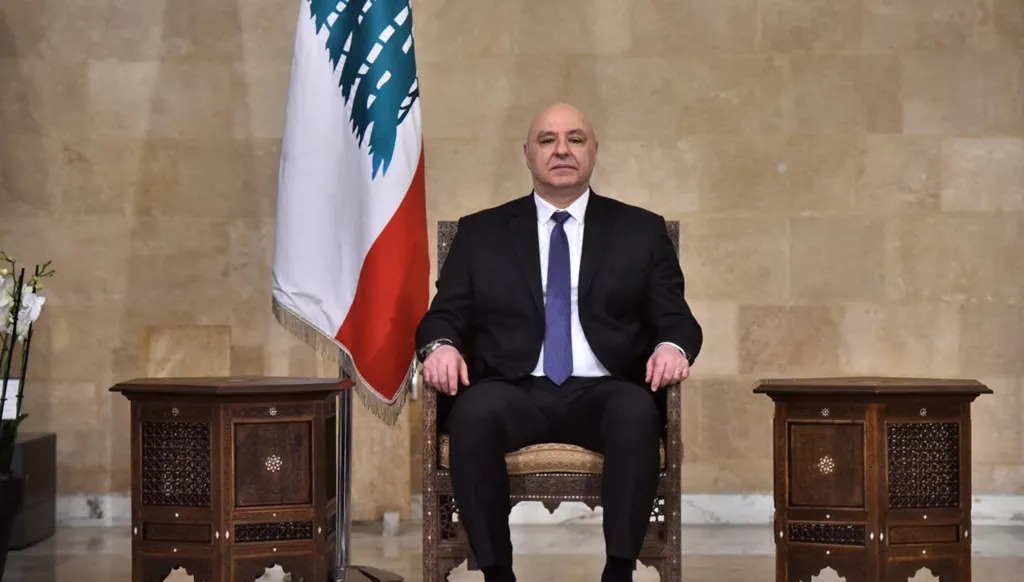
After signing, President Joseph Aoun addressed the American administration, headed by President Donald Trump, with "thanks for the efforts made in hosting the negotiations and supporting Lebanon's position to reach today’s announced step."
He also thanked "all brotherly and friendly countries that accompanied us during these tough negotiations, supporting the Lebanese state's positions and announcing their keenness on Lebanon's independence, peace, and prosperity."
Aoun expressed "appreciation for the Lebanese negotiating team, composed of diplomats and military personnel, both in Washington and Beirut, for their moment-to-moment, word-for-word accompaniment to complete what we consider the first step in Lebanon regaining sovereignty over its entire territory, not lacking an atom, affirming gratitude is mandatory to all Lebanese who sacrificed, persevered, and faced the harshest conditions of aggression, destruction, and displacement, showing splendid support for one another and demonstrating the most astonishing national solidarity in trying times, like one nation under one flag, never seeking another's shade."
He pointed out that "the framework agreement signed today is the beginning of reaping the fruits of their sacrifices, so they return to their completely liberated lands, to their rebuilt homes, certainly thriving with them and their national consciousness, as free and dignified, heads held high, under the sovereignty of a sole Lebanese state with no partner on its land and people."
"This is what we pledged to embody. And we vow to continue working until its complete achievement, leaving neither occupation nor prisoners nor subordination nor guardianship behind. This is what every responsible free Lebanese agrees upon. This is our promise to them and our duty towards them."
Prime Minister Nawaf Salam wrote on the "X" platform: "The 'framework' reached today with Israel under U.S. sponsorship aims at achieving the Israeli withdrawal from all Lebanese territories and restoring the state's sovereignty over them and the return of its citizens to them."
"As for what Lebanon must carry out under this "framework," which entails extending the authority of the Lebanese state through its armed forces over its entire territory, this is nothing but what the Lebanese previously agreed upon in the Taif Agreement, which the UN Security Council Resolution 1701 reaffirmed the necessity of its implementation."
"Furthermore, the 2024 "Declaration of Cessation of Hostilities," passed by the previous government, also clearly states in its preamble that only legitimate forces are authorized to bear arms in Lebanon, and it exclusively specifies them. Our government's ministerial statement, which gained parliamentary confidence, reiterated these national constants, stressing that the state alone is responsible for decisions of war and peace."
"All thanks to the United States of America, our Arab brothers, and our friends in the world whose efforts led to achieving this agreement. I look forward to the blessed hour when Israel starts withdrawing, enabling our dear people to safely and honorably return to their homes from which they were forced to leave."
Before publishing the official text of the agreement, the Lebanese embassy in Washington stated that the agreement stipulates implementing two pilot zones, including an Israeli withdrawal, the deployment of the Lebanese army, and disarming non-state armed groups.
Conversely, the "Israeli Broadcasting Authority" published details about the framework agreement "preparing for the beginning of Israeli troop withdrawal from southern Lebanon." According to the "Broadcasting Authority," the "agreement maintains the Israeli presence in southern Lebanon unless Hezbollah is disarmed."
It also quoted informed sources stating: "An agreement was reached between Israel and Lebanon to start the pilot phase in two areas in southern Lebanon from which Israeli forces will withdraw, and the Lebanese army will enter these two areas during the pilot phase." Israel and Lebanon also agreed on "how to deal with tunnels and confront Hezbollah reinforcements," according to the "Israeli Broadcasting Authority."
"Channel 12 Israel" quoted an Israeli official saying: "According to the framework agreement with Lebanon, Israel will have the freedom to respond to any threats directed at Israel," and the agreement stipulates that "Israel will remain in the yellow line area until Hezbollah is disarmed, and the Lebanese state can fully assume security responsibilities."
The two zones included in the partial withdrawal in southern Lebanon:
The first zone is outside the "yellow line," west of the Wadi al-Salouqi and south of the Litani River.
The second zone is north of the Litani River; part of it cuts from the "new yellow line," while the other part is outside it.
Israeli Prime Minister Benjamin Netanyahu stated that the signing of the framework agreement with Lebanon "is a strong blow to Iran." He explained in a video message that this agreement represents "a strong blow to Iran," and continued that "Iran tries to force us to withdraw from southern Lebanon by force. In essence, Israel, Lebanon, and the United States say to them: this is not your business. You have no role in Lebanon. Neither you, nor Hezbollah, nor any terrorist organization."
Netanyahu said Israel would not withdraw from the secure areas in southern Lebanon without disarming Hezbollah. He added: "Israel remains in the secure area in southern Lebanon. This is a great achievement—framework agreement—and we will maintain it as long as Hezbollah does not disarm, and as long as there remains a threat to the State of Israel."
Regarding field arrangements, Israeli Prime Minister explained: "We will create two pilot zones based on the recommendation of the Israeli army, one outside the security area entirely, south of the Litani River, and the other north of it, with a small part within the expanded security area we achieved over the past two weeks, which the Israeli army does not need."
As expected, Hezbollah immediately launched threats and intimidation against civil peace after the agreement was signed. In Hezbollah's first comment about the agreement between Lebanon and Israel, Hassan Fadlallah, a member of the "Loyalty to the Resistance Bloc," said that "the authorities cannot enforce the Washington Agreement unless they go into a civil war with U.S. support."
He added: "What happened is a hindrance to the Islamabad path," warning that "without resistance, nothing will pass."
Minister of Labor Mohammed Haidar and Minister of Health Rakan Nasreddine confirmed their "opposition to direct negotiation with the Israeli enemy—a stance that has not changed and will not change, as it expresses the political and national conviction we have adhered to and continue to uphold clearly," as stated in a declaration they issued "clarifying what was raised after the recent cabinet meeting regarding the matter of 'negotiation authorization,' to prevent any misunderstanding or inaccurate interpretation of what happened within the meeting."
Nighttime demonstrations and motorcycle gatherings began at the Al-Musharrafiyeh Bridge area in the southern suburbs of Beirut.