

After the war: Why Tehran fears the calm more than the conflict
As military confrontation fades, Iran faces a deeper challenge: postponed economic crises, internal power struggles, and rising social unrest that may prove more destabilizing than war itself.



 Messenger
 Whatsapp
 Threads
 Email
Email
 Print
Print
 X
X
 Facebook
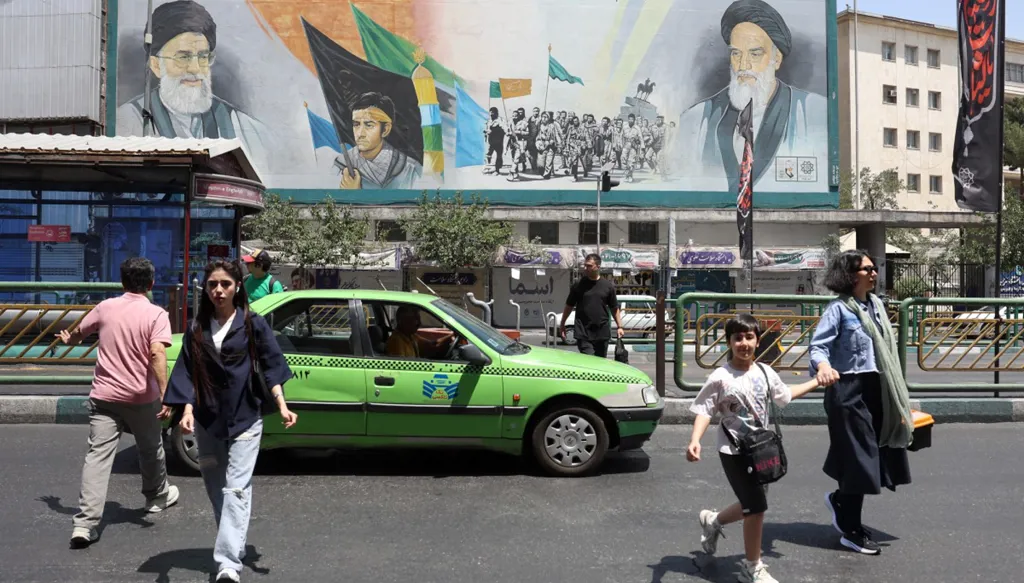


Tehran fears calm, when what comes after the war becomes more dangerous than the war itself. On the surface, the region appears to be moving toward a phase of de-escalation after months of military confrontations and rising tensions. The United States does not seem willing to slide into an open-ended, long-term war. At the same time, the Iranian regime understands that continuing military confrontation could open doors it would not be able to control. Meanwhile, the ongoing negotiations have not achieved any real breakthrough, because neither side wants to pay the political price of backing down from its positions. However, what concerns Tehran today is not limited to war or negotiations. The more dangerous dilemma for the Iranian system lies in the phase after the war, meaning the moment when the noise of external confrontation fades and postponed internal crises return to the surface. For this reason, the phase after the war appears in the calculations of the authorities as more dangerous than the war itself.
The regime has over the past decades become accustomed to using external crises. Whenever economic pressure intensified or public anger rose, the authorities resorted to amplifying external threats, or creating a regional confrontation, or opening a new security file in order to justify repression and tighten control over society. However, this mechanism is no longer able to conceal the accumulated contradictions inside Iran. When the noise of war ends, the regime will find itself face to face with its real opponent, the Iranian people, and with fear of what comes after the war. In this context, a statement by Hamid Rasaee takes on striking significance when he said, I am not afraid of war, but I am afraid of what comes after the war. War, despite its cost and risks, gave the regime a temporary opportunity to mobilize its supporters, justify security measures, and impose further restrictions on society. But a halt in confrontation or a shift to relative calm will bring back to the surface all the issues that the authorities tried to bury under the smoke of war. At the forefront of these issues is the economic and social crisis that has reached unprecedented levels. Inflation, the collapse of the currency, unemployment, rising poverty, and crises in water, energy, and the environment are all factors that did not disappear because of the war, but instead became more complex. As soon as the atmosphere of military mobilization recedes, these crises will return to impose themselves on the daily lives of Iranians with even greater force.
Another major issue that emerges is the succession crisis within the regime, one of the most dangerous postponed files. The war succeeded in freezing the conflict over the rise of Mojtaba Khamenei to the position of Supreme Leader, but it did not resolve it. As political life returns to a normal course, the contradictions between power factions over the future leadership and the direction of the system will reemerge. Early signs of this struggle have already begun to appear within the regime’s media and political institutions.
Reconstruction and the resource crisis. In addition, the regime faces a massive challenge represented by rebuilding the damage left by the war in the oil, petrochemical, industrial, and infrastructure sectors. This process requires hundreds of billions of dollars at a time when the Iranian economy is suffering from a shortage of resources, declining investment, worsening sanctions, and increasing international isolation. The crisis is not limited to the economy alone. Rebuilding military and missile capabilities and regional networks of influence will also require enormous resources and a stable political environment, both of which are far from the current reality of the system. Every dollar spent on restoring tools of repression and external intervention will increase the anger of a society burdened by poverty and deprivation. More importantly, the system is entering this phase without the element that for decades formed the center of its internal balance, Ali Khamenei. The figure who served as the final authority to settle disputes and manage internal equilibrium is no longer present, while Mojtaba Khamenei finds himself facing intertwined crises that make him closer to being part of the problem rather than part of the solution.
Organized resistance and internal calculations.
In contrast, the Iranian opposition today stands in a different position from previous stages. Years of protests and uprisings have contributed to consolidating the presence of resistance units in many Iranian cities and have created networks capable of taking advantage of any easing or weakening of the regime’s grip. For this reason, the regime understands that the end of the war does not mean the end of threats. Instead, it may mark the beginning of a more dangerous phase in which protests intensify and opposition activity expands. War may provide the authorities with a temporary security cover, but what follows it reveals the scale of the anger accumulated within society.
What awaits Iran after the war is not a phase of stability but a phase of confrontation with delayed realities. Social demands will return to the forefront, economic crises will become more visible, and internal conflicts will grow sharper, while Iranian society continues to search for an escape from an increasingly harsh reality year after year. From this perspective, the real question is no longer limited to the outcome of the war or the fate of negotiations, but rather to the regime’s ability to face what comes after it. This is a phase that appears, to many observers and even to some within the regime itself, more dangerous than the war itself. War may end with a ceasefire or a political agreement. However, the conflict between the regime and the Iranian people remains open, and it is this conflict that will ultimately determine the future of Iran as a whole.
Disclaimer: The opinions expressed by the writers are their own and do not necessarily represent the views of Annahar