

Military Artificial Intelligence: A Crucial Pillar in the Global Arms Race
Most studies estimate the current military AI market size between $10 and $15 billion, with expectations of double-digit annual growth in the coming years.



 Messenger
 Whatsapp
 Threads
 Email
Email
 Print
Print
 X
X
 Facebook
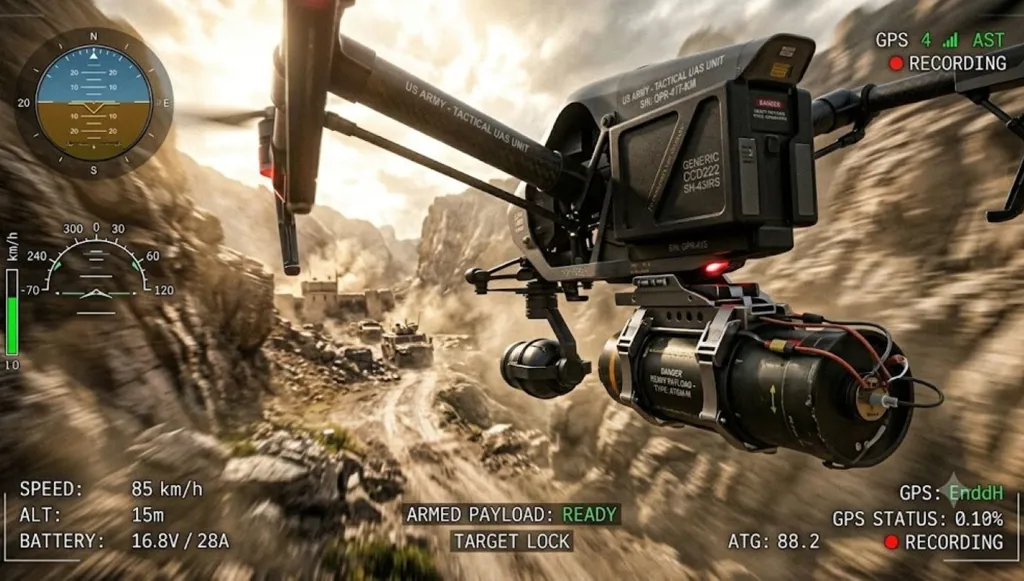


Artificial intelligence is no longer merely a civilian technology sector circling around which major companies and investors wager; it has swiftly become one of the most critical axes of military and intelligence competition among nations.
With the expansion of modern wars, from Ukraine to the Middle East, armies are now seeking tools capable of accelerating information gathering, data analysis, target identification, managing drones, and supporting military decision-making in complex and rapidly changing combat environments.
The wave comes amidst a record increase in global defense spending. Global military expenditure approached $2.9 trillion in 2025, marking over a decade of continuous growth. Within this rising expenditure, artificial intelligence emerges as one of the most attractive fields for funding; not only does it enhance the quality of weapons, but it also reshapes the way wars are managed and military decisions are made.
Most studies estimate the current market size of military artificial intelligence between $10 and $15 billion, with expectations for double-digit annual growth in the coming years, potentially pushing the market size to between $25 and $40 billion over the next decade. Although these figures remain modest compared to the global defense spending scale, their significance lies in their rapid growth and their direct connection to the future of defense industries.

The United States Leads the Race
The United States leads this trend clearly, whether through its Department of Defense or through emerging defense technology companies. Companies like Palantir, Anduril, Shield AI, General Atomics, Lockheed Martin, Northrop Grumman, and RTX are at the heart of this transformation. The competition is no longer restricted to producing planes, tanks, and missiles; it has transitioned to software, command and control systems, big data analytics, generative artificial intelligence, and semi-autonomous or autonomous drones.
The rise of Anduril company reflects the shift in investors' appetites towards technological defense, as the company's valuation exceeded $60 billion, driven by growing demand for drones, surveillance systems, and command and control software. The company, alongside General Atomics, has secured contracts related to the semi-autonomous combat drone program in the US Air Force, signaling a transition of these technologies from the experimental phase to actual production.
Military artificial intelligence is not limited to small drones but extends to loyal wingman programs that accompany manned fighters, performing reconnaissance, jamming, and combat support missions semi-autonomously. These systems are among the fastest-growing investment areas within the US Air Force due to their ability to reduce human risks and enhance operational efficiency.
A Global Race Beyond the United States
The race is not restricted to the United States. China is investing heavily in military artificial intelligence as part of its strategy to build a more technologically advanced army, while Europe seeks to reduce its dependence on American companies and enhance what it calls "defensive digital sovereignty." Initiatives such as NATO's Defense Innovation Accelerator for the North Atlantic (DIANA) and the European Defence Fund are funding projects in artificial intelligence, robotics, sensing, space, communications, and autonomous systems.
In the Middle East, recent conflicts have shown increased use of artificial intelligence tools for gathering and analyzing information and accelerating military decision-making cycles. These experiences confirm that the military value of artificial intelligence lies not only in weapon possession but also in the ability to link information with decision-making and field operations more rapidly.
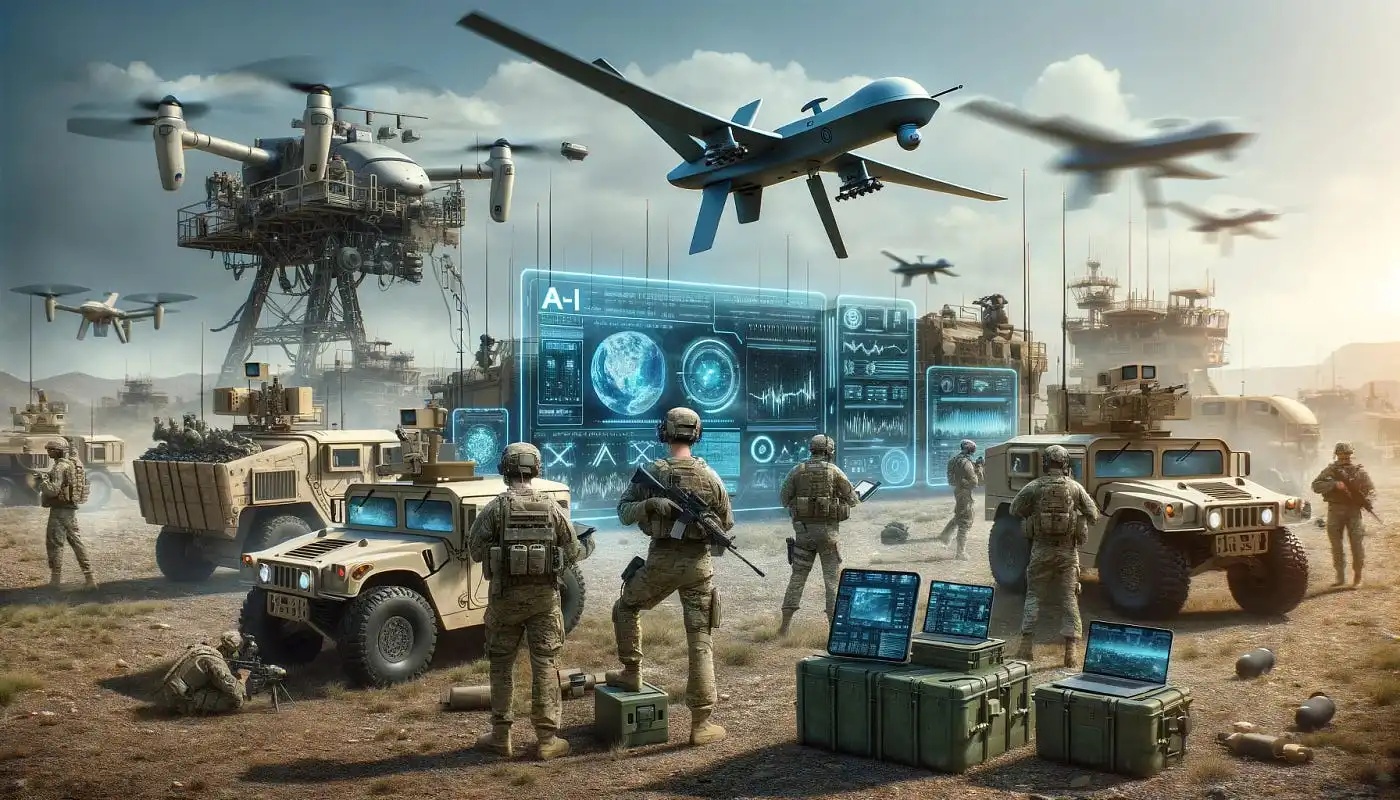
Where Are Investments Heading?
Current investments are distributed across several primary areas.
First, drones and autonomous systems, which have become a relatively low-cost and highly impactful weapon.
Second, big data analytics systems, where algorithms are used to sift massive amounts of photos, communications, signals, and intelligence information.
Third, target recognition and decision support systems, which are among the most sensitive fields due to their direct link to international law and ethical risks.
The fourth area is cybersecurity and electronic warfare, where artificial intelligence helps detect attacks, analyze patterns, and enhance response speed.
Economically, this sector appears set to transform into one of the most prominent drivers of global defense spending. Armies seek less costly and more flexible solutions than traditional systems, especially after the war in Ukraine demonstrated that drones and software could shift the balance of battle at lower costs than massive military platforms.
The "defense as a service" model is also beginning to assert itself, where companies not only sell equipment but also provide operable capabilities and software that can be continuously updated.
An Arms Race Driven by Algorithms
This transformation has been reflected in the performance of many technological defense companies over recent years, with investors granting higher valuation premiums to companies combining software, artificial intelligence, and autonomous systems compared to some traditional defense companies.
This reflects a growing conviction that the future value in the defense sector may gradually shift from heavy military platforms to software, algorithms, and data.
However, this growth does not come without risks. The high valuations of some technological defense companies reflect ambitious expectations that may not materialize at the same pace, especially since defense contracts are subject to long cycles, government oversight, and political and geopolitical considerations.
Additionally, the increasing reliance on private companies in sensitive areas raises growing questions about sovereignty, accountability, and data protection.
Ultimately, it seems that military artificial intelligence is transitioning from a specialized field within defense budgets to a fundamental pillar in the global arms race.
Nations that succeed in integrating algorithms with weapons, data with decision-making, and software with operations will be more capable of managing future wars.
Hence, the current investment wave does not appear to be a mere transient technological bubble but an expression of a deeper structural transformation in the nature of military power, where data and artificial intelligence become integral parts of the hard power of states in the 21st century.
Explore our weapons dossier and the related stories below:
- The Big Winners of Wars: Who Sells the Weapons and Who Pays the Price?
- The Evolution of Tanks: Artificial Intelligence, Drones, and Advanced Defenses
- Kalashnikov: How a Soviet Rifle Became the World's Most Widely Used Weapon
- Drone vs drone: How “Merops” is reshaping air defense economics
- The end of strategic depth: How modern warfare is redrawing the map of security