

Kalashnikov: How a Soviet Rifle Became the World's Most Widely Used Weapon
The Kalashnikov remains less costly than many modern Western alternatives, explaining its continued appeal and spread.



 Messenger
 Whatsapp
 Threads
 Email
Email
 Print
Print
 X
X
 Facebook
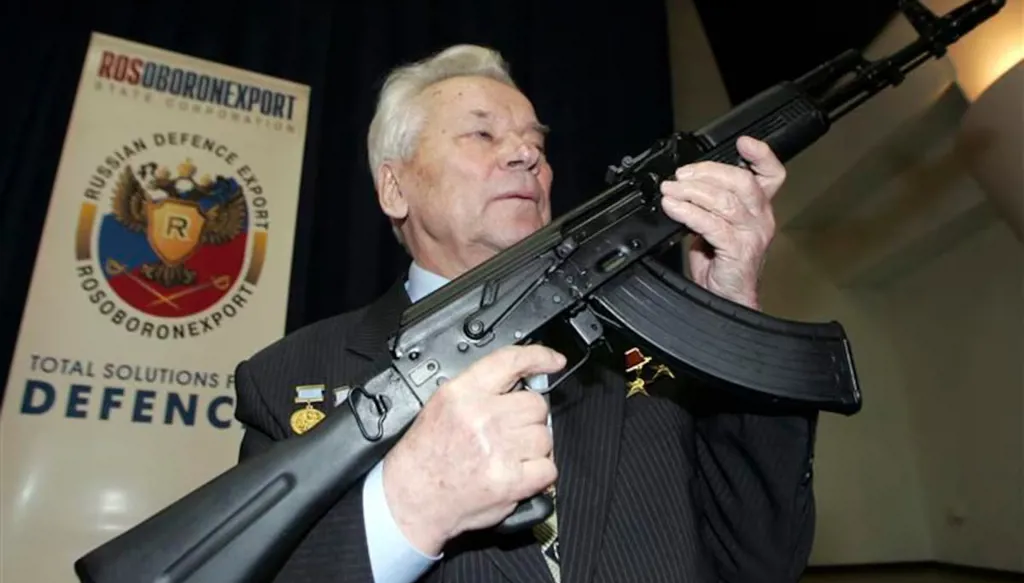


Rarely has a piece of weaponry left such a profound imprint on politics, economy, and popular culture during the 20th century as the Kalashnikov rifle. From the dense forests of Africa to the rugged mountains of Afghanistan, and from the battles in the Middle East and North Africa to the conflicts in Latin America, this rifle has appeared on countless battlefields. It has been wielded by regular soldiers, liberation movement fighters, militia elements, and rebel groups, becoming a part of the mental image of modern wars.
Despite nearly eight decades since its emergence and the significant advancements in individual weaponry manufacturing, the Kalashnikov remains one of the most widespread and used weapons worldwide.
But the tale of the Kalashnikov is not just a story of a militarily successful rifle. It is also the story of an exceptional product that managed to transcend borders, ideologies, and markets, turning into a global commodity and one of the most widely spread and impactful military products in modern history.
The story began amidst World War II. In 1941, Soviet soldier Mikhail Kalashnikov was injured in battles against German forces. During his recovery period, he pondered a simple question that would later change the history of weaponry: How can a more efficient weapon be designed for the Soviet soldier?
Kalashnikov was not a conventional engineer from laboratories or major universities but a soldier who knew the battlefield up close. Therefore, his focus was on the needs of the fighter himself: a powerful, easy-to-use weapon capable of operating in harsh conditions.
After years of experiments and development, the model bearing his name emerged in 1947: the 'Avtomat Kalashnikova 1947' (AK-47). Shortly after, the weapon entered service in the Soviet army, beginning a journey that would far exceed what its designer had imagined.
It's easy to assume the most widespread weapons are necessarily the most advanced. But the Kalashnikov proves that it's not that simple.
A Reliable Weapon
The rifle was not the most accurate, nor the lightest, nor the most technologically advanced. But it possessed something more important: reliability. The Kalashnikov is easy to manufacture, rarely malfunctions, withstands dust, mud, moisture, and extreme heat, requires relatively limited training, can be maintained with simple tools, and continues to operate in conditions that might disable more complex weapons.
For this reason, it was favored by large armies needing to arm vast numbers of soldiers, as well as armed movements lacking advanced logistical infrastructure.
During the Cold War, the Soviet Union did not treat the Kalashnikov as just a weapon, but as a political tool. Just as the United States used military aid to enhance its influence, Moscow used the Kalashnikov to strengthen its ties with allies and partners worldwide.
Thus, the rifle spread to the armies of Eastern Europe, Asia, Africa, and the Middle East, with many countries obtaining licenses for local production. Over time, local versions began appearing in China, Romania, Bulgaria, Hungary, the former Yugoslavia, Egypt, and others.
This widespread distribution helped turn the Kalashnikov into the most prominent individual weaponry presence globally. Numerous studies estimate the number of Kalashnikov rifles and derivatives produced worldwide has exceeded 100 million, making it the most prevalent family of firearms in modern history. Some estimates even suggest that about a fifth of the firearms existing globally belong to the Kalashnikov family.
Economically, the Kalashnikov presents an exceptional case within the realm of military industries. Most modern defense industries rely on advanced technology, high prices, and limited customers.
The Kalashnikov, however, succeeded following a completely different logic: low cost and mass production. During the Cold War, millions of units were produced within and outside the Soviet Union. Their production cost wasn't high compared to other weapons in the same category.
Over time, with licensed and unlicensed manufacturing spreading, the Soviet Union, and later Russia, lost complete control over the product. Unlike Western arms companies, which safeguard intellectual property rights and trademarks very carefully, Kalashnikov versions spread worldwide to an extent that made it almost impossible to monopolize production or control returns.
Thus, the original product lost a significant part of potential profits but gained something greater: global spread that no other individual weapon has achieved.
The Rifle as a Global Commodity
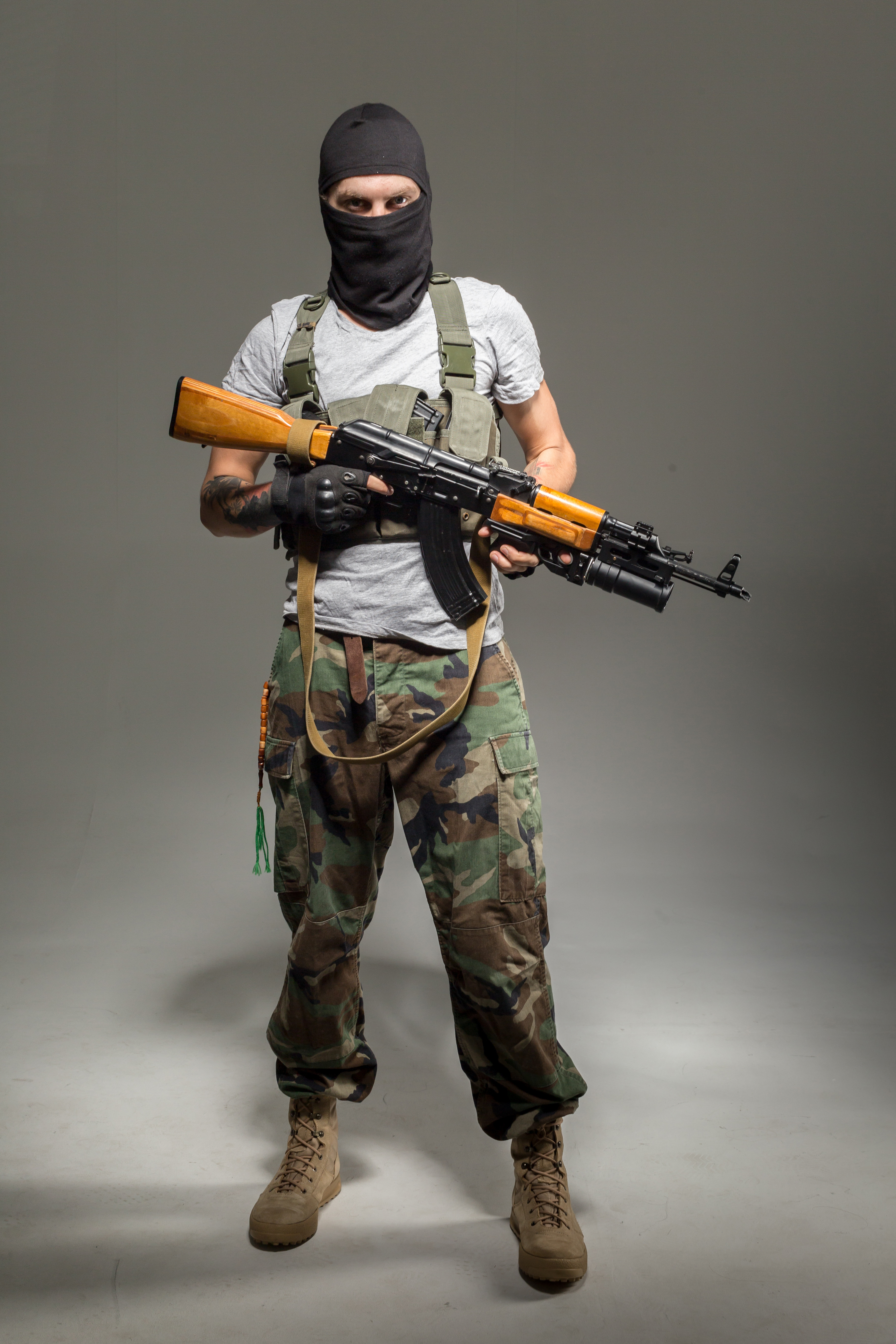
While the Cold War spread the Kalashnikov, the collapse of the Soviet Union in 1991 turned it into a global commodity difficult to monitor or control. With the dissolution of the Soviet system, former armies, warehouses, and governmental entities found themselves with excess weaponry and ammunition far beyond their actual needs. Meanwhile, conflicts flared in the Balkans, the Caucasus, Africa, and different parts of the Middle East. The natural result was a massive influx of weaponry into international markets, both through legal channels and illicit smuggling networks.
In some cases, Kalashnikov rifles were sold at extremely low prices due to the chaos and weak control over military stockpiles. In the 1990s and early 2000s, this rifle became the backbone of numerous wars and civil conflicts, not only due to its effectiveness but also due to its easy availability and the massive quantities of ammunition.
Thus, the Kalashnikov transitioned from a Soviet tool of influence to a global commodity traded by governments, armies, armed factions, and smuggling networks simultaneously.
Ironically, Russia did not benefit financially from the Kalashnikov as much as one might expect. Unlicensed versions that emerged in dozens of countries deprived the original product of a significant portion of potential revenues. With the collapse of the Soviet Union, Moscow sought to reorganize the sector. Kalashnikov Concern became the main heir to the historic brand.
Today, it is the largest producer of light weapons in Russia and one of its leading defense companies. Its activities extend beyond Kalashnikov rifles to include sniper rifles, military equipment, drones, and various civilian products.
Nevertheless, the fame of the "Kalashnikov" name around the world still greatly surpasses the revenues earned by the original product due to the vast spread of foreign and counterfeit versions. This phenomenon reflects the nature of the global light weapons market, which differs from fighter jet or air defense systems markets, where monopoly or intellectual property protection is harder to enforce to the same degree.
A Common Historical Symbol
In the Middle East, it's challenging to separate the history of conflicts from the history of the Kalashnikov. It has been carried by regular armies and used by Palestinian, Lebanese, Iraqi, Syrian, Yemeni factions, among others.
Over the decades, it became a familiar presence in the region's military landscape. Long wars, the collapse of some state institutions, and the spread of smuggling networks have entrenched its presence within both legal and illegal markets. Thus, despite its long life, the Kalashnikov has remained a constant element in many local and regional power equations.
Few weapons have succeeded in becoming a cultural and political symbol like the Kalashnikov. It has appeared on flags, symbols, and political posters in several countries and movements. Perhaps the most famous example is Mozambique, where the Kalashnikov still appears on its national flag, a case almost unique globally.
The weapon has also been featured in thousands of films, series, video games, and journalistic photographs, embedding itself into the collective visual memory associated with wars and conflicts. At different times, it has carried contradictory meanings; some viewed it as a symbol of liberation and resistance, while others saw it as a symbol of violence and chaos.
But how much is the Kalashnikov worth today? The answer depends on location, market, and circumstances. In legal markets, prices vary according to the manufacturing country, product quality, and technological additions. In illegal markets, other factors like the intensity of conflict, supply, and smuggling routes come into play. Thus, the same weapon might sell for hundreds of dollars in one area and thousands in another.
However, what's remained constant is that the Kalashnikov is still less expensive than many modern Western alternatives, explaining its continued appeal and spreading.
The global light arms market is estimated at tens of billions of dollars annually when factoring in military and civilian sales, ammunition, and related services, making the Kalashnikov part of a vast economic sector far beyond its direct military use.
Explore our weapons dossier and the related stories below:
- The Big Winners of Wars: Who Sells the Weapons and Who Pays the Price?
- The Evolution of Tanks: Artificial Intelligence, Drones, and Advanced Defenses
- Drone vs drone: How “Merops” is reshaping air defense economics
- The end of strategic depth: How modern warfare is redrawing the map of security