

The Big Winners of Wars: Who Sells the Weapons and Who Pays the Price?



 Messenger
 Whatsapp
 Threads
 Email
Email
 Print
Print
 X
X
 Facebook
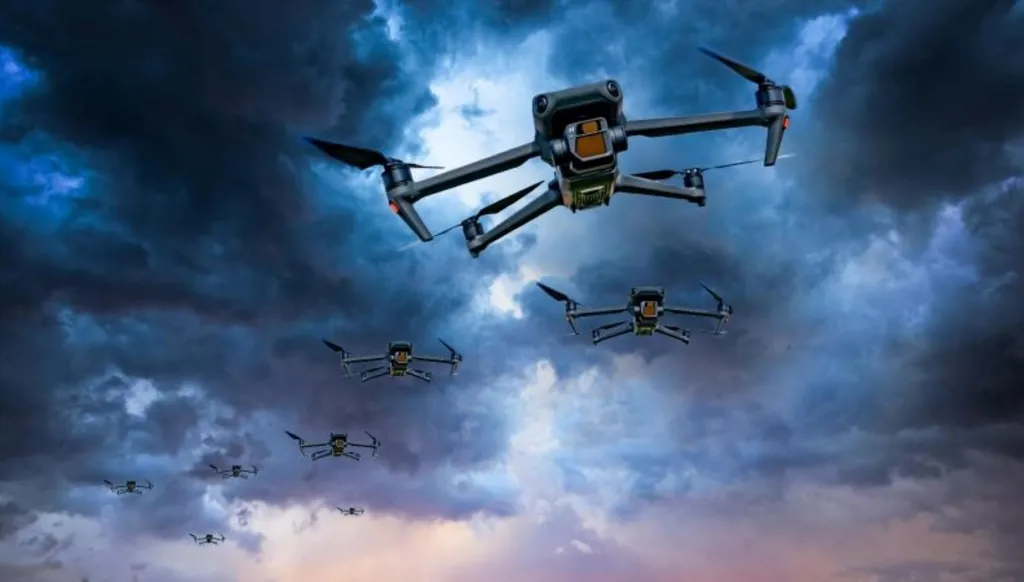


In the aftermath of the Israeli-American confrontation with Iran during 2026, the world was preoccupied with the tally of missile strikes, military losses, and political repercussions.
But behind the military scene, another war was silently taking place: an economic war driven by the global arms industry, from missile factories in the United States to drone production lines in Iran, and from Israeli defense companies to growing military ambitions in the Arabian Gulf and Turkey.
The modern wars no longer consume only armies and ammunition but also drive one of the largest and most profitable industries in the world. According to the latest data from the Stockholm International Peace Research Institute, global military spending reached about 2.89 trillion dollars in 2025, the highest level recorded so far. At the same time, the United States captured about 42 percent of global arms exports during the period 2021-2025, far ahead of France, Russia, Germany, and China.
In this gigantic market, the Middle East and North Africa region is one of the world's largest arms-importing regions in terms of population size and economy. While Europe has become the prime destination for American military exports due to the war in Ukraine and the rearmament wave sweeping through Europe in light of this war, our region remains one of the most important and politically and economically sensitive arms markets.
The United States remains the dominant force in the global arms trade. For decades, the Gulf States, Egypt, Jordan, and Israel have relied to varying degrees on American weapons, whether in fighters, air defense systems, missiles, or command and control systems. However, the recent military confrontation in the region has shown a significant shift in the nature of military demand.
In past decades, major deals focused on fighters, tanks, and warships, but today the priority has shifted to air and missile defense systems, radars, and anti-drone systems.
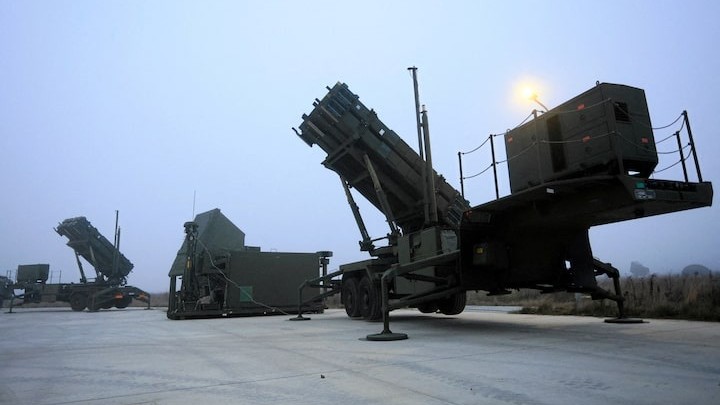
Who are the Biggest Seller and the Biggest Buyer?
Every missile or drone launched by Iran or its proxies in the region means additional demand for interceptor missiles, radars, and associated electronic systems. Hence, American companies like Lockheed Martin, RTX, Northrop Grumman, Boeing Defense, and L3Harris Technologies have emerged as major beneficiaries of escalating regional tensions. The benefit is not limited to selling new systems but also includes maintenance, upgrades, training contracts, and resupplying armies with ammunition and components consumed during military operations.
Conversely, Israel occupies a unique position in the global arms economy. On one hand, it is the largest cumulative recipient of U.S. military aid since World War II, and on the other, it has become one of the leading exporters of advanced military technology in recent decades. Israeli defense exports reached a record level of 19.2 billion dollars in 2025, driven by increased demand for air defense systems, radars, drones, and electronic warfare.
Companies such as Israel Aerospace Industries (IAI), Rafael, and Elbit Systems have become key players in the global markets. The recent military confrontation in the region offered these companies an additional opportunity to showcase their capabilities in actual combat conditions. The success of any system on the battlefield is not just a military gain but also serves as an effective marketing tool in the international arms market.
While the United States is the “biggest seller,” the Gulf States represent one of the most important categories of “buyers.” The Gulf has for years lived under the pressure of long-range missile and drone threats, whether directly from Iran or from its regional allies. This security environment prompts regional countries to redefine their defensive priorities.
The fundamental question is no longer just how many fighters the state possesses or how many warships are in its fleet, but also how many interceptor missiles it has and how resilient its defense systems are against consecutive waves of attacks.
Therefore, air defense systems, radars, early warning networks, and counter-drone systems have become the fastest-growing sectors in military spending in the region. For countries whose economies rely on energy exports and critical infrastructure, it is imperative to protect oil facilities, ports, and airports as part of economic security, not just military security.
What is the Future Shift?
Perhaps the recent confrontation is the clearest example of the shift occurring in modern conflicts. Over the past years, Iran has developed a military model based on a large number of relatively low-cost drones and missiles. The cost of some Shahed suicide drones is estimated at tens of thousands of dollars, while the cost of interceptor missiles used to shoot them down may exceed millions of dollars, according to estimates in defense studies.
This paradox is clearly seen in systems like the Patriot and THAAD and advanced Israeli defense systems, where the cost of intercepting a low-cost target can multiply the original production cost. Thus, economic attrition becomes part of the military strategy itself.
Success is not only measured by the number of targets struck but also by the ability to impose high costs on the opponent. It extends beyond selling defense systems to include buying new interceptor missiles after stockpiles run out, upgrading radars, developing software, and enhancing early warning capabilities. For this reason, air defense companies have become some of the “biggest beneficiaries” of contemporary regional conflicts.
In Iran, Western sanctions imposed for decades have pushed the authorities to establish a military-industrial base relying heavily on local manufacturing. While Tehran remains relatively behind in areas like modern fighters, it has succeeded in developing significant capabilities in ballistic missile and drone production, among others.
Over time, some of these products have become tools of influence beyond Iranian borders, whether through direct exports or technology and expertise transfer to regional allies and partners. Thus, Iran has become a part of the global arms economy not only as a “buyer” or “recipient” of technology but also as a “producer” and “exporter” of certain military categories that have made their presence known in more than one conflict arena.
Who Dominates Today?
Despite clear American dominance, the global arms market is more diverse than it appears. In Europe, France stands out, notably as the second-largest “exporter” of arms in the world in recent years. Companies like Dassault Aviation, Thales, Naval Group, and MBDA have become major “suppliers” to several Arab countries, including the United Arab Emirates, Qatar, and Egypt.
Russia maintains a significant presence in Asian, African, and Middle Eastern markets, even amid the challenges posed by the Ukraine war and Western sanctions.
Moscow has been an important “supplier” of weapons in the region for decades, despite its relative decline in recent years. Meanwhile, China continues to expand its global share through drones, air defense systems, missiles, and weapons that are less costly compared to their Western counterparts. It has successfully penetrated markets traditionally reliant on American and European suppliers.
In terms of numbers, the United States dominates the global arms trade with a 43 percent share of major arms exports, followed by France (9.6 percent), Russia (7.8 percent), and China (5.9 percent). The global military industry's size reflects the expanding market, with revenues of the world's top 100 arms companies reaching 679 billion dollars in 2024, according to the Stockholm International Peace Research Institute.
According to the institute's data for the period 2020-2024, Ukraine topped the list of importers with an 8.8 percent share of global arms imports, followed by India at 8.3 percent, then Saudi Arabia and Qatar at 6.8 percent each, and Pakistan at 4.6 percent.
The impact of wars is not limited to factories and government contracts but also extends to global stock exchanges. Investors typically regard geopolitical tensions as an indicator of increased future demand for arms, ammunition, and military services. Hence, defense company stocks often outperform other economic sectors during periods of tension or major wars.
For financial markets, any anticipated increase in military spending means longer-term contracts, larger profits, and more stable cash flows for companies operating in the defense sector.
Explore our weapons dossier and the related stories below:
- The Evolution of Tanks: Artificial Intelligence, Drones, and Advanced Defenses
- Kalashnikov: How a Soviet Rifle Became the World's Most Widely Used Weapon
- Drone vs drone: How “Merops” is reshaping air defense economics
- The end of strategic depth: How modern warfare is redrawing the map of security