

The Evolution of Tanks: Artificial Intelligence, Drones, and Advanced Defenses
With the evolution of anti-armor weapons, the need to improve the protection of military vehicles has emerged.



 Messenger
 Whatsapp
 Threads
 Email
Email
 Print
Print
 X
X
 Facebook
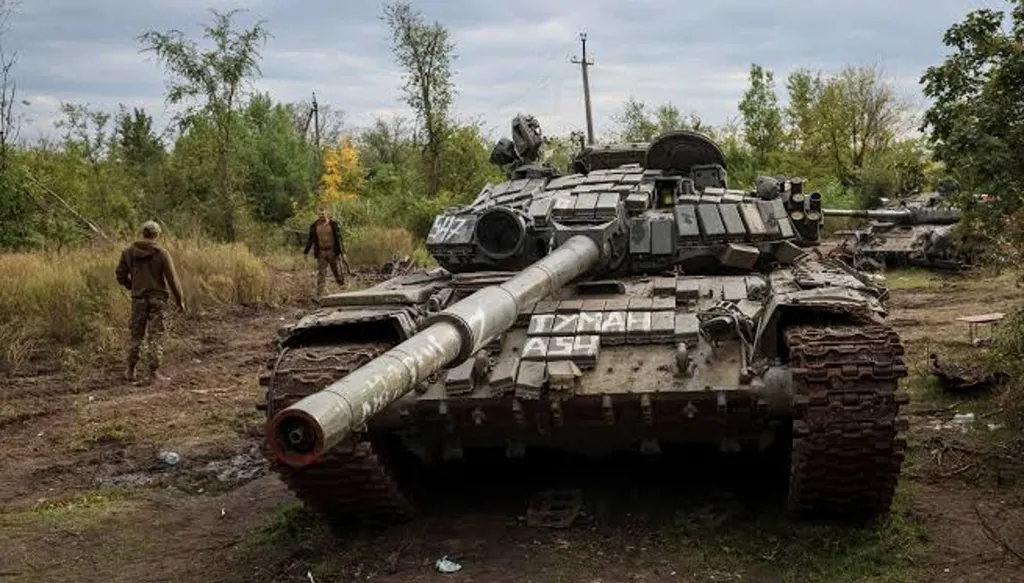


Despite the advancement of artificial intelligence and its increasing impact on the world of armament, the tank still holds its place as a key element in military arsenals around the world.
Therefore, defense companies in the United States, Russia, China, South Korea, and European countries continue to work on developing new generations of tanks and their protection systems to face the growing threats in modern battlefields.
Explore our weapons dossier and the related stories below:
The Ukraine war imposed significant challenges regarding the development of tank operations, more so than other wars like the Iran war, which were mostly aerial battles. The Ukrainian-Russian borders were a testing ground for the capabilities of existing tanks and the threats they face, to develop defensive plans.
Active Protection Systems: Defense Before Impact
With the evolution of anti-armor weapons, the need to improve the protection of military vehicles has emerged. Although increasing the thickness of armor may provide additional protection, it leads to increased weight and size, affecting mobility and performance.
Therefore, armies have moved towards developing Active Protection Systems (APS), designed to intercept or deflect anti-tank projectiles before they hit the vehicle. These systems rely on explosives or intercepting projectiles that detonate near incoming threats to destroy or divert them from the target.
Among the prominent projects is the "Iron Curtain" system, developed in 2004, before a refined version known as the "Enhanced Iron Curtain" (I2C) appeared, providing better performance while reducing size, weight, power consumption, and cost. Modern protection means include technology that disrupts guided missiles and electronic warfare systems, as well as laser jammers that disrupt enemy guidance means.
Artificial Intelligence Inside the Tank
Artificial intelligence has become a part of the future of modern tanks, helping crews quickly identify and classify the most dangerous threats, as well as making tank detection and targeting more difficult for the enemy.
This direction is also evident in the Capint system, described by its developer as the basis for a future combat system that combines artificial intelligence, advanced protection systems, anti-drone technologies, and beyond-visual-range engagement capabilities.
In the context of defensive technologies, some tanks include guns and a fire control system supported by artificial intelligence capable of tracking and targeting at high speed. They also carry anti-tank missiles with a range of up to 8 kilometers, including protection systems such as the DIRCM system to counter heat-seeking missiles and the APS system to intercept projectiles, as well as jamming systems against drones.
Tanks and Collaboration with Drones
Efforts are being made to develop the Future Ready Combat Vehicle (FRCV), an advanced digital platform reliant on networks and human-machine collaboration. It will be capable of controlling unmanned ground vehicles, drones, and loitering munitions.
It will include battle management systems, friend-and-foe recognition capabilities, secured communications for operating in electronic warfare environments, in addition to 360-degree situational awareness and counter-drone capabilities.
Some tanks are distinguished by effective protection systems and the integration of drones within their combat capabilities.
Stealth and Hydrogen
South Korean company Hyundai Rotem is working on developing the K3 tank, which operates on hydrogen to reduce the heat and noise generated by diesel engines, minimizing detection chances and enhancing mobility.
It features a low-profile design and materials that reduce its radar footprint, modular adaptable armor according to mission, as well as autonomous driving capabilities and the ability to launch reconnaissance drones to detect threats.
Explore our weapons dossier and the related stories below:
- Drone vs drone: How “Merops” is reshaping air defense economics
- The end of strategic depth: How modern warfare is redrawing the map of security
- The Evolution of Tanks: Artificial Intelligence, Drones, and Advanced Defenses
- Kalashnikov: How a Soviet Rifle Became the World's Most Widely Used Weapon