

The end of strategic depth: How modern warfare is redrawing the map of security
From drones hidden in trucks to strikes reaching distant bases and islands, recent conflicts show that distance is no longer a reliable shield—and the battlefield is increasingly everywhere.




 Messenger
 Whatsapp
 Threads
 Email
Email
 Print
Print
 X
X
 Facebook


From Russia to Iran
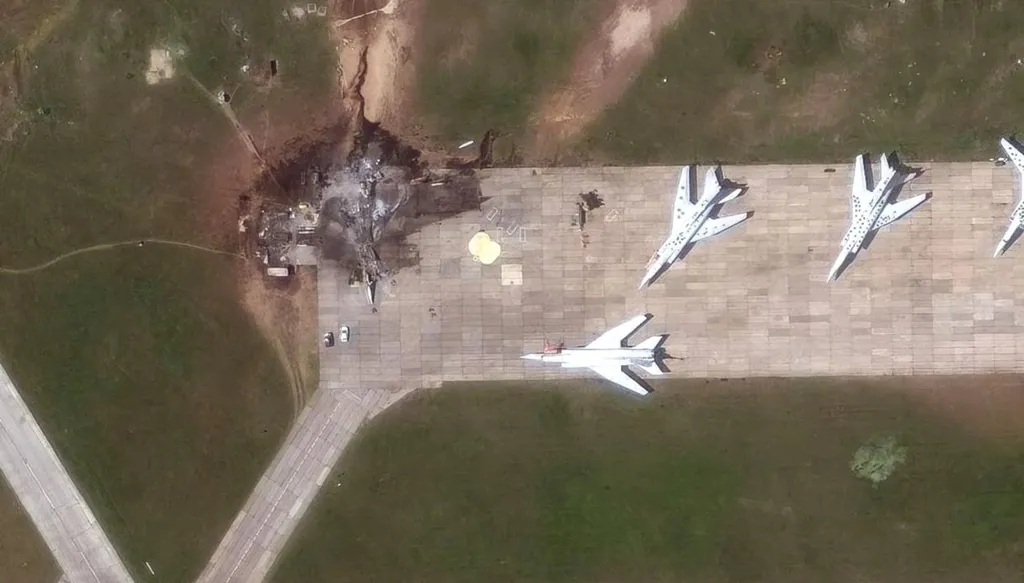
This trajectory reached a new stage with the Russian–Ukrainian war. In the “Spider Web” operation, Ukraine, according to its account, used 117 drones that were smuggled inside containers transported on civilian trucks deep into Russian territory, before being launched near strategic airbases. Kyiv stated that the operation damaged or disabled 41 aircraft, including strategic bombers and early warning aircraft.
The Center for Strategic and International Studies (CSIS) assessed that the significance of the operation goes beyond the direct losses, as it demonstrated that facilities located far from the front lines can become vulnerable to attacks using relatively low-cost means. Chatham House, for its part, argued that the operation requires a comprehensive reassessment of the concept of protecting rear bases in the era of drones.
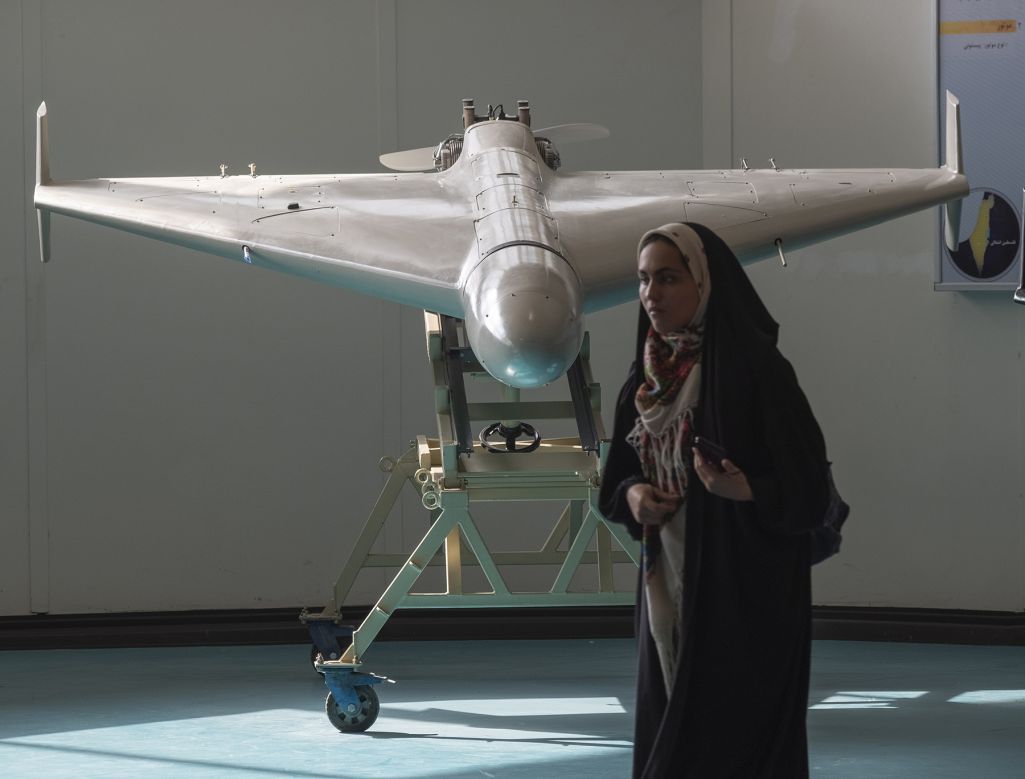
The Iranian experience, however, may have carried a different and more complex dimension. In the war fought by the United States and Israel against Iran, multiple reports highlighted the role of an intelligence infrastructure whose components had been prepared inside Iran over several years. These efforts, according to Western, Israeli, and Iranian reports, included the smuggling of equipment, communications technology, and drone operating components into Iranian territory, in addition to the establishment of networks capable of gathering intelligence and identifying the locations of radars, missile launchers, and command centers.
During the first hours of the 12-day war, drones and offensive assets were activated from within Iranian territory simultaneously with airstrikes coming from outside. These operations targeted a number of air defense systems and missile launch sites, helping to disrupt radar and early warning systems during the opening phase of the confrontation. According to analyses published by the Institute for the Study of War (ISW), these operations facilitated the main strike and weakened Iran’s ability to respond quickly in the early hours.
The Russian and Iranian cases reveal an important shift in the nature of conflict. Reaching strategic depth no longer requires traversing vast distances or penetrating multiple layers of air defenses. Instead, an adversary can exploit intelligence networks or offensive means that have been pre-positioned inside the targeted state, creating a launch point that is closer to the target and harder to detect.
Even remote islands have entered the zone of risk
This shift has not been limited to facilities located deep inside countries. Diego Garcia Island, which hosts one of the most important US bases in the Indian Ocean, was long considered a model of a fortified location due to its geographical remoteness and isolated position.
However, Iran’s attempt to target the island during the recent war showed that even distant locations have become part of deterrence and targeting calculations. Even without confirmed hits, the mere inclusion of a base located thousands of kilometers away within the logic of the battlefield carries an important strategic implication.
Bases that were previously classified as assets beyond the reach of adversaries now face a different reality. The rapid development of long-range missiles, drones, and reconnaissance and targeting capabilities has made long distances far less capable of providing the protection they once offered in previous decades.
A new era of deterrence
The examples spanning from New York and Aramco to Russia, Iran, and Diego Garcia reveal that one of the oldest principles of military deterrence is increasingly being challenged. Geography is no longer the decisive factor it once was, and distance is no longer a sufficient guarantee for protecting strategic assets, while the ability of states and armed groups to project threats into the depth of their adversaries has expanded.
For this reason, major militaries are moving toward revising their defense doctrines, with greater emphasis on dispersing military assets, strengthening internal protection measures, developing counter-drone systems, and building more complex early warning and intelligence networks.
What recent years suggest is that warfare is entering a new phase in which the value of geographic depth is gradually declining, while the importance of the ability to reach the enemy’s depth is increasing, disrupting the adversary from within, and denying them the sense that there is a safe space outside the battlefield.
Explore our weapons dossier and the related stories below: