

From Ukraine to Iran: The emerging limits of military dominance
How modern wars are exposing the gap between technological superiority and the ability to adapt quickly to rapidly evolving battlefield realities.




 Messenger
 Whatsapp
 Threads
 Email
Email
 Print
Print
 X
X
 Facebook


“During the war, everybody has problems, even you, but you have a nice ocean and don't feel it now, but you will feel it in the future.”
About a little over a year after that pivotal and widely discussed exchange, the predictions of Ukrainian President Volodymyr Zelensky about modern warfare were partially validated. At the time, US President Donald Trump appeared dismissive of the warning: “Do not tell us what we will feel.” After the war on Iran, the United States did feel its effects, at the very least in terms of its military arsenal.
Iran opens a “window of vulnerability”
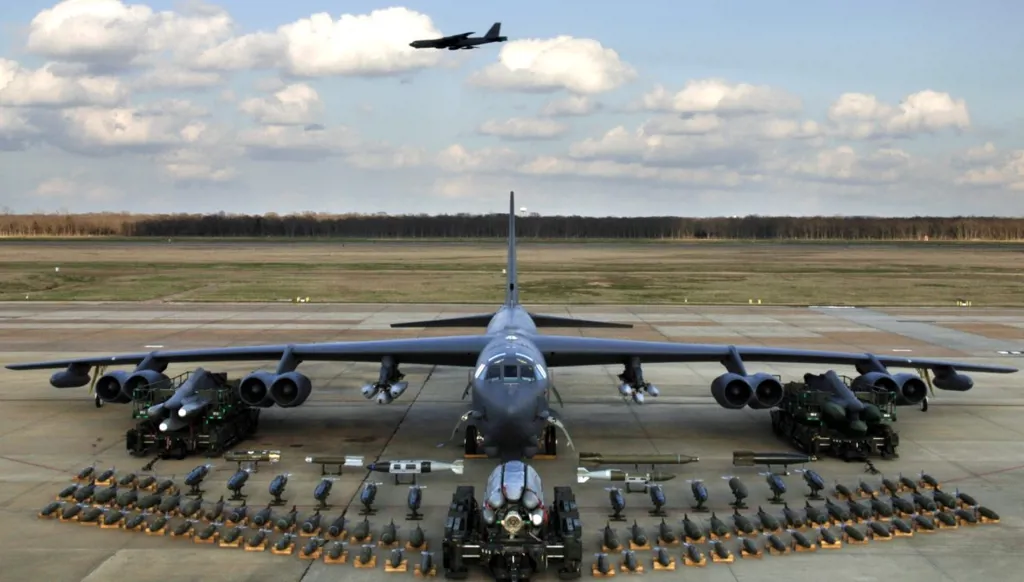
At the end of May, the Center for Strategic and International Studies released new estimates regarding shortages in US ammunition following the war. The report concluded that the United States has entered a dangerous “window of vulnerability.” In four out of seven categories of American offensive and defensive missiles, there are shortages equal to or exceeding 50 percent.
For example, the United States used about 67 percent of its stockpile of Tomahawk missile offensive missiles, and between 36 and 58 percent of its THAAD missile system defensive missile inventory, and between 39 and 55 percent of its Patriot missile system stock. The most concerning point is that the United States would need between one and five years to return to prewar stockpile levels, according to the report. It is also not guaranteed that even baseline stockpiles would be sufficient for a potential war in the East Asian theater.

During the first months of Ukraine’s use of some advanced American missiles of the “HIMARS” type, the Russians were able to divert those missiles away from their targets through jamming. Later, the Ukrainians managed to readjust targeting by bypassing Russian electronic interference. This is a simple example of how quickly adversaries can adapt the way they use weapons, even without being parties to their manufacture. According to some American generals, they learned from the Ukrainians how to update their own tactics in using their weapons.
Iran and the real lesson… it is not technology
Some believe that the introduction of new technology into the battlefield is the decisive factor in shifting the balance. In many cases, this claim is exaggerated. Wars do not only require the introduction of such technology, but also the ability to scale its use rapidly and at a decreasing cost.
Iran, for example, has succeeded in increasing the production of drones and, most likely, in reducing their cost. The cost of its widely used “Shahed-136” drones ranges between 20,000 and 50,000 dollars, though some estimates place it even lower than that.
It was not expected that the United States would find itself in this situation. Ukrainian drones and missiles inflicted significant costs on Russia’s Black Sea Fleet during the first two years of the war. However, the complexity of the American mindset of superiority, along with the historical bureaucratic inertia typical of militaries in general, has likely undermined the ability to adapt quickly and cheaply to new realities, according to Scharre.
The post Iran war period represents a difficult phase for the United States, and not only because of the nuclear negotiations.
:Explore our weapons dossier and the related stories below