

Lebanon Becomes Collateral in Washington’s Iran Reset
Shifts in Washington’s approach to Tehran are reverberating in Lebanon, complicating efforts to strengthen state institutions amid enduring parallel power structures.



 Messenger
 Whatsapp
 Threads
 Email
Email
 Print
Print
 X
X
 Facebook
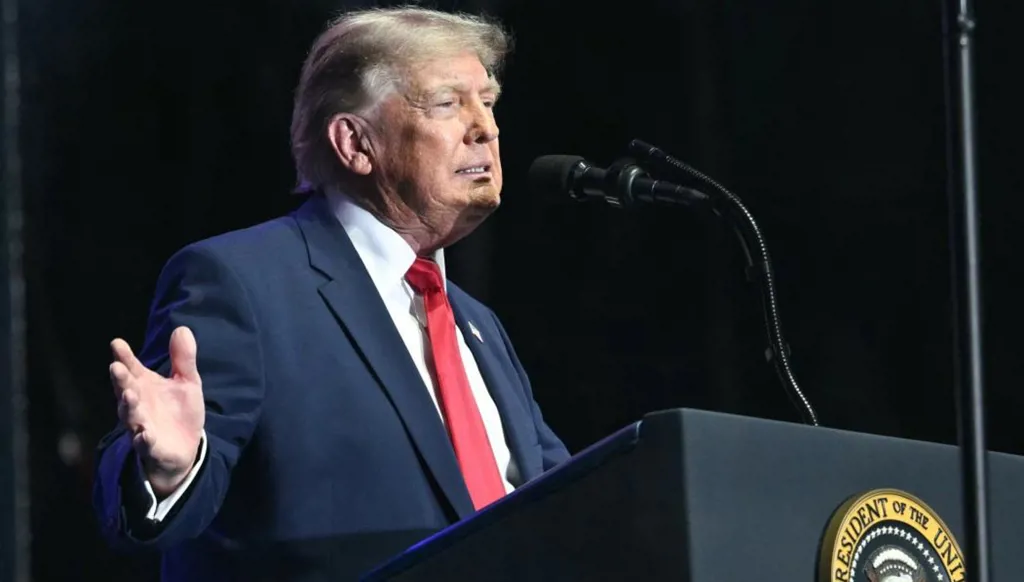


The American–Iranian “memorandum of understanding” has raised concerns across the region, from Lebanon to the Gulf and all the way to North Africa, as it appears to resemble concessions to Iran more than a balanced understanding between the world’s only superpower and Iran. This is especially so since it came after a war that President Donald Trump said had led to the destruction of Iran’s military and economic capabilities and brought it to its knees, ultimately pushing it to the negotiating table, where, according to Trump’s statements, it gave the United States everything it demanded.
Of course, we do not dwell on Iranian political propaganda, which in reality is nothing more than rudimentary propaganda belonging to another era. However, one cannot ignore the growing concerns in the region about the shift in President Trump’s policy and his assignment of his vice president, J. D. Vance, to the task of negotiating with the Iranian side. The actual war lasted 38 days, while the negotiations and political bargaining lasted nearly 70 days.
The reality is that Trump’s decision to halt the war halfway prevented the completion of its objectives, giving the Iranian regime an opportunity to survive collapse and, in turn, granting its regional allies a lifeline amid changes that had already disrupted the regional trajectory in 2023 and 2024. Without delving into the broader regional dimension, one can observe the impact of the American–Iranian negotiations on the Lebanese arena, where Lebanese state legitimacy had begun taking bold steps toward direct negotiations with Israel under American sponsorship, in order to reach lasting agreements that would end the conflict between Lebanon and Israel by resolving all disputes between the two countries.
It is also important here to note the decisions taken by the Lebanese government in August 2025 and then in March 2026 to limit weapons to the hands of the state, in other words to disarm Hezbollah, as well as the declaration that Hezbollah’s weapons and its operational and military activities are illegal and illegitimate, through a ban decision that was voted on in a heated cabinet session.
Although these decisions have not yet been implemented on the ground, they have established a legal precedent that will not be easy for the Iran-linked party to erase, for the simple reason that government decisions may remain in drawers for years, but at a suitable moment they can be taken out and enforced. This, of course, depends on the balance of power, which is constantly shifting in the region and therefore reflects on the Lebanese arena.
Before the shift in the American president’s approach to the war with Iran, the path was paved for the Lebanese state apparatus to embark on the venture of negotiation and to take further bold decisions in favor of building the state. When I speak of the state, I refer to the machinery that revolves around President Joseph Aoun and Prime Minister Nawaf Salam, while excluding Speaker of Parliament Nabih Berri, whom I consider part of the Iranian political apparatus operating within formal state institutions. He will not leave the position in which he has been firmly entrenched for a long time, dating back to the era of Syrian occupation and guardianship, followed by Iranian dominance that inherited Syria after the assassination of the late Prime Minister Rafik Hariri by a security group affiliated with Hezbollah.
Therefore, Speaker of Parliament Nabih Berri will continue to play the role of the “good cop” alongside Hezbollah, absorbing as much opposition as possible to the party’s policies and major objectives in Lebanon, foremost among them domination and turning Lebanon into an Iranian political, security, and military platform. More dangerously, the party’s objective is to bring about profound demographic and property ownership changes in Lebanon through control, dominance, and the power of arms. Gradually, it has pushed more communities that are not aligned with its approach and nature toward emigration. From here, I have often compared Hezbollah’s behavior and methods to those of the Jewish Agency in Palestine at the beginning of the last century.
The American shift in its approach to the conflict with Iran has inflicted significant damage on the Lebanese arena, because it shook confidence in the continuity of strong and firm American support for the path of strengthening the state project over the Iranian militia project in Lebanon. Consequently, we are facing a problem of a lost American compass regarding the Lebanese file, as Washington has effectively granted Iran a seat at the table in discussions over Lebanon, leading to overlapping negotiation tracks and widespread confusion in this regard.
Based on the above, it cannot be denied that the sharp American shift in dealing with Iran, at least through the provisions of the memorandum of understanding, has cast a shadow over Lebanon’s path toward imposing the state project at the expense of the parallel state.
Disclaimer: The opinions expressed by the writers are their own and do not necessarily represent the views of Annahar