Lebanon and the perpetual cycle of external intervention

Opinion 26-06-2026 | 09:09

Lebanon and the perpetual cycle of external intervention

From Cairo to Taif and beyond, Lebanon’s sovereignty remains trapped between regional power struggles and repeated foreign-imposed arrangements.


Lebanon and the perpetual cycle of external intervention
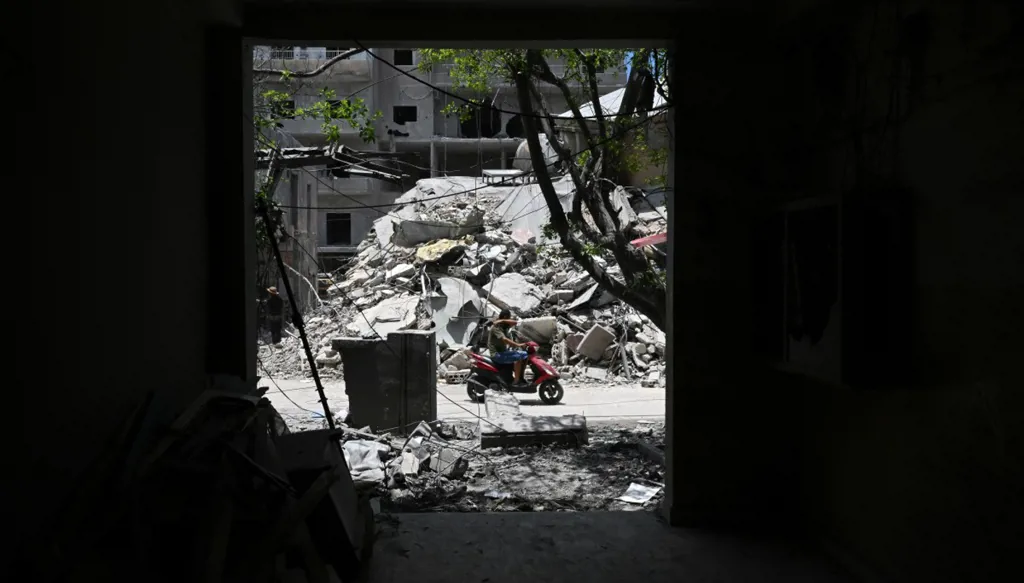
Lebanon has long paid the costs and prices of regional and international deals (AFP).
Smaller Bigger

Last week was the scene of a massive, albeit largely unspoken, explosion of one of the most difficult objective historical dilemmas among Lebanese people, deeply rooted in their anxieties and fears, to the point of causing panic and terror attacks that often lead individuals and communities to further waves of emigration.


All the accumulated legacy of experiences and periods in which Lebanon has paid the costs and prices of regional and international deals, especially and specifically in the decades that began with the major Lebanese war in 1975 and what followed and stemmed from it, has reemerged in the Lebanese collective memory with the recall of the most recent and undoubtedly most dangerous model of forcibly dragging Lebanon into the outcomes of the US Iranian understanding.


And because it may be difficult for non-Lebanese people, and even for Arabs themselves, to grasp the depth of the Lebanese dilemma regarding any development similar to the consequences of the US Iranian understanding, even though most Gulf and Arab states, indeed all of them, appear and have appeared welcoming of it for many reasons that require their own specific analyses, it becomes urgent to revisit the deep motivations behind the caution, fear, and even justified apprehension among a large segment of Lebanese society about the cost symbolized by sacrificing their country, a country torn apart under the storms of competing regional interests and spheres of influence, under the cover of influential major powers.


The Cairo Agreement and “Fatahland”

The most painful point in the “cost dilemma” (which is not similar to Stockholm syndrome, where a hostage becomes attached to their captor and tormentor) reaches first and foremost the well-known Cairo Agreement, which practically dismantled the best state experience Lebanon had known since its independence and the consolidation of its geographical and constitutional entity. At that time, the Lebanese authorities of that era surrendered to a dubious Arab and international conspiracy and granted Palestinian fighters the right to fight Israel from the area known as “Fatahland” in southern Lebanon.


Then came the next, even more dangerous experience, with a specifically American “engineering” of legitimising Syrian army intervention in Lebanon’s wars, starting with the drawing of what were called the red lines that stopped Hafez al Assad’s army’s advance at the Awali River in the south, in order to prevent any military confrontation with the Israeli army that had invaded the south and established the border strip.


Those red lines did not remain merely a fatal marker of Lebanese sovereignty; they evolved into what became an even more dangerous American, Western, and Arab collective surrender to a tyrannical regime, the Hafez al Assad regime, granting it an occupying guardianship over Lebanon.


It is true that the international Arab umbrella later returned to stop the internal and external wars in Lebanon with the signing of the Taif Agreement, yet the international submission to the terror of the Assad regime, which shortly after the agreement was reached went on to assassinate President René Moawad because he refused to grant it permission to kill and to carry out the massacre of storming Baabda Palace in order to topple Michel Aoun’s authority, tore apart the reality of the Taif international umbrella and its meaning, leaving Lebanon for a long time under the grip of a false, Syrian, dark Taif.


Exploitation as an Effective Weapon


The concept of the “deadly cost” or Lebanon as a perpetual victim was not truly dismantled, historically or in practice, except with the eruption of the greatest revolution in Lebanon’s entire history: the independence uprising of March 14, 2005, which exploded over the blood of victims of the Assad regime and its terror. That movement was destined, after forcing that regime into a humiliating withdrawal from Lebanon, to establish a strong state that would permanently end external violations of its sovereignty and territory. However, the Lebanese faction that inherited loyalty to the defunct Assad regime and its twin alignment with the mullahs’ regime in Iran, along with a fully sectarian, financial, military, and ideological dependency, managed to keep “exploitation” as an effective and deadly weapon by repeatedly drawing Israel into occupations and wars on Lebanese territory.


When Lebanon was “informed” a few days ago of its “membership” in a cell that brings together the United States and Iran to monitor the ceasefire, this was an ominous sign of the revival of a dilemma that encapsulates Lebanon’s worst fate.


Disclaimer: The opinions expressed by the writers are their own and do not necessarily represent the views of Annahar