Fifth round of Lebanon-Israel talks in Washington stalls over Israeli withdrawal

Lebanon 26-06-2026 | 08:20

Fifth round of Lebanon-Israel talks in Washington stalls over Israeli withdrawal

The fifth round of US mediated Lebanon Israel negotiations in Washington ends amid deep disagreements over Israeli withdrawal from southern Lebanon, security arrangements, and proposed pilot zones, despite limited progress toward a declaration of intent


Fifth round of Lebanon-Israel talks in Washington stalls over Israeli withdrawal
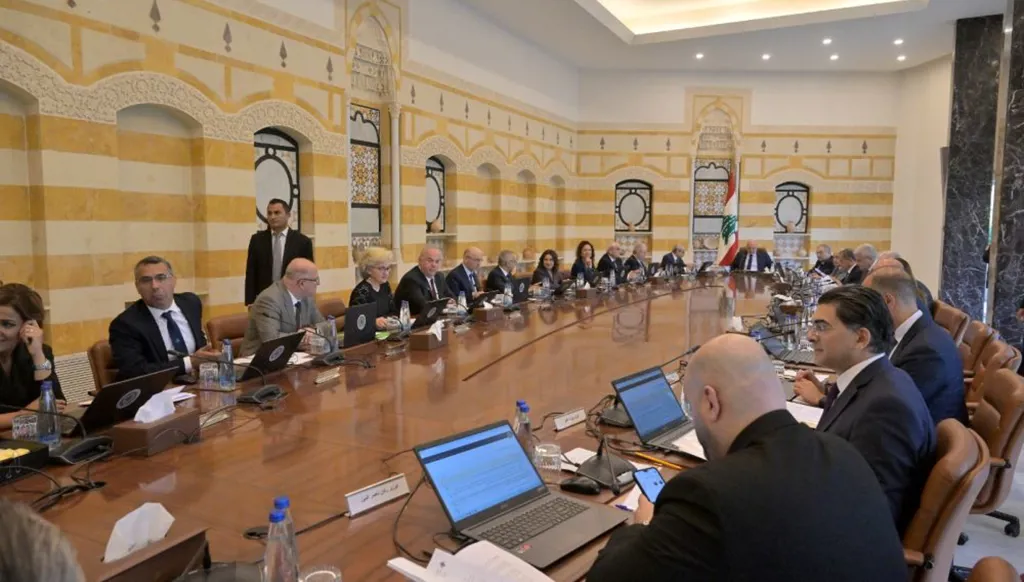
During the Cabinet session held at Baabda Palace yesterday. (Nabil Ismail
Smaller Bigger

It had become clear, even before the fifth round of the Lebanese, Israeli, and US negotiations in Washington concluded yesterday, that the negotiations were facing both longstanding challenges and a new set of complications that had made the process even more difficult. Iran's involvement in the security and military framework related to monitoring the ceasefire in Lebanon further complicated matters, raising the level of risk surrounding the negotiations in Washington.


Although leaked information and reports from the three days of talks indicated growing tensions over key issues between Lebanon and Israel, including the timetable for an Israeli withdrawal and the proposed pilot areas, the emergence of reports from the US State Department several hours before the third and final negotiating session claiming that Israel would withdraw from part of the buffer zone in southern Lebanon, despite later being denied by both Israel and Lebanon, was interpreted by informed sources in Beirut as pointing to the outcome the negotiations were expected to reach one way or another.


These sources explained that discussions had indeed focused on such a withdrawal because it would serve as the starting point for the procedural steps agreed upon by Lebanon and Israel under US political and executive sponsorship. Those steps would later pave the way for implementing the agreement on the first pilot areas.


However, shortly after the final round of negotiations began, bringing together both diplomatic and military delegations, reports from Washington indicated that the negotiators had reached a deadlock and that the issue of an Israeli withdrawal from southern Lebanon had prevented the two sides from reaching an agreement. At the same time, Israeli media, citing Israeli sources, reported that the main disagreements between Lebanon and Israel centered on the withdrawal of Israeli forces and the proposed pilot areas.


Israeli Prime Minister Benjamin Netanyahu reinforced this position by once again declaring, "We will not withdraw from Lebanon and will remain in the security zone for as long as necessary. We have instructed the army to do whatever is required to protect the residents of the north."


For his part, Israeli Defense Minister Israel Katz stressed his opposition to any withdrawal from the "security zone" inside Lebanese territory, confirming that the Israeli security establishment rejects such a move despite the pressure being exerted on Israel over this issue.


Katz said that the Israeli army would continue to maintain its positions in the areas it currently controls, arguing that withdrawing from them under the current circumstances would not meet Israel's security requirements for protecting its northern border and preventing any potential threats.


However, information received later indicated that the parties had agreed on a declaration of intent, which was scheduled to be issued at the end of the negotiating round.


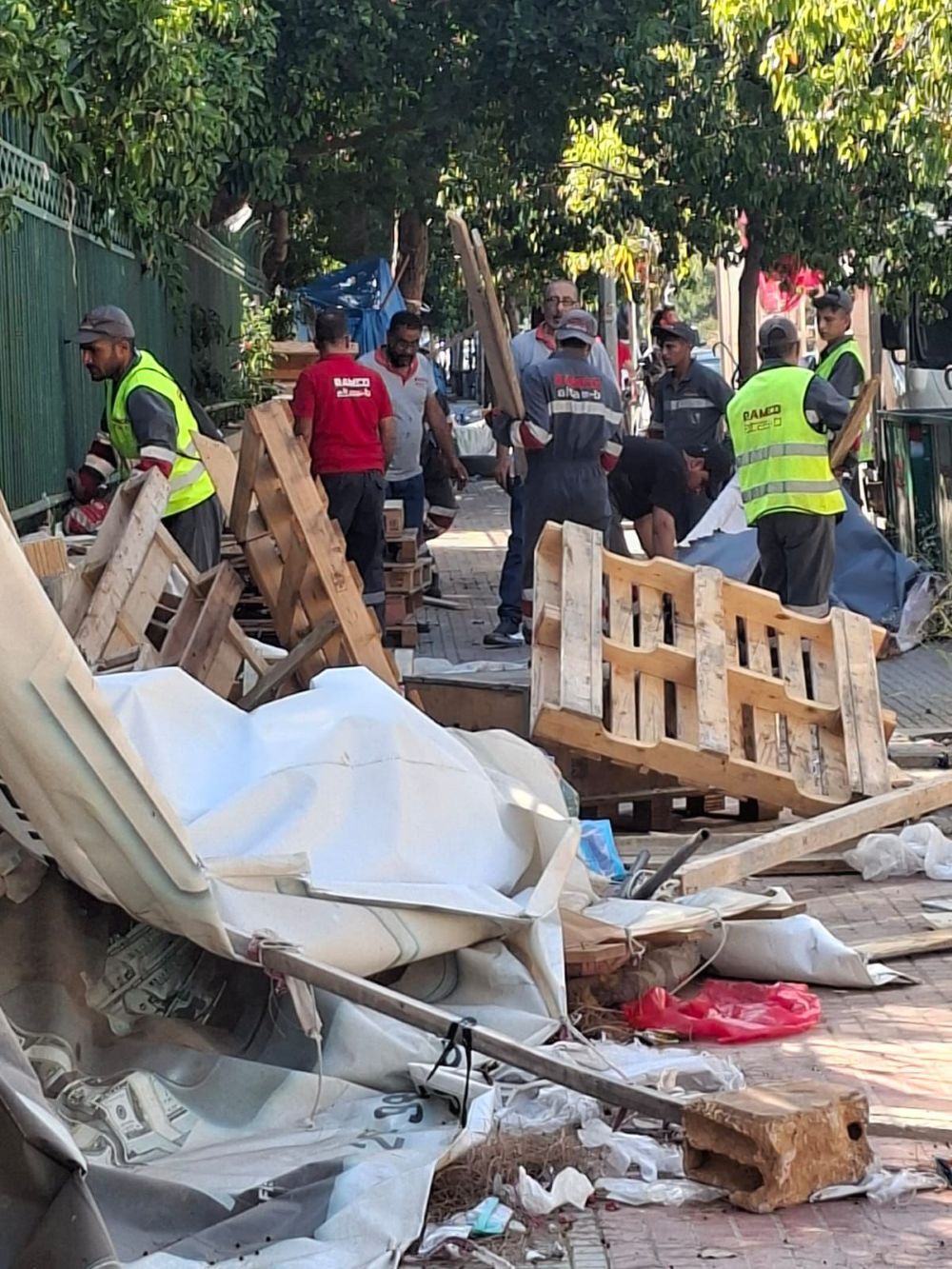
Removal of tents in the vicinity of the Horj Beirut after the evacuation of displaced persons.


Before the final negotiating session, a brief statement by US Ambassador to Lebanon Michel Issa reflected the difficult atmosphere surrounding the talks. He said, "The negotiations are continuing and coordination is ongoing, but the issue is far more complex than simply achieving a ceasefire."


US Secretary of State Marco Rubio, however, praised the progress made in the negotiations between Israel and Lebanon, saying, "Yesterday's results from the negotiations were very good." Speaking to reporters during a visit to Bahrain, Rubio added, "I believe we are very close to achieving our goal of securing a declaration of intent from both countries."


Confusion arose shortly before yesterday's negotiating session when Reuters quoted a US State Department official as saying that Israel had withdrawn from part of the buffer zone in southern Lebanon.


The official said that "the Israeli withdrawal represents a goodwill gesture toward the Lebanese government."


In response, the Israeli military denied receiving any orders to withdraw from the buffer zone in southern Lebanon. Israel's public broadcaster stated, "The Israeli army has not withdrawn from any area in Lebanon, and no decision to that effect has been made."


Israel Hayom also quoted Israeli officers stationed at a position inside Lebanon as saying, "We have not received any instructions to withdraw from the site."


On the Lebanese side, a Lebanese source denied the accuracy of Reuters' report citing the US official regarding the withdrawal of Israeli forces from part of the buffer zone, saying that Israel continues to occupy the area and is attempting to expand its occupation on a daily basis.


Israeli Conditions


Regarding information leaked from the previous two rounds of negotiations, reports indicated that Israel has been avoiding any discussion of a timetable for withdrawal and is imposing extremely difficult conditions for pulling out. According to these reports, more than ten proposals for pilot areas submitted by the Lebanese delegation and the US side were rejected by the Israelis, who insist that the Lebanese army operate in areas outside the occupied zone, both south and north of the Litani River.


The reports also said that the Lebanese and Israeli military delegations discussed a security annex, but many issues remain disputed, including the wording and substance of provisions linking an Israeli withdrawal to the complete disarmament of armed groups. Agreement has, however, been reached on the remaining points.


A statement was also circulated from a military source commenting on criticism directed at the Lebanese military delegation for refusing to take a commemorative photograph with the Israeli delegation. The source said such criticism reflected "a misunderstanding of the nature of the mission assigned to the delegation and the sensitivity of the current stage Lebanon is going through."


The source explained that the delegation had attended to carry out a specific national mission within the mandate granted to it, in a manner that safeguards Lebanon's interests and national principles. The success of any negotiations, the source added, should be judged by the results they achieve in serving Lebanon rather than by commemorative photographs or protocol formalities.


The source further stated that "The deaths of military personnel in deliberate Israeli attacks are still fresh in people's minds, and the effects of the aggression remain visible across many parts of Lebanon. This requires consideration for the feelings of the Lebanese people and adherence to conduct that reflects the scale of the sacrifices made in defense of the country."


These developments were also reflected in statements made by ministers before yesterday's Cabinet session at Baabda Palace. At the opening of the session, President Joseph Aoun reaffirmed "our commitment to rights, unity, and solidarity among the Lebanese people," adding, "This is our strongest weapon, and we must continue addressing the situation of the displaced."


Before the session, Deputy Prime Minister Tarek Mitri commented on US pressure on Syria to take responsibility for the Hezbollah file, saying, "President Ahmad al Sharaa's position is clear, and there will be no Syrian intervention in Lebanon."


Interior Minister Ahmad Hajjar said, "There are no unusual Syrian military deployments along the border, and coordination between Lebanon and Syria continues to secure the border and prevent any illegal activity."


He also confirmed that a new group of detained Syrians will be released, with the Lebanese judiciary determining the names and referring them to the Interior Ministry.


Hajjar further announced that the billboards along the airport road thanking Iran will be removed within two days.


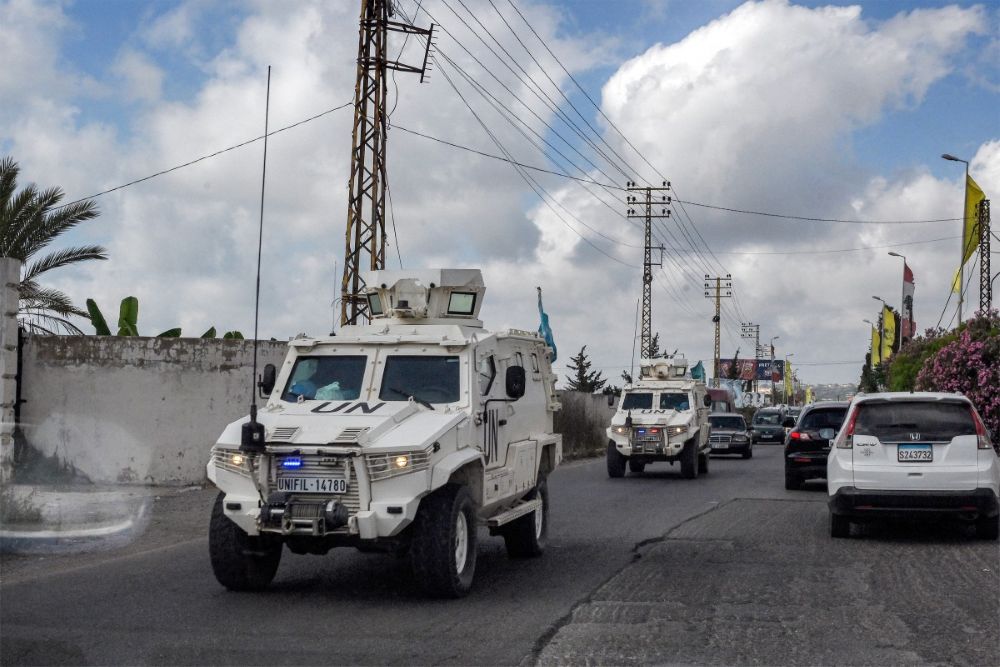
UNIFIL patrol along the coastal road of the city of Tyre in southern Lebanon. (AFP)


It is worth noting that during its session, the Cabinet settled the issue of the official examinations. Education Minister Rima Karami announced that the Cabinet had canceled the 2025 to 2026 official secondary school and technical baccalaureate examinations.


She added that students would instead be issued certificates of successful completion for the 2025 to 2026 academic year.