The Lost Names of the Iran-Iraq War: A Deep Dive

Opinion 25-06-2026 | 11:02

The Lost Names of the Iran-Iraq War: A Deep Dive

Decades after the Iran-Iraq war ended, thousands of missing Iraqis remain trapped between life and death, leaving behind families, unanswered questions, and a legacy of unresolved loss.


The Lost Names of the Iran-Iraq War: A Deep Dive
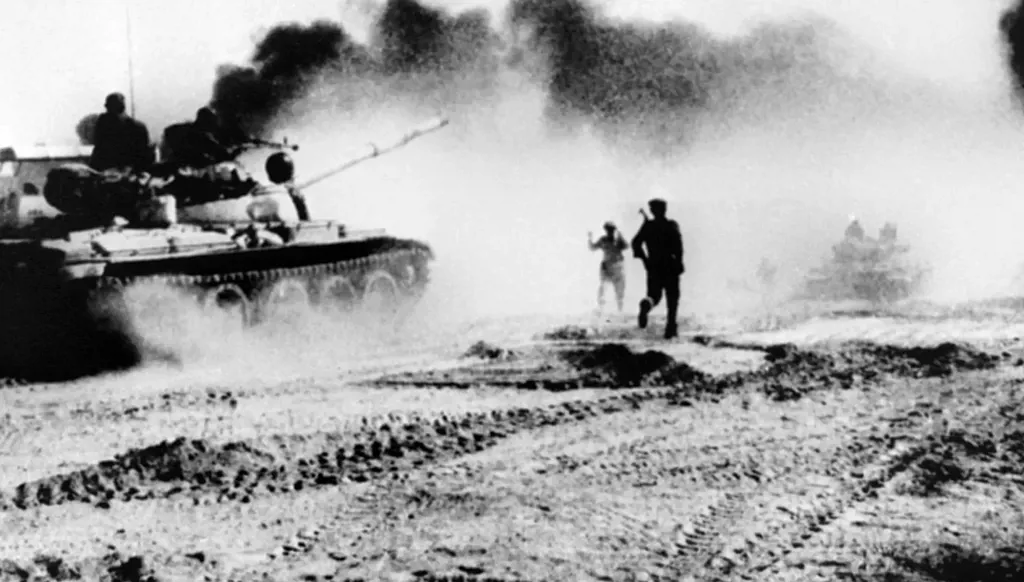
Image from the Iran-Iraq war (AFP/Archive)
Smaller Bigger

In the language of war, the missing are neither prisoners nor dead; they are ghosts acknowledged by no one, drifting through records as names and numbers, without ever regaining the form and presence that once carried the lived traces of their existence and the fleeting habits they were thought to have left behind.


“Missing” is not an adjective; it is a condition, a complex, rhythmic state that envelops those around it with unheard sighs. During the eight-year Iran–Iraq war, the number of missing persons grew steadily. Their women remain suspended in uncertainty, and their children are not considered orphans. What does that signify in the language of the state? Nothing.


The missing receive no monthly salary, and their families are denied any rights. The logic of erasure outweighs any system of balance. The sequence is broken, and numbers seem to mock their own absurdity. “Wasn’t the Hidden Imam absent until he was invoked as proof of the end times?”, a question stripped of sarcasm yet heavy with maternal reproach. Mothers, however, carry an unwavering memory, like that of ibexes that never lose their way even while sensing the hunters’ bullets closing in around them.


Those who were missing passed through the Al-Nahda and Al-Alawi bus stations, southward from the former, northward from the latter, drinking tea after eating fried eggs, before falling asleep on the buses as though already dead. They had no names, only small, suspended dreams, while Baghdad, their postponed dream as in films, received them only as ghosts; they drank its tea, but it was not generous. Near the Iraqi Museum, lines of soldiers stood without reflecting on history. I once joked with my friend Fawzi Rashid, the historian and archaeologist: “What do the soldiers at the Al-Alawi bus station think about?” and he laughed, replying, “They were certainly not thinking of Uruk, but of Baghdad, that was the real mistake.”


He Continues to Trace His Origin

The Iran-Iraq war ended in 1988, yet the question of missing Iraqis still lingers like an unresolved mystery. Their parents have passed away, and their children have grown old, while the grandchildren have learned to answer the question, “What did your grandfather do?” with a single word: “Missing.” It has become, in a sense, his final profession, a label he never chose, never mastered, yet one by which he is now defined. An ambiguous occupation, suspended between absence and identity, whose meaning remains open to endless interpretation.


It does not matter how you define the one who has been lost, the mother, the wife, the sister, or the daughters. They become a line of women standing in his shadow, a copy without an original. The tree uprooted from the family orchard does not carry its shadow away; it remains behind, silent, as though time itself has stopped speaking. These are stories that never reached Wadi al-Salam Cemetery in Najaf. And since the missing person leaves behind only the blankness of memory, all the pages once filled with his pain, laughter, sighs, and joys, between his first Thursday at school reciting the anthem and his last day at university kissing his colleague, between his tears as he held his first child and his final departure at dawn to join his battalion, become nothing but a family inheritance of absence.


A story written by a blind man and listened to by a deaf one. As for the reader, he is forced to invent words that were never spoken. A crossword that never fills its blanks until it empties at remarkable speed. Only delirium assists the carpenter as he builds a coffin for a dead man whose size, weight, and imagination he cannot know. But do the dead even need imagination? In this case, death resembles a Wednesday that never arrives because Monday has stretched itself to swallow Tuesday, there is no Wednesday without Tuesday. The carpenter distracts himself with jokes to delay his urge to cry with the family of the deceased, who still have not found his body after the records labeled him “missing.”


The Language of Hidden Hours


But how many were missing in that eight-year war? “52,785” names appear in the official records. Each name carries a number, a military rank, a home address, a date of birth, a civilian profession, and other details stripped of meaning. The records were never meant to function as a waiting list. I once had a missing friend who spoke with admiration about the film Gone with the Wind. I told him I had read Margaret Mitchell’s novel, and his eyes lit up as he said, “Then you haven’t seen Vivien Leigh.” I replied, “Tomorrow is another day,” and he looked at me in silence. Later that evening, he asked, “Do we have another evening?” It became a futile attempt to search for his name among the “52,785” recorded missing.


I thought of the lists of names engraved on memorials. Yet there is no true meaning to immortality when it reduces its elements to mere adhesive material. There is no difference between letters that fail to form a language. Indeed, loss itself is a language without an alphabet, a language born from waiting, tears, dreams, sighs, and all that settles in the chest without a name, and all that glimmers in the eye without a guide to interpret it. More painful still, Baghdad forgot its missing. It did not even erect a monument bearing their names, though that would have been the least it could do. They disappeared, and with them disappeared our other evening. My friend who went with the wind was right when he asked whether we would have another evening. I lacked the courage to ask him about the day that would follow. That day remains postponed, for no reason other than that I have not yet taken his stopped wristwatch, the one he left behind, to the watchmaker.


Disclaimer: The opinions expressed by the writers are their own and do not necessarily represent the views of Annahar.