

Child Recruitment in Libya: UN Report 2025 Insights



 Messenger
 Whatsapp
 Threads
 Email
Email
 Print
Print
 X
X
 Facebook
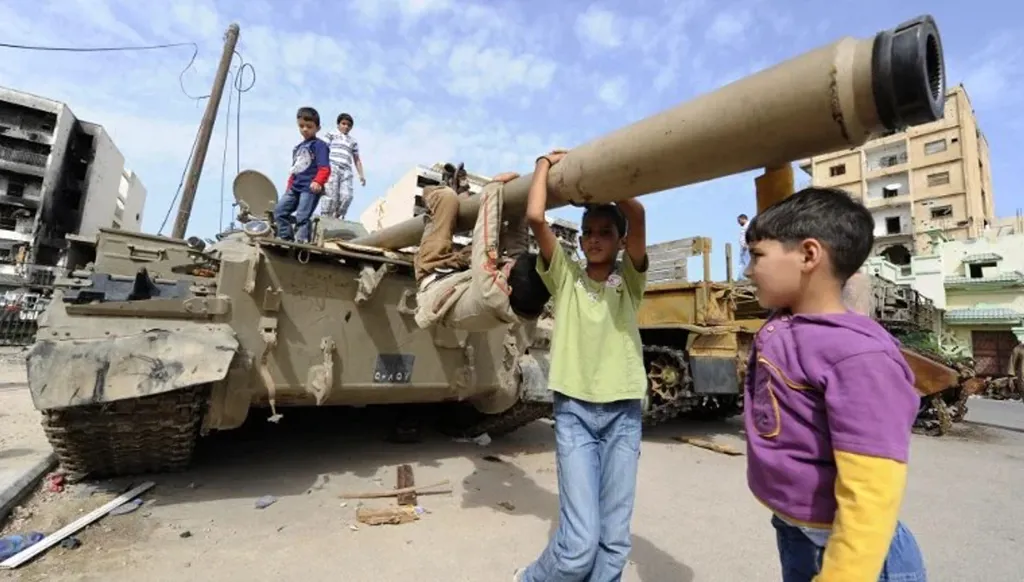


A recent UN report has once again brought attention to the issue of child recruitment in Libya, identifying it as one of the most significant consequences of the political divisions that have afflicted the country for more than a decade. The report comes amid growing domestic calls for legislative reforms to criminalize the exploitation of minors in armed conflicts and to impose stricter penalties on those involved in this crime.
The significance of the report extends beyond merely documenting violations against children. It directly links these abuses to the growing influence of armed groups and the state's diminishing capacity to enforce the rule of law. In doing so, it brings renewed attention to the issue of child protection in a country that continues to grapple with the lasting consequences of conflict and institutional fragmentation.
Alarming Numbers and Ongoing Violations
According to a report submitted by UN Secretary-General António Guterres to the Security Council a few days ago, the United Nations verified 1,140 grave violations affecting 56 children in Libya during 2025. These violations included killings, injuries, recruitment and use of children by armed groups, arbitrary detention, and the obstruction of humanitarian assistance.
While the figures indicate that explosive remnants of war continue to pose the greatest threat to children, the report also documented cases of child recruitment and use in armed conflicts, as well as the detention of children on allegations of association with armed groups.
The report attributed child recruitment activities to several armed groups, including the Deterrence Apparatus, the Judicial Police, and the Illegal Immigration Control Apparatus in western Libya, as well as the National Army in the country's eastern and southern regions. It also held Brigade 444, the Stability Support Apparatus, and other unidentified actors responsible for a number of child deaths and injuries.
The United Nations also documented 1,084 incidents involving the obstruction of humanitarian assistance, attributing the majority of them to various security entities. The organization expressed concern over the growing number of child victims and the continued restrictions hindering humanitarian operations.
These findings come amid growing calls within Libya to strengthen and modernize the legal framework for child protection. The issue has featured prominently in discussions held under the "Structured Dialogue" facilitated by the UN Support Mission in Libya, whose final recommendations stressed the need to prohibit the recruitment of children in armed conflicts and to cut off the funding sources that sustain and prolong the conflict.
UN Secretary-General António Guterres called on the Libyan authorities to strengthen child protection measures, end the detention of children, and ensure unhindered access for humanitarian assistance. He also urged the implementation of effective measures to prevent the recruitment of children and to protect them from trafficking, exploitation, and other forms of abuse.
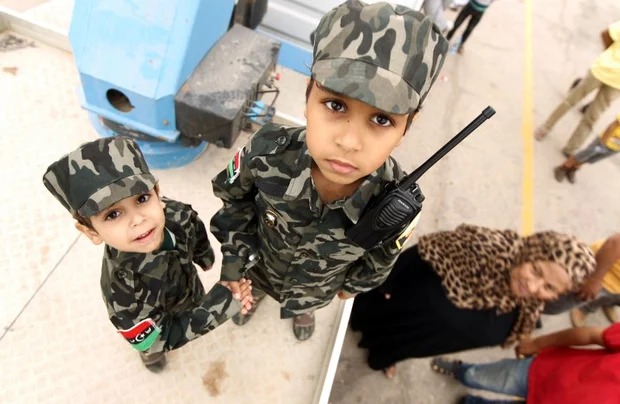
Why Does the Phenomenon Persist?
UNICEF previously urged the interim Government of National Unity (Libya) in western Libya to establish an institutional mechanism enabling the state to monitor and respond to violations against children, amid reports indicating the continued recruitment of children in the country.
Although Libya’s military legislation sets the minimum recruitment age at 18, the phenomenon has persisted across all regions of Libya, east, west, and south since the events of 2011 and the armed conflicts that followed.
The Director of the National Human Rights Institution in Libya, Ahmed Hamza, told Annahar that the widespread nature of this phenomenon is linked to several factors, foremost among them the absence of accountability and the persistence of impunity. He also pointed to economic and social drivers, including poverty, unemployment, and school dropout rates. In addition, he highlighted political and military factors, noting that some boys join armed groups in search of protection or security, or out of a desire for social status and displays of power. He warned that this phenomenon poses an imminent threat to the lives and future of children.
According to Hamza, child recruitment patterns in Libya vary widely, ranging from direct participation in combat operations and semi-military roles such as manning checkpoints and performing guard duties, to logistical support tasks including transporting ammunition and supplies, as well as gathering information and conducting surveillance.
Needed Legislation... But Not Enough
The president of the Libyan Human Rights Organization, Hanan Al-Sharif, told Annahar that child recruitment is a “complex phenomenon” that cannot be attributed to a single cause, but rather results from a combination of interrelated factors. These include ongoing insecurity, the weakness of social and educational protection institutions, school dropouts, displacement, and family breakdown, as well as poverty and difficult economic conditions that may increase children’s vulnerability to recruitment.
She added that while the economic crisis is a significant factor, it is not the only cause. In her view, the most dangerous driver is the persistence of conflict environments that exploit children or push them into activities that are inappropriate for their age.
Al-Sharif emphasized that legislation alone is insufficient, although important. She stressed the need for a comprehensive approach that includes strict enforcement of laws, accountability for those involved, and the implementation of a national child protection plan. This, she noted, should be accompanied by efforts to support education, reduce school dropout rates, strengthen social protection systems, and provide rehabilitation and psychological support programs for children affected by conflict, alongside raising public awareness about the dangers of child recruitment.
However, she expressed reservations about parts of the UN report, arguing that it “lacks transparency and accuracy in presenting information.” She added that the Libyan public has the right to know the identity of the children included in the statistics, questioning whether they are solely Libyan children or if the figures also include migrant and refugee children, as well as the proportion of each category. She further raised questions about the geographical distribution of the cases, the areas recording the highest rates of violations, and whether effective accountability mechanisms are in place.