

Washington talks put Lebanon’s sovereignty and Iran’s influence at the center of debate
As direct negotiations with Israel continue, Lebanon faces growing internal and regional pressure over foreign tutelage and armed power balances.



 Messenger
 Whatsapp
 Threads
 Email
Email
 Print
Print
 X
X
 Facebook
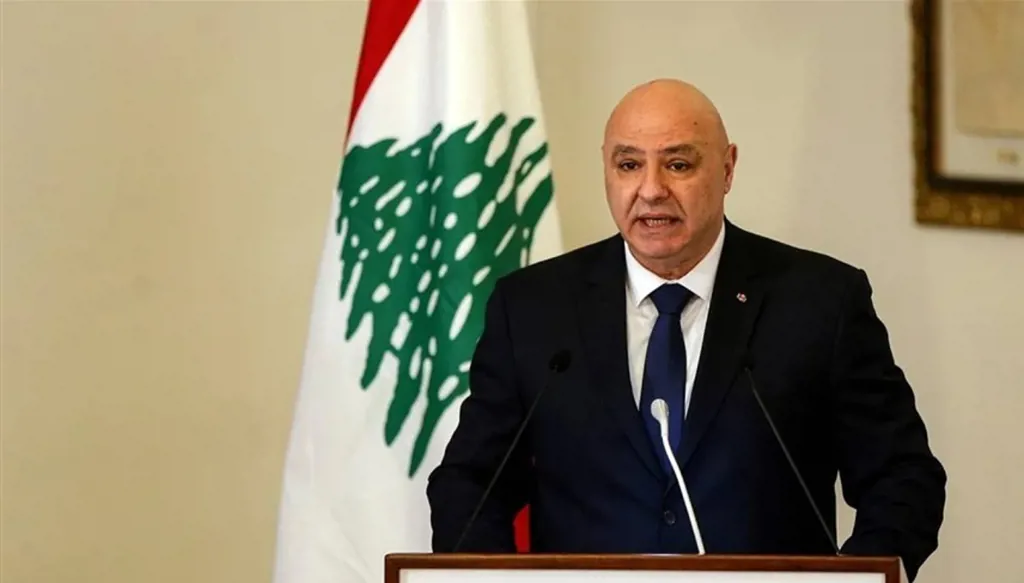


It is very important for the direct negotiation process between Lebanon and Israel to move forward in Washington. It is also crucial to confront every crossroads where Iran attempts to re-infiltrate and regain influence over part of Lebanon’s decision-making process. Most importantly, support should be given to President Joseph Aoun, who summarized the situation yesterday just hours before the fifth round of negotiations in Washington began, saying: “Lebanon will not accept anything except the end of the Israeli occupation in southern Lebanon and the end of foreign tutelage.” The term “foreign tutelage” here refers specifically to the Iranian role in Lebanon, which is actively trying to restore its waning influence.
President Aoun’s statement coincided with a speech by the Iranian Guide “Awaited” Mojtaba Khamenei, in which he claimed that “the Iranian armed forces and the Mujahideen of the Resistance Front, especially dear Lebanon, achieved victories in the third imposed war.” Mojtaba’s logic suggests that Lebanon still remains one of the arenas under Iranian control.
It is true that “Hezbollah” still maintains military and security strength in Lebanon and continues to fight the Israeli army in the south, but its power has clear limits. It does not have the ability to restore the “lost glory,” meaning it cannot reproduce the dominance it once exercised over the Lebanese state across political, security, economic, and social levels. That phase has ended. The vast majority of Lebanese now oppose Iran’s influence and the behavior of “Hezbollah” and its futile, even catastrophic, wars.
Moreover, the regional equation that was overturned at the end of 2025 has not changed fundamentally, given Syria’s firm losses, Hezbollah’s substantial losses in the first and second support wars, and the catastrophe these proxy wars have caused on the human, social, and economic levels. This has primarily affected the party’s support base, and it remains unclear whether it will recover quickly.
What remains uncertain, however, is the position of the Lebanese majority rejecting the party, its policies, and its blind, even suicidal, allegiance to Iran, and the possibility of living under the same framework as this party’s project and culture. Unless the party’s behavior changes, more voices are expected to rise in other communities calling for separation. This is a reality, even if many supporters or those satisfied with Iran and its party’s dominance in Lebanon do not accept it.
So far, despite criticism of its slowness last year, President Joseph Aoun’s approach remains a comprehensive national guarantee. He is a unifying and inclusive figure, but Lebanese society has not been a unified society for a long time. It is a collection of “peoples” — as our colleague Sarkis Naoum describes it — living together while each looks in a different direction. Nevertheless, had it not been for “Hezbollah’s” behavior on all levels, Lebanon might have reached a genuine homeland with at least the minimum conditions expected of a state.
For all these reasons and more, it is important for the Lebanese majority to resist this abnormal situation.
Disclaimer: The opinions expressed by the writers are their own and do not necessarily represent the views of Annahar.