

Caught Between Washington, Ankara and Tel Aviv, Syria Redefines Its Lebanon Role
As regional negotiations reshape the Middle East, Damascus is emerging as a key player in Lebanon—not through direct military intervention, but via border control, security influence, and political maneuvering amid competing interests from Washington, Tehran, Ankara, and Tel Aviv.



 Messenger
 Whatsapp
 Threads
 Email
Email
 Print
Print
 X
X
 Facebook
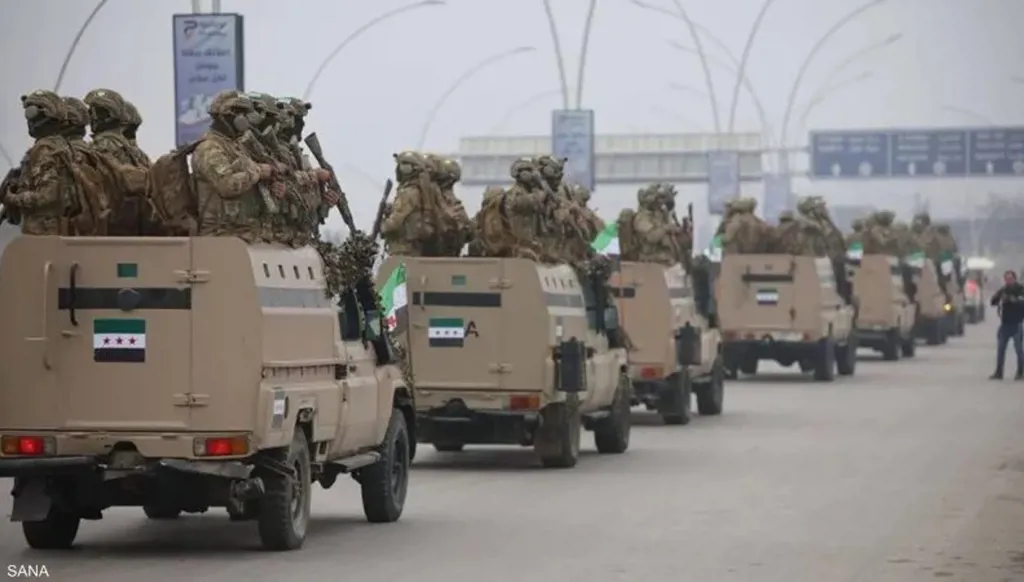


The Syrian role in Lebanon is gradually moving from the shadows to the center of an ongoing and incomplete regional reorganization. The issue goes beyond differing interpretations of U.S. President Donald Trump's statements or repeated Syrian denials regarding any intention by Damascus to intervene militarily in Lebanon. Rather, it is part of a broader picture in which the United States seeks a means of pressuring "Hezbollah" without leaving Israel to bear the full burden alone. At the same time, Syria is attempting to transform this pressure into a political, economic, and security opportunity at a relatively low cost, while Turkey and Israel closely monitor the scope and limits of such a role, each according to its own calculations.
Amid the interwoven Lebanese and regional tracks, debate is increasingly intensifying over the nature of the role that the new Syria can play in Lebanon and the limits of the mission it may undertake during the coming phase.
Fiery Borders and an Emerging Role
On the ground, the border reality appears far more complex than the language of peace might suggest. The continued deployment of reinforcements toward al-Qusayr and areas facing the Beqaa and Hermel regions, confirmed by several sources to Annahar, along with the reemergence of figures such as Abu Malek al-Talli, makes any discussion about "economic corridors" between two countries burdened by weapons, smuggling networks, and the legacy of war incomplete without parallel security arrangements.
The Syrian-Lebanese border has never been a quiet dividing line. Instead, it has long represented a network of intertwined interests, crossings, routes, communities, weapons, remnants, and the accumulated legacy of conflict. Any effort to transform it from a smuggling route into a corridor of mutual interests requires effective control, particularly given the ever-present risk of slipping into other trajectories as a result of security incidents, political pressures, or undeclared understandings.
The situation becomes even more complicated because Lebanon is no longer moving along a single track. Lebanese-Israeli negotiations continue over ending hostilities, withdrawal arrangements, and Hezbollah's weapons. Simultaneously, an American-Iranian track is unfolding in which Lebanon forms part of broader regional peace arrangements, while Washington is also exerting pressure to revive the Syrian-Israeli security track.
Within this context, Trump's statements appear less as isolated remarks and more as part of a broader political engineering effort aimed at finding a balance between competing interests. Israel seeks security guarantees along its northern border and in the Golan. Iran seeks to secure its position in Lebanon through negotiation rather than confrontation. Meanwhile, Washington is searching for a formula that can contain Hezbollah without leaving the entire file in Israel's hands.
Against this backdrop, Syrian denials seem less like a definitive end to the discussion and more like an effort to manage the situation—closing the door on direct military intervention while leaving room for a political, security, and border-related role that can expand or contract depending on developments.
Between Washington, Ankara, and Tel Aviv
Damascus is operating within a narrow margin shaped by intersecting pressures that do not necessarily converge around a single interest. The United States wants Syria to help limit Hezbollah's influence without becoming entangled in a prolonged conflict. Turkey prefers a stable Syria capable of securing its borders rather than becoming involved in a confrontation that could drain its resources and provide additional advantages to Israel. Israel, meanwhile, welcomes any weakening of Hezbollah but remains cautious about any potential Syrian-Turkish expansion of influence toward Lebanon and the Golan.
For this reason, Damascus cannot present its role as a direct response to Washington's wishes or as part of an open confrontation with Hezbollah. Nor can it portray it as a return to the former era of Syrian guardianship over Lebanon.
As a result, Syria appears compelled to adopt a more complex formula centered on supporting the Lebanese state, strengthening border control, combating smuggling, and enhancing economic cooperation, while simultaneously maintaining communication channels with various Lebanese actors, including Hezbollah. Such an approach aims to reassure Washington, avoid provoking Ankara, deny Tel Aviv additional pretexts, and prevent Iran and Hezbollah from viewing Syria as a direct adversary.
This complexity has led some observers to reduce the situation to two seemingly contradictory images: military-style border deployments on one side and political discourse centered on development and dialogue on the other. In reality, however, the situation appears to lie somewhere between these two extremes. The Syrian role may begin with border control, combating smuggling networks and armed remnants, and engaging through limited political and security channels before expanding or retreating according to negotiations and developments on the ground.
Gradual Pressure, Not Open Confrontation
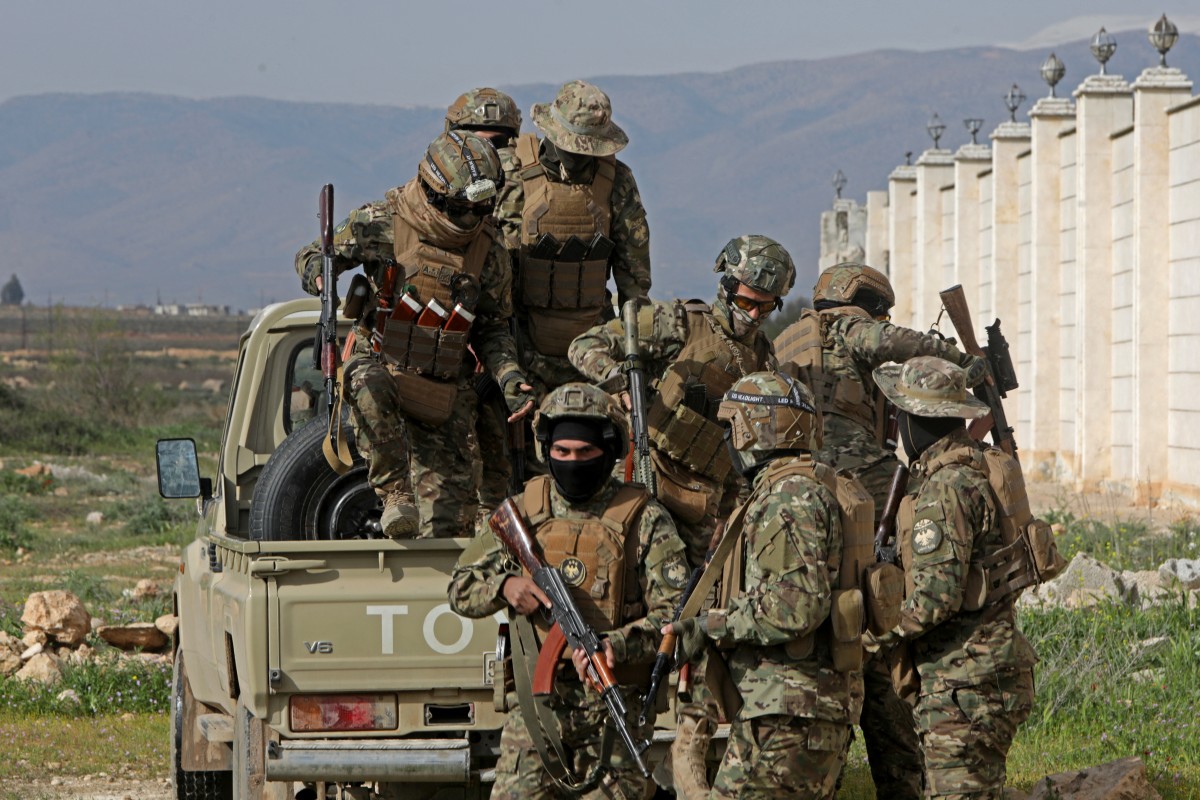
At present, large-scale military intervention remains the most costly and least realistic option. The new Syrian army lacks air superiority, advanced air defense systems, and the missile infrastructure necessary to protect Syrian territory should any confrontation escalate.
Moreover, any rapid enhancement of Syria's military capabilities would require substantial external support, a process constrained by complex considerations that include the legacy of sanctions, Israeli sensitivity toward rearming the Syrian military, and Washington's preference for reintegrating Syria into the region without transforming it into a new source of escalation.
For these reasons, the Syrian role appears far closer to a strategy of gradual pressure than to a traditional military project. Yet this path is not without risks. Any border incident, development linked to the remnants file, or Israeli strike capable of reshaping calculations could push Syria's role from limited pressure toward a higher degree of involvement.
The geography under discussion is far from neutral. It is the same geography of Qalamoun, al-Qusayr, the Beqaa, and Hermel—areas where security and politics are deeply intertwined, where economics cannot easily be separated from weapons, and where smuggling networks intersect with broader balances of power.
The challenges are not limited to the regional environment alone. Within Syria's leadership itself, differing approaches toward Hezbollah continue to coexist. Some favor maintaining calm as a political and security choice, while others are reluctant to appear as though they are leaving Hezbollah and Iran to set the rules or allowing Israel alone to define the limits of confrontation.
Ultimately, the issue appears to revolve less around direct military intervention and more around the degree of Syria's involvement in Lebanon. That role may begin through economic cooperation, development initiatives, and border management. It could later evolve into limited security understandings or assume different dimensions should regional and field dynamics shift.
The only certainty at present is that Lebanon has once again become an arena where regional interests intersect beyond its borders, and that the new Syria is entering this arena seeking to present itself as an actor rather than merely an observer. Yet it remains too early to determine whether Damascus is defining this role on its own terms or negotiating over a role that others are helping shape.