

Allies at Odds: The Limits of the Trump-Netanyahu Dispute
Despite recent disagreements over Iran, Lebanon, and regional strategy, history shows that clashes between American presidents and Israeli prime ministers are a recurring feature of a partnership that both sides ultimately cannot afford to abandon.



 Messenger
 Whatsapp
 Threads
 Email
Email
 Print
Print
 X
X
 Facebook
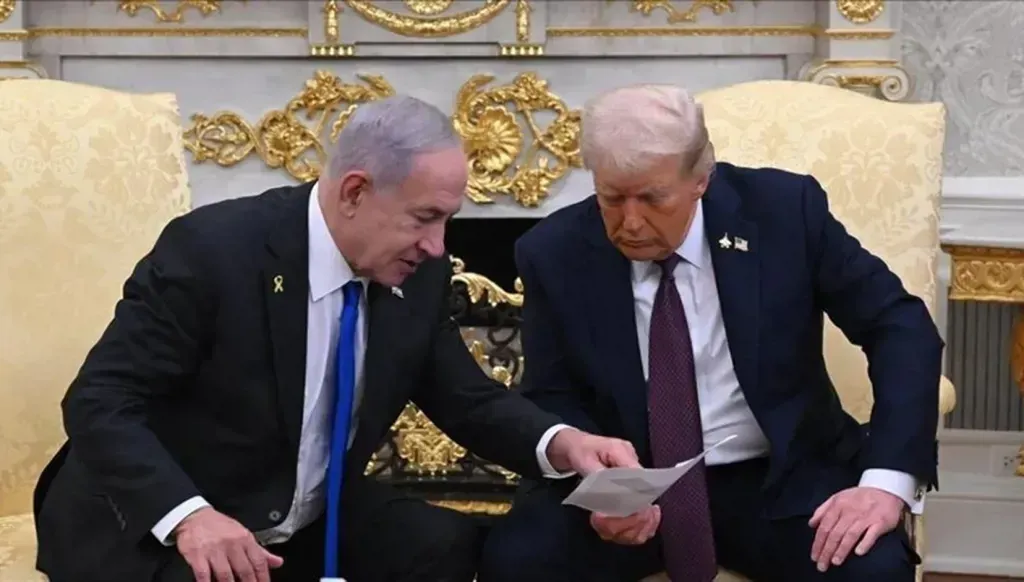


Presidential disagreements and tensions with Israeli prime ministers are nothing new. Blaming the United States' most capable ally in the Middle East would ultimately mean more work for American military forces, not less.
Some believe that relations between Washington and Jerusalem are deteriorating because of the extensive media coverage surrounding the dispute that has emerged between the two allies in recent weeks.
President Donald Trump has been urging Israel to halt its attacks on Hezbollah in Lebanon, a key American demand. In recent weeks, Trump has also strongly questioned the motives behind Prime Minister Benjamin Netanyahu's decision to order airstrikes on Beirut at a time when negotiations appeared close to reaching a conclusion.
Yet such tensions between American presidents and Israeli prime ministers are far from unprecedented. In 1975, President Gerald Ford wrote to Israeli Prime Minister Yitzhak Rabin expressing his "disappointment" with Israel's position during the negotiations that followed the 1973 Yom Kippur War between Egypt and Israel. He warned that failure to reach an agreement could have "far-reaching repercussions on our relations."
A similar episode occurred in 1982 following Israel's invasion of Beirut. U.S. President Ronald Reagan called Prime Minister Menachem Begin and warned that if Israel did not halt its military campaign, "our entire future relationship would be in jeopardy."
More recently, President Joe Biden advised Netanyahu to be satisfied with victory rather than pursue further military escalation. That victory came in successfully confronting major Iranian missile attacks against Israel in 2024.
How, then, has the relationship between the United States and Israel been managed? The answer lies in the fact that the two countries share interests that are both mutual and, at times, distinct. Much of the difference between them can be explained by the saying: "Where you stand depends on where you sit."
Today, both Trump and Netanyahu are under pressure to achieve a successful outcome in the confrontation with Iran. For the average American, success could mean lower gas prices and the elimination of the nuclear threat Iran has come to represent. For Israelis—as well as Emiratis and Kuwaitis—success means safely removing the threat posed by Iranian and Hezbollah missiles and drones, dangers that are not viewed as equally direct threats to the United States.
According to a prominent American researcher, such dynamics are natural among allies. Leaders from Caesar to Eisenhower understood this reality. Great powers are often frustrated when smaller partners fail to do what is asked of them—or even complicate broader strategic objectives. At the same time, smaller states often feel vulnerable to the decisions of their larger partners, believing their role is limited to providing support, resources, and cooperation without being granted a meaningful seat at the decision-making table.
Despite their differences, the United States and Israel have little choice but to coexist strategically—not despite their close relationship, but because of it.
This frustration often overshadows an important reality. The war with Iran is the first conflict in decades in which the United States has fought alongside a partner whose capabilities come close to matching its own. Israel relied on American support but assumed a significant share of the mission of striking Iranian targets. It also fought regional adversaries shared by both countries, including Hezbollah. In that sense, Israel earned the description of a "model ally."
From this perspective, Trump should avoid two temptations.
First, he should not rush to demonstrate that he can control Israel's actions. Diplomacy is most effective when backed by credible pressure. Israel's posture can, at times, complement American diplomacy by reinforcing the seriousness of U.S. efforts. On occasion, Israel has undertaken actions that served both its own interests and those of the United States, even when Washington was reluctant to act directly. One example was Israel's 2007 operation that destroyed a Syrian nuclear reactor, an action that benefited both countries.
The second temptation is for American officials to avoid placing blame on Israel. Many observers, whether acting in good faith or not, have argued that the United States entered a conflict with Iran on Israel's behalf or because Israel pushed Washington into it. This claim is inaccurate. Trump's early threats to strike Iran in January stemmed from his anger over the Iranian regime's harsh repression of its own people.
Pointing fingers at Israel may serve as a form of political self-justification, but it risks undermining support for the American-Israeli relationship. While that relationship may currently be experiencing strains due to differing views on Gaza and other regional issues, weakening America's most capable ally in the Middle East would increase Washington's operational burdens in the region rather than reduce them. Allies often frustrate one another. Indeed, the closer the alliance, the greater the potential for friction. As the late British leader Winston Churchill famously observed: "The only thing worse than fighting with allies is fighting without them."
Disclaimer: The opinions expressed by the writers are their own and do not necessarily represent the views of Annahar.