

Iran and the reality behind claims of victory
Despite the presentation of recent understandings as decisive victories, the broader regional picture reveals unresolved strategic disputes, rising internal pressures in Iran, and a Middle East where stability and development are increasingly redefining power dynamics




 Messenger
 Whatsapp
 Threads
 Email
Email
 Print
Print
 X
X
 Facebook
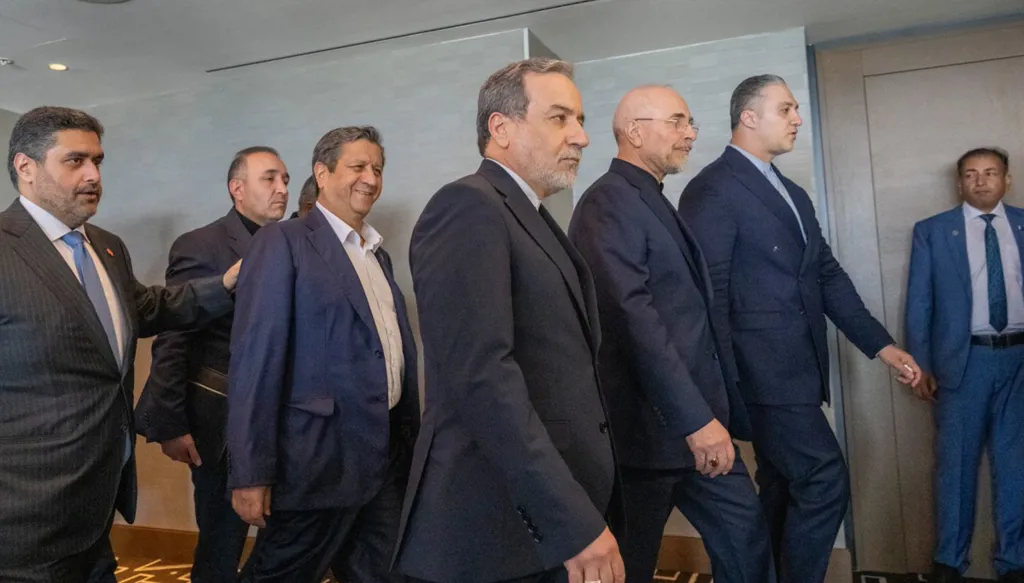


Since the announcement of a memorandum of understanding between Iran and the United States, the Iranian media apparatus has quickly presented it as a historic victory and a defeat for Washington, in an attempt to rebuild its image of power both domestically and internationally. However, a calm reading of the content of the agreement and the nature of international relations reveals that the picture is more complex than political slogans suggest.
Have the conflicts ended
In international law, a memorandum of understanding differs from a treaty or a binding agreement. It is essentially a political framework aimed at managing a transitional phase and opening the door to negotiations, rather than a document that reflects a final victory for one side or a complete resolution of the conflict. Therefore, portraying it as evidence of a defeat for the United States or a victory for Iran ignores the fact that the main issues remain unresolved, in addition to the significant losses suffered by Iran’s security and military structure during recent confrontations. Accordingly, it can be said that the conflict has moved from the battlefield to the negotiating table rather than having ended definitively.
More importantly, the recent war has revealed deep strategic shifts in the region. The Gulf states, especially those whose positions were clear and decisive in confronting Iranian attacks, have emerged stronger and more cohesive. Tehran has received multiple layers of messages. Legal messages through international condemnations of attacks on sovereign states and the potential legal claims and compensation that may follow, military messages through the exposure of the limited ability to impose its will by force, economic messages as pressures have affected the Iranian domestic situation compared to the ability of Gulf economies to adapt and recover quickly, and political messages after realizing that policies of threat and intervention no longer pass without a heavy cost.
Iran and internal challenges
For decades, the Iranian regime has been accustomed to using external crises to unify the domestic front and justify economic failures. However, recent developments have made this equation more difficult. Today, the Iranian citizen faces accumulated living challenges, high inflation rates, and limited economic opportunities, while questions are increasing about the cost of regional policies that have drained the country’s resources for many years.
From this perspective, talk of “victory” appears closer to an attempt to manage public opinion than to an accurate description of reality. States are not measured by slogans, but by their ability to provide security and prosperity for their people. If the memorandum of understanding has halted a round of conflict, it has not ended its deeper causes, nor has it closed the files of regional influence, the nuclear program, or the nature of relations with neighboring countries.
Therefore, what we are witnessing today may be closer to a “warrior’s rest” than to the end of a conflict with military, political, and strategic dimensions. History teaches us that many temporary agreements were only stations between larger phases of change. The most impactful transformations in the future may well arise from within Iran itself, if the Iranian people decide that the time has come to build a state that places development, prosperity, and normal relations with its neighbors above the logic of perpetual conflict and costly adventures.
What remains constant in reading the regional scene is that the security and stability of the Gulf have become more solid, and that the region is entering a new phase in which power is measured by stability, development, and the building of partnerships, not by revolutionary slogans or narratives of temporary victory.
Disclaimer: The opinions expressed by the writers are their own and do not necessarily represent the views of Annahar