

U.S. Optimistic as Lebanon-Israel Talks Move Toward Declaration of Intentions
Negotiators in Washington aim to finalize a declaration of intentions, advance plans for Israeli withdrawal from pilot areas in southern Lebanon, and strengthen arrangements for a lasting ceasefire amid intensified U.S. and international diplomatic engagement.



 Messenger
 Whatsapp
 Threads
 Email
Email
 Print
Print
 X
X
 Facebook
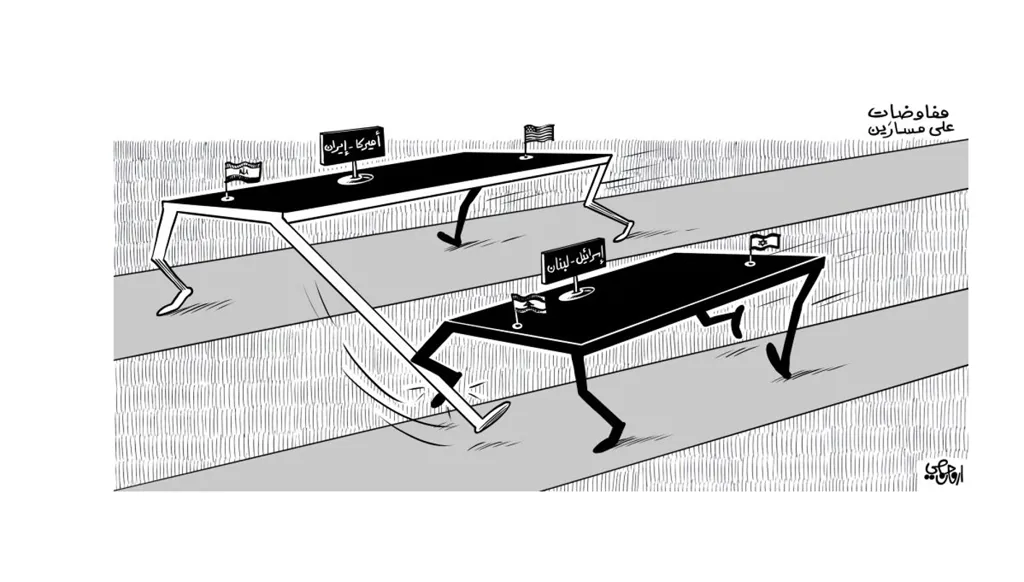


The fifth round of Lebanese-Israeli negotiations, which began yesterday at the U.S. State Department, could mark a crucial turning point in the negotiating process, particularly given the challenges of keeping it separate from the U.S.-Iran track and Tehran’s continued efforts to influence it and claim a degree of ownership over its outcomes.
This round comes after Lebanon was informed of its inclusion in the “De-escalation Group” emerging from the U.S.-Iranian understanding, a development that does not align with Lebanon’s position of maintaining an independent track separate from the U.S.-Iran negotiations. This appears to provide an additional incentive for the fifth round to achieve a genuine breakthrough and restore momentum to the Washington-led process.
In this context, Annahar learned that both Lebanese and American officials are expressing optimism about the possibility of achieving two significant outcomes through this round, on both the diplomatic and military levels. The first is reaching agreement on a “Declaration of Intentions” containing detailed provisions that would supplement the “Washington Statement” issued after the previous round. The second is an agreement on defining one or more pilot areas in southern Lebanon from which Israeli forces would withdraw, allowing the Lebanese Army to deploy and Hezbollah to disarm. Notably, the Israeli side had leaked ahead of the talks that its delegation would propose a plan for a gradual withdrawal from parts of southern Lebanon in exchange for the deployment of the Lebanese Army.
Yesterday’s session was dedicated to the political track, while today’s discussions focus on military and security issues. The talks will return to the political track on Thursday, with the round expected to conclude with the issuance of a Declaration of Intentions outlining the framework for the next phase.
Sources at Baabda Palace stated that the head of the Lebanese delegation, Ambassador Simon Karam, was instructed to adhere to Lebanon’s core positions regarding a ceasefire, Israeli withdrawal, the return of displaced persons, and the release of prisoners. The objective, according to the sources, is to emerge with clear and practical arrangements that can be implemented on the military and security levels and place the withdrawal process on a defined path. Information indicates that the negotiations are focusing primarily on the mechanism for implementing “pilot areas” in southern Lebanon and securing a ceasefire.
Meanwhile, Israel’s Channel 12 reported that Israeli Ambassador to the United States Yehiel Leiter said at the opening of the negotiations: “Four rounds ago, we all boarded the same train when it was on track toward a clear destination: full peace between the two states, the removal of Iran, the dismantling of Hezbollah, and the achievement of peace and security for Lebanon and Israel. Today, however, that train risks derailing. There is a danger that Hezbollah has received encouragement; there is no doubt that it feels stronger and more emboldened.”
An Israeli source also revealed that the Israeli delegation would present maps during the talks identifying a “model area” in Lebanon, located partially south of the “Yellow Line,” from which Israeli forces would withdraw as part of a field experiment. The Lebanese Army would then assume responsibility for deployment in the area, while U.S. forces would oversee supervision and monitoring.
The significance of Lebanon’s effort to keep its negotiations separate from other regional tracks was underscored by intense diplomatic activity surrounding Baabda Palace. President Joseph Aoun received a joint phone call from U.S. Vice President J.D. Vance and Secretary of State Marco Rubio, who reaffirmed U.S. support for the positions of the President and the Lebanese government in extending the authority of the legitimate state and strengthening its sovereignty across all Lebanese territory through its army and security forces alone. They also stressed the importance of implementing the understandings reached during the Swiss meetings, including the establishment of a unit responsible for securing the ceasefire in Lebanon and monitoring the implementation of related measures. According to the call, arrangements regarding the formation and operation of this unit remain under discussion. Following the conversation, President Aoun briefed Speaker of Parliament Nabih Berri and Prime Minister Nawaf Salam on the content of the call.
Later in the day, Aoun chaired a meeting attended by Army Commander General Rodolphe Haykal and members of the advisory team following the negotiations in Washington. During the meeting, he stated: “The developments of recent days have confirmed the correctness of our decision to enter negotiations, as they remain the only internationally recognized means of achieving national objectives and reclaiming all rights. We therefore proceeded today, and will continue over the next two days, with a new round that we hope will prove decisive in securing what is best for our country and our people, namely the restoration of Lebanon’s full sovereignty and the extension of state authority over every part of our land.”
President Aoun also received a call from French President Emmanuel Macron to discuss developments in southern Lebanon and the period following the conclusion of UNIFIL’s mission, particularly in light of the desire of European countries, supported by Lebanon, to maintain their forces within the international operations area. Macron indicated that he would consult with several countries to assess their positions on the matter.
Macron also held separate phone conversations with Prime Minister Nawaf Salam and Speaker Nabih Berri.
Separately, U.S. Vice President J.D. Vance responded yesterday to a message sent by Lebanese Forces leader Samir Geagea, affirming that the United States views President Aoun and the Lebanese government as the sole legitimate authority in Lebanon and intends to work with the Lebanese state to strengthen its sovereignty and reinforce its legitimate authority. He further clarified that U.S. contacts with Iran concerning Lebanon are not intended to grant Tehran any role in determining Lebanon’s future or influencing its decisions, but rather to ensure that Iran exerts pressure on Hezbollah to fulfill its commitments and obligations.