Lebanon Finance Committee Approves Golden Residency Plan to Attract Investors and Boost Revenues

Business Tech 23-06-2026 | 10:31

Lebanon Finance Committee Approves Golden Residency Plan to Attract Investors and Boost Revenues

Lawmakers advance key fiscal reforms while weighing investor residency incentives, housing support measures, and pending IMF-linked banking reforms amid ongoing economic pressures.


Lebanon Finance Committee Approves Golden Residency Plan to Attract Investors and Boost Revenues
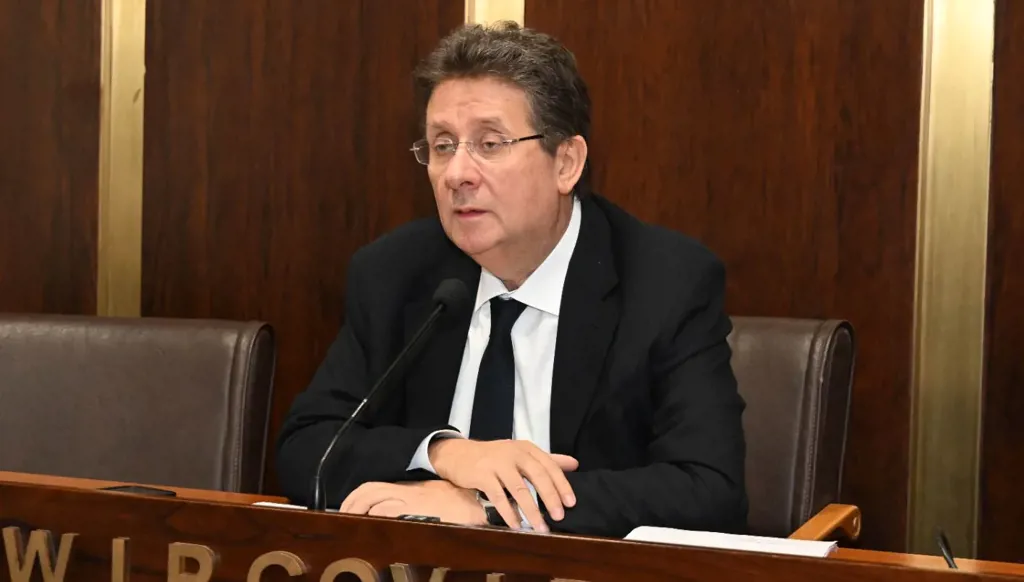
MP Ibrahim Kanaan.
Smaller Bigger


The Finance and Budget Committee, chaired by MP Ibrahim Kanaan and attended by Finance Minister Yassine Jaber and Justice Minister Adel Nassar, approved granting Lebanon’s local mayor a 5% fee on the stamp duty to support their fund, and established a mechanism for stamping and verification to prevent forgery or evasion.


After the session, Kanaan stated: “Regarding the golden residency, we all know that Lebanon’s situation requires attracting investors and investments, which begins with laying the foundation for economic, financial, and banking recovery. However, we must prepare for the next phase even if we are not yet entering it."


"Accordingly, the government has proposed a scheme to grant ‘golden residency’ to non-residents in Lebanon, whether foreigners or Lebanese expatriates who require what is known as tax residency,  on the condition of investing no less than $500,000 across three sectors. This will take into account the foreign ownership law regarding real estate, as well as the transfer of funds from abroad under strict compliance checks to prevent money laundering through bank accounts.


"The scheme also extends benefits to family members, in addition to an annual fee of no less than $50,000 for each family member wishing to benefit from tax residency. This is intended as a gateway to create jobs, generate revenues for the state treasury, and promote investment when conditions allow.”


Finance Committee session.


The issue of the judges’ mutual fund, a levy collected by notaries, was also discussed. The government submitted a proposal to increase the percentage and allocate 1 per 1,000 to the fund. The Minister of Justice highlighted the importance of the proposal, followed by a discussion featuring differing views on whether it should be reworded, amended, or opposed in principle. Instead of calculating certain fees in Lebanese pounds based on pre–exchange rate collapse standards, the proposal suggests multiplying the fee by 46, in line with adjustments applied to other fees."


"We requested a clear fee schedule from the Ministry of Justice before approving any amendment. MP Melhem Khalaf, for his part, proposed converting the new fee into a bounty, ensuring it does not add to citizens’ burden but is instead shared between notaries and the judges’ fund. The matter will be revisited in a future session, pending feedback expected from the International Monetary Fund regarding banking reforms. I will also call for two sessions per week, on Mondays and Thursdays.


He added: “Regarding housing, there was a draft law submitted by fellow MP Simon Abi Ramia, which would significantly assist applicants to the Housing Institution, accelerate processing procedures, and increase the institution’s capacity to handle a larger number of applications. However, due to the loss of quorum before discussion and voting, the matter will be placed on the agenda of the next session, subject to the availability of the Director General of the Housing Institution, Rony Lahoud, who has prior travel commitments.”


He said: “The issue of the Lebanese University and the fairness of the third category will also be included on the agenda of a forthcoming session. We hope to maintain the same level of productivity in the upcoming sessions, as our primary focus remains on livelihood issues affecting citizens in light of the current circumstances. Alongside the necessary reforms, our concern is also directed toward urgent matters related to citizens’ rights and ensuring their continuity and that of their families under these difficult conditions.”