

U.S. Treasury Allows Iranian Oil Transactions Until August
Move tied to broader Washington–Tehran understandings as diplomatic talks accelerate in Switzerland, signaling potential breakthrough in regional tensions and energy flows.



 Messenger
 Whatsapp
 Threads
 Email
Email
 Print
Print
 X
X
 Facebook
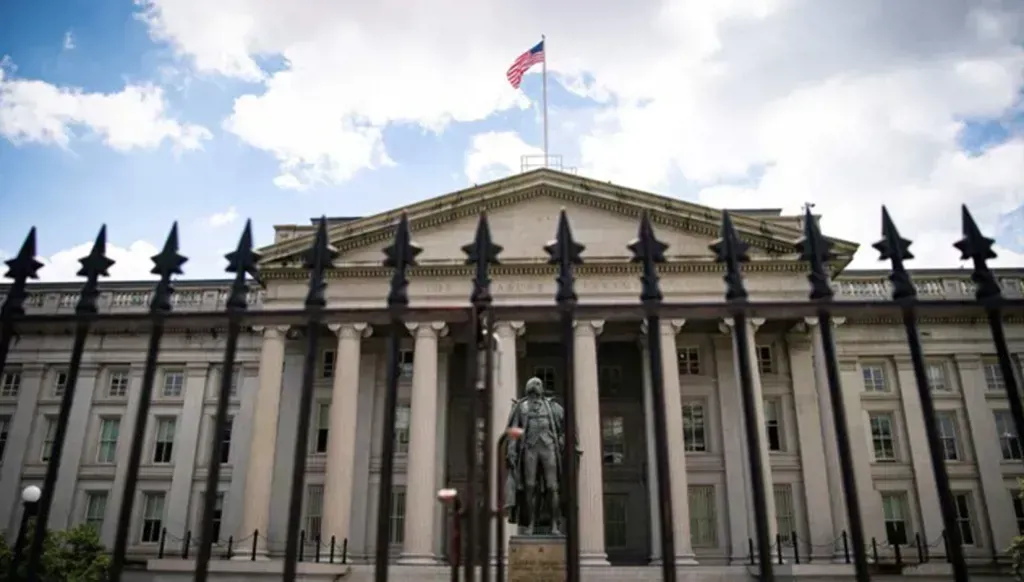



The department clarified that “these facilitations are part of the recent understandings between the two parties, which also include facilitating payment transactions and financial transfers related to oil trade,” in a move “aimed at regulating the flow of Iranian energy exports during a specific period.”
Rapid Political Developments in Negotiation Path
This decision comes at a time when U.S.-Iranian relations are experiencing rapid diplomatic movement, following the start of talks between the two sides in Switzerland. The negotiation path, outlined in a recently signed memorandum, is scheduled to last 60 days and is extendable, aiming to reach a settlement for the regional dispute and long-standing issues.
Switzerland considered today that “conditions are ripe for starting technical talks immediately after the first round of negotiations hosted by the Bürgenstock Resort, which aimed to establish a comprehensive framework to end tensions in the Middle East.”
Pakistan and Qatar announced in a joint statement that “the parties reached a roadmap to conclude a final agreement within 60 days, in addition to establishing a communication channel to ensure ongoing dialogue, including keeping the Strait of Hormuz open and addressing regional issues such as the war in Lebanon.”
Pakistani Prime Minister Shehbaz Sharif announced that “the high-level committee meeting between Iran and the United States concluded with positive results,” confirming the achievement of “encouraging progress, including agreement on a roadmap, the formation of a high political committee, and preparations for new technical rounds.”
Meanwhile, U.S. Vice President J.D. Vance said: “Washington has made notable progress in the talks,” indicating that “U.S. President Donald Trump seeks an agreement that serves mutual interests, and that technical negotiations will continue in the coming weeks, with Iran's agreement to allow the return of International Atomic Energy Agency inspectors.”