

Lebanon Heads to Washington Seeking Ceasefire as Regional Negotiations Intensify
Diplomatic talks unfold between Swiss and U.S. venues, with South Lebanon at the center of a fragile push toward a potential ceasefire and new regional security framework.



 Messenger
 Whatsapp
 Threads
 Email
Email
 Print
Print
 X
X
 Facebook
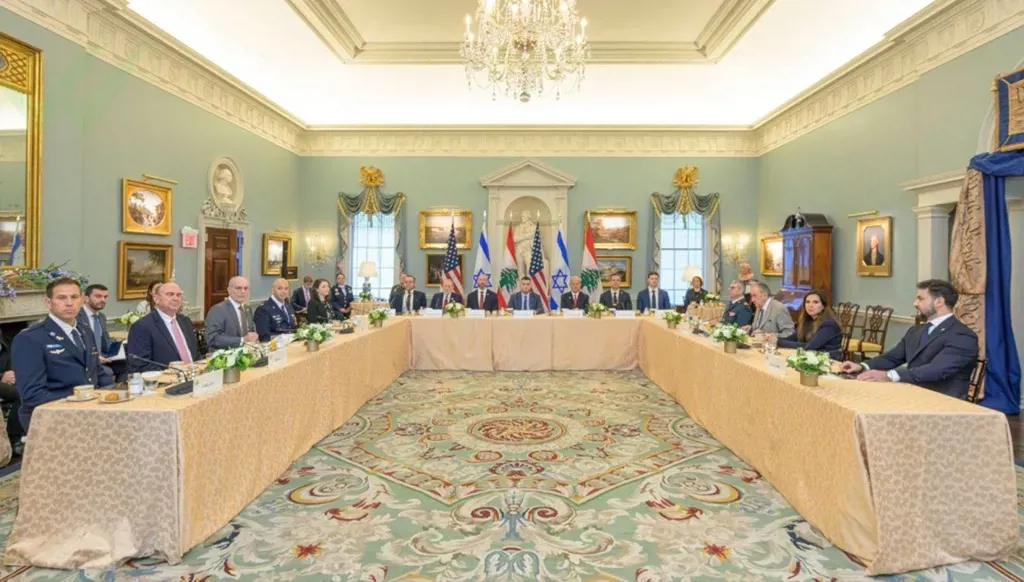


The world's attention is turning toward Switzerland and Washington to see what will emerge from the open negotiations underway between the parties. South Lebanon will be at the center of discussions in both capitals as efforts continue to shape a new regional landscape involving the countries of the region and Israel, without any side abandoning the agendas or ideologies it has adhered to for decades.
The Lebanese diplomatic and military delegation has prepared a roadmap for its negotiations with the Israelis in Washington over three days, beginning tomorrow, Tuesday. The delegation carries the directives of President Joseph Aoun and the guidance of the advisory team accompanying him in Baabda.
The American-Iranian memorandum of understanding will also be present at the Washington negotiating table. Its central provision cannot be separated from efforts to translate it into a comprehensive ceasefire, particularly amid American pressure and Iranian threats framed by the equation: Hormuz in exchange for South Lebanon.
This comes especially after Iran threatened not to participate in the technical meetings in Switzerland if military operations and massacres in the south continued. It was on this basis that talks between the representatives of the two countries, whose conflict spans nearly half a century, began yesterday.
According to informed sources, the Lebanese negotiator's top priority in Washington will be securing a real and comprehensive ceasefire and ensuring the deployment of the Lebanese Army throughout the south. This issue tops the agenda and constitutes the cornerstone of the broader negotiation process with Israel.
In detail, the Lebanese and Israeli delegations will meet tomorrow, Tuesday, while military officers from both sides will hold talks on Wednesday—outside the Pentagon. The meetings will conclude on Thursday with a political summary marking the fifth round of negotiations.
All sessions are being held at the U.S. Department of State, where officials are keen to emphasize the importance of the process and demonstrate the close attention it is receiving from the White House. The aim is to advance President Donald Trump's regional vision and leverage it in support of both the American economy and the upcoming congressional midterm elections.
President Aoun, who is scheduled to visit Washington next July, has shown no objection to the path Pakistan has taken and its outcomes, despite the reservations he continues to express regarding Iran's policies and performance in Lebanon and the wider region. His objection, he says, applies to "any country that interferes in our affairs." He also does not oppose American-Iranian rapprochement if it helps end the war, echoing Speaker Nabih Berri's remark that such a result would be welcome "even if it came from Bangladesh."
According to available information, Aoun remains focused on making a ceasefire the central issue in discussions with the Israelis—a position shared by Berri, Walid Jumblatt, and what sources describe as "the cool-headed."
The Lebanese camp supporting direct negotiations is also keenly aware of the possibility of Israeli obstruction and believes that stronger American intervention and pressure will be required. Lebanese officials, the sources say, are seeking tangible implementation on the ground.
There is also a Lebanese determination to continue the negotiations rather than halt them, contrary to the position of voices within Hezbollah and circles close to it. Members of the delegation believe that ending the talks would serve Israeli interests, a view supported by both Aoun and Army Commander Rodolphe Haykal. According to sources, Aoun does not want "to provide such a service to the Israelis," who are not particularly enthusiastic about the negotiations in the first place.
The discussion of "Pilot Zones" is expected to resume and will constitute the second item on the agenda. Meanwhile, sources following the negotiations say there has been no discussion of Lebanon and Israel signing any security agreement. The issue was not raised during the preparatory meeting held in Baabda last Thursday. However, there remains a possibility that the Americans could propose a "declaration of intent" to both the Lebanese and Israeli delegations, although its details have yet to be finalized.