

Éléonore Caroit’s Beirut visit: A unified diplomatic push for aid, sovereignty, and francophonie
A coordinated Franco British Qatari diplomatic mission in Beirut to reinforce aid coordination, political support, and cultural cooperation amid Lebanon’s ongoing crises.



 Messenger
 Whatsapp
 Threads
 Email
Email
 Print
Print
 X
X
 Facebook



Micheline Abu Khater
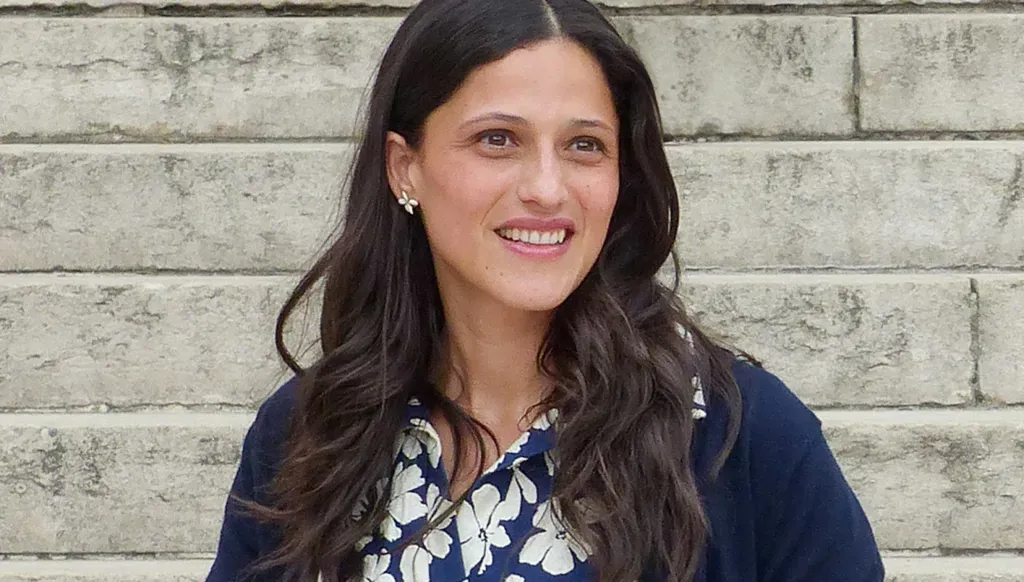
The anticipated and carefully planned visit of the French minister came at a critical political moment. Through her visit to Lebanon, the Minister Delegate for Francophonie, International Partnerships and French Nationals Abroad Éléonore Caroit set a clear objective for herself: to deliver an unequivocal message of French support and to closely observe the realities on the ground.
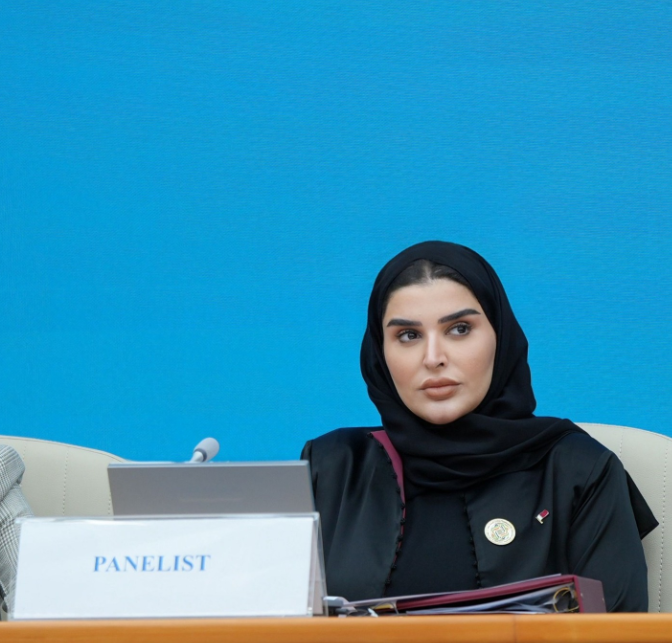
To give this effort the greatest possible resonance and effectiveness, Caroit initiated an unprecedented diplomatic format consisting of a joint tour with her British counterpart Jenny Chapman and her Qatari counterpart Maryam Al Misnad. This unified three voice front established itself as a strong symbol and a practical lever for action.
While Paris and London took an early position from the beginning of the conflict within a multinational coalition to ensure freedom of navigation in the Strait of Hormuz, Britain is now reaffirming its engagement in the Middle East, and Qatar, for its part, stands out as a key player in mediation efforts and a major investor in the region’s development.
Priorities and international partnerships
This visit takes place in the context of the priorities set by the Minister Delegate Éléonore Caroit in the field of international partnerships. Just weeks after chairing a ministerial meeting of the Group of Seven in Paris dedicated to development, whose main directions were later endorsed at the Evian Summit, the minister used this platform in Beirut to denounce the fragmentation of humanitarian aid.
Today, some crisis affected countries are burdened by complex procedures, as they sometimes have to deal with more than one hundred multilateral agencies and non governmental organizations to meet their needs.
Faced with this reality, Caroit recalled a central principle in her vision, sovereignty. For aid, whether emergency relief or development assistance, to be effective, it must fully align with the needs defined by the host country itself, not by the donors. In this context, the visit was closely coordinated with local authorities, in particular with the Lebanese Minister of Social Affairs Haneen Sayed, who accompanied the ministerial delegation during its field tour.
On the political level, the French minister led a true institutional marathon to reaffirm France’s support for Lebanese institutions. She held a series of meetings with President Joseph Aoun, Speaker of Parliament Nabih Berri, as well as the Ministers of Social Affairs and Foreign Affairs.
A planned meeting with Prime Minister Nawaf Salam could not take place due to scheduling reasons, as he was in Paris at the time. The stakes of these consultations were significant, defining the core priorities of the Lebanese government in order to coordinate bilateral aid and to ensure that Lebanon’s voice is fully represented in multilateral forums.
Beyond official settings, Caroit made sure to confront the reality of everyday life for Lebanese citizens. In Beirut, the delegation visited a school that had been turned into an emergency shelter, then the minister went alone to a medical clinic in the Armenian district of Beirut supported by France, a concrete example of the assistance provided by Paris to Lebanese public health structures.
In Sidon, alongside her British counterpart Jenny Chapman, she visited another shelter and spoke with members of the Lebanese Red Cross. The visit coincided with the announcement of an agreement followed by an immediate resumption of tensions, allowing the minister to directly witness the remarkable resilience of the population.
As the minister responsible for French nationals abroad, Caroit dedicated a significant part of her trip to the French community, including association representatives, academics, cultural actors, and business leaders. The dialogue with dual nationals and long term expatriates was essential for her in understanding their reading of the crisis.
The most striking moment of the visit was undoubtedly her trip to the Verdun High School. This institution today embodies an exceptional chain of solidarity, as it currently hosts students and teachers from two secondary schools whose operations have been disrupted, the Nabatieh High School in the south affected by the war, and the Lycée Abdel Kader which has been transformed into a shelter.
The minister praised the extraordinary courage of teaching staff who continue to ensure educational continuity despite the tragedy experienced by their families. Lebanon, which hosts the largest number of French schools abroad worldwide, once again demonstrates the unique strength of the network of French education abroad known as AEFE.
Reviving Francophonie and protecting heritage
This support for schools is a direct response to the noticeable decline of the French language among younger Lebanese generations. For the Minister Delegate Éléonore Caroit, the preservation of the attractiveness of the French language in Lebanon, where half the population speaks it, represents a daily effort to maintain the historical bridges between the two countries.
The minister concluded her tour in Byblos, through the gateway of cultural cooperation, where France, alongside the United Arab Emirates and other partners, supports the ALIPH Foundation in protecting heritage in conflict zones.
In response to those who may view culture as secondary during wartime, she reaffirmed that safeguarding Lebanese treasures is an absolute political priority. This visit echoed the exhibition Treasures of Byblos, which she had previously inaugurated at the Institut du monde arabe in Paris alongside the President of the Republic and Ghassan Salamé, although the current conflict unfortunately prevented some artifacts from being transferred to France.
In short, through this intensive visit and this bold three country format, Caroit sent a strong signal. Beyond emergency humanitarian aid, France is positioning itself as a defender of Lebanese sovereignty, fully committed to ensuring that Lebanon’s voice and interests carry weight in ongoing international negotiations.