

From departure to return: A history of war and displacement in Lebanon
From 1948 to today, Lebanon’s modern history can be traced through repeated waves of forced migration—where entire generations have lived between departure, loss, and the uncertain hope of homecoming.



 Messenger
 Whatsapp
 Threads
 Email
Email
 Print
Print
 X
X
 Facebook
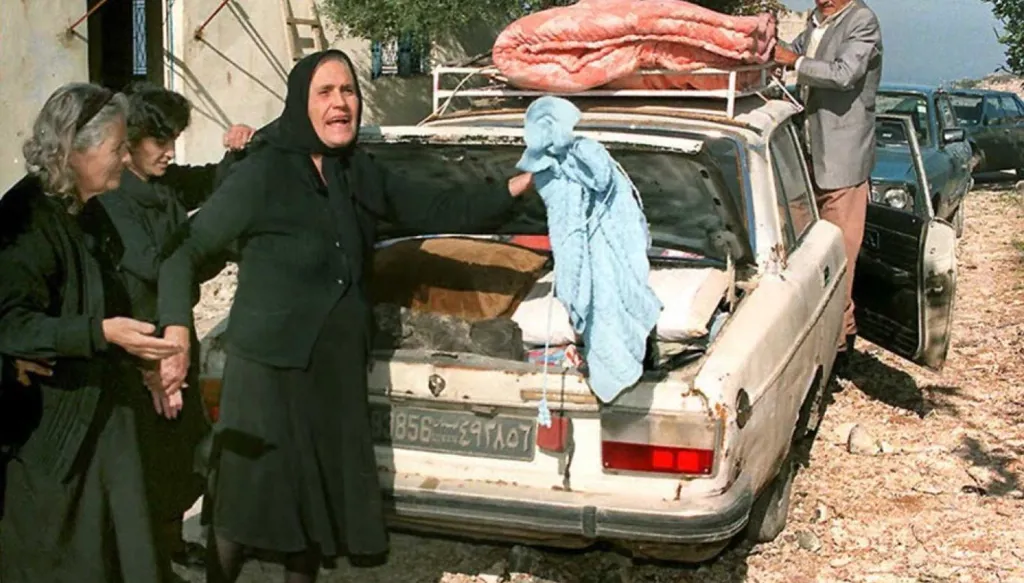


With every experience of war, Lebanon has seen roads filled with hastily loaded cars, carrying bags, clothes, and family photos. A house whose doors are closed in the hope of returning after a few days, only for its owners to later discover that the absence will last months or years—sometimes an entire generation. A large part of modern Lebanese history can, in fact, be read through these roads.
In 1948, tens of thousands of Palestinians fleeing the first Arab-Israeli war arrived in Lebanon. From that moment, the country entered the heart of a regional conflict that would leave deep marks on its society, politics, and security. Over the years, the camps established to receive refugees became part of Lebanon’s tense landscape.
In 1958, some families temporarily left areas of tension within Lebanon, but the real alarm came later. Between the mid-1960s and the early 1970s, as armed Palestinian organizations intensified their activities in southern Lebanon and from its territory, border villages began to live to the rhythm of Israeli raids and clashes between Palestinian factions and the Israeli army.
From there, staggered waves of displacement toward Beirut and its suburbs began, as though the south was already experiencing, in advance, what would later extend across the country.
In 1975, the Lebanese war erupted, and displacement was no longer an exception or a temporary event but part of daily life. Beirut was divided, the maps of neighborhoods and villages changed, and families left their homes because of identity, fear, or their location along new lines of confrontation. For the first time, war did not only claim victims but also redistributed populations and redrew the country’s human geography.
With the entry of the Syrian army into Lebanon in 1976, the scope of the conflict widened. The confrontation was no longer limited to Lebanese forces and Palestinian factions; the Syrian factor entered powerfully before its presence turned into a prolonged occupation. Areas of Beirut, Mount Lebanon, the Bekaa, and the North witnessed successive waves of displacement accompanying battles and military tensions.
The Damour massacre in early 1976 led to the near-total evacuation of its residents toward Beirut and other districts in Mount Lebanon. Later, in northern Lebanon, as in Ashrafieh in 1978 and Zahle in 1981, rounds of fighting between the Syrian army and Lebanese forces, along with heavy Syrian shelling, forced many residents to leave their homes in search of safety.
In the south, wars continued without interruption. The “Litani Operation” in 1978 displaced tens of thousands, followed by the Israeli invasion in 1982, which produced one of the largest displacement waves since the beginning of the war. Entire villages were evacuated, and hundreds of thousands left their areas in the south, while Lebanon endured the siege of Beirut and scenes of collective departure that became part of the war’s memory.
The Mountain War in 1983 added a new chapter of internal displacement, with large numbers of Christians leaving the Chouf and Aley areas. Then came sub-wars within the larger war, such as the War of the Camps and militia battles known as the “Brothers’ War.” Between 1985 and 1988, displacement and movement between Beirut, the mountain, East Sidon, and the south continued. The southern suburbs, now known as Dahieh, witnessed systematic displacement, with some neighborhoods and areas emptied of their original families, who have not returned to this day.
As the war appeared to be nearing its end, Lebanon experienced the Liberation War, accompanied by one of the largest waves of external migration, before the Cancellation War followed, prompting thousands of families again into temporary displacement and migration in search of safety.
With the Taif Agreement, the journey of return began, but it remained an incomplete return. Some families went back to their homes, yet the effects of displacement persisted in memory and in a social fabric reshaped by years of war.
The calm did not last long. In 1993, the Israeli “Operation Accountability” brought back scenes of displacement in the south, followed in 1996 by “Operation Grapes of Wrath,” which pushed hundreds of thousands to leave their homes within days.
In 2000, a different scene unfolded. A broad return to border villages followed the Israeli withdrawal from the south, countered by a reverse movement of families associated with the South Lebanon Army, who left for Israel after threats from “Hezbollah” and the state’s inability at the time to provide sufficient guarantees.
War returned in 2006. In just thirty-three days, about a million people from the south, the southern suburbs, and the Bekaa Valley were displaced. The entire country was almost constantly on the move. A year later, scenes were repeated in northern Lebanon during the Battle of Nahr al-Bared, pushing tens of thousands of Palestinians and Lebanese from the area.
With the outbreak of the Syrian revolution in 2011, which later became one of the bloodiest wars, Lebanon received the largest Syrian displacement wave in its modern history, which turned into an illegal presence, while some border areas experienced limited internal displacement during the battles in Arsal in the following years.
Recent years have brought Lebanon back to a scene many thought belonged to the past. Since the autumn of 2023, with Hezbollah entering the war “Support for Gaza,” southern border villages began emptying of residents. The war expanded in 2024, marking one of the largest displacement waves since 2006, with the number of displaced exceeding hundreds of thousands and reaching over a million people according to official estimates at the height of the confrontations.
While some of the displaced returned in 2025, the “Support for Iran” war from southern Lebanon in 2026 opened a new displacement wave that also exceeded the one-million mark, reaffirming once more that Lebanese continue to live with the perpetual possibility of departure.
This is why the story of displacement in Lebanon is not only about numbers or demographic maps. It is a troubled relationship between the “stable Lebanese home” and “war projects” on Lebanese soil. From the 1950s to today, the same scene is repeated: a hastily packed bag, a home left behind, and a family awaiting the end of a war they did not choose.
Perhaps for this reason, the history of displacement and expulsion in Lebanon is, to a large extent, the history of Lebanese sovereignty itself.