

Living in the mind’s war zone: Lebanon’s hidden crisis of psychological displacement




 Messenger
 Whatsapp
 Threads
 Email
Email
 Print
Print
 X
X
 Facebook
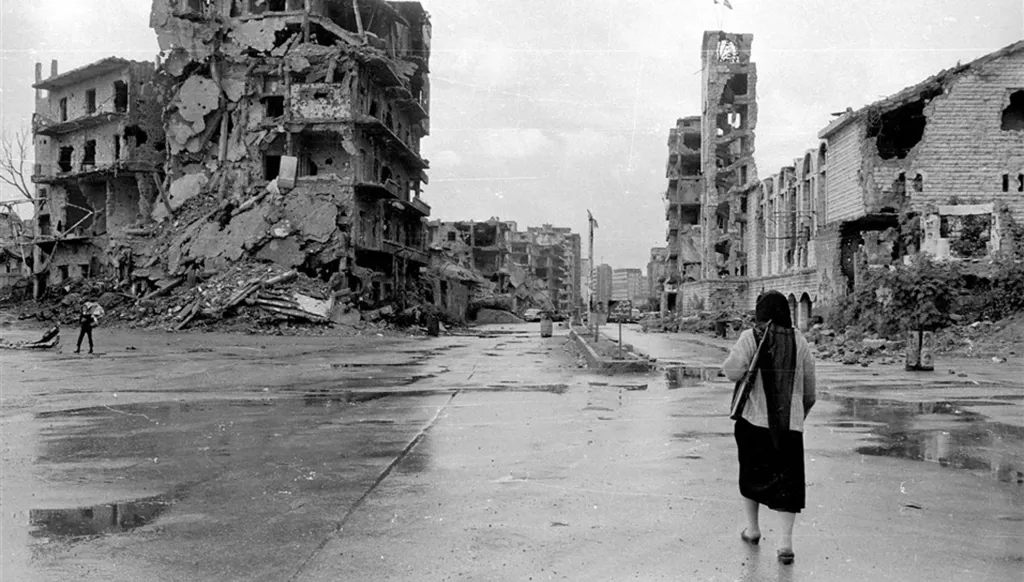


The Israeli war has displaced more than a million people in Lebanon. These individuals were forced to leave their homes, villages, and memories behind and move to safer areas. At the same time, another group of Lebanese did not physically displace and remained in their homes throughout the war.
However, they have experienced what can be described as psychological displacement: a sense of being internally uprooted, living with constant fear, and losing feelings of stability and security. It is as if their minds have entered a state of chronic alert, uncertain about what the coming days may bring.

Are the Lebanese currently experiencing a state of "psychological displacement"?
According to Dr. Carol Saade, a specialist in psychological therapy, a significant number of Lebanese today are indeed experiencing something beyond the traditional concept of geographic displacement. These individuals have not left their homes, yet they have lost their sense of security, stability, and belonging to their place. In psychology, this condition is described as "psychological displacement" or internal psychological uprooting.
In this state, a person remains in their home, but their psychological system behaves as if it is under threat of forced departure at any moment. The most dangerous form of displacement is not necessarily the one linked to leaving homes and villages, but rather the one that occurs within the individual—when they remain in place but lose the feeling of stability there.
Have the Lebanese become accustomed to war?
The Lebanese have lived through multiple wars, from the civil war to the 1996 war, the 2006 war, followed by the economic crisis, the port explosion, and then the war in the south. For many years, they have lived under the pressure of repeated conflicts, economic hardship, and social and security breakdowns.
When a person is exposed to prolonged periods of uncertainty, Saade explains that the brain enters a state known as "chronic alert." In this state, the mind stops functioning according to the logic of growth and planning and instead operates according to the logic of survival and protection. As a result, anxiety about the future becomes a daily preoccupation.
Why have many Lebanese lost the ability to plan ahead?
Due to the instability and uncertainty that characterize daily life, it has become difficult for many Lebanese to plan long-term projects such as marriage, having children, or traveling. The chronic alert state experienced by many helps explain this difficulty in planning for the future. When a person feels that circumstances can change at any moment, making major decisions becomes extremely difficult.
Therefore, we see repeated postponement of marriage, having children, or starting new projects. According to Saade, this is not only linked to the economic situation but also to what psychology refers to as "loss of the sense of control." When individuals feel that their fate is tied to events they cannot predict or influence, their motivation to invest in the future decreases.
The consequences of constant fear on our health
The impact of constant fear is not limited to the psychological level but extends to physical health as well. According to Saade, the nervous system, which is designed to respond to temporary danger, cannot remain in a constant state of alert without consequences. As a result, symptoms such as insomnia, headaches, muscle pain, digestive disorders, palpitations, and chronic fatigue may appear. These symptoms are not isolated, but rather signals the body sends when it is under prolonged psychological stress.
Trauma: between accumulation and adjustment
Repeated traumas do not disappear over time; instead, their effects accumulate. While some individuals may appear more resilient and able to adapt, this adaptation can sometimes mask a form of psychological numbness. The level of fear does not necessarily decrease over time; rather, people may become accustomed to living with it to the point that they no longer notice it clearly.
These are among the most serious psychological consequences of repeated wars. When a person lives for many years in survival mode, they gradually lose part of their connection to their dreams, ambitions, and sense of identity.
The space for creativity, exploration, and planning shrinks, and their time horizon becomes shorter. They live in an anxious present and are unable to fully invest emotionally in the future. There are many indicators pointing to a collective psychological state experienced by an entire community.
There are several measures that can help overcome psychological displacement:
- Maintaining a healthy routine and adopting protective factors that help prevent psychological disorders
- Preserving social and family relationships and strengthening social solidarity
- Engaging in daily healthy activities such as sports and other practices that help release psychological stress
- Turning to nature
- Turning to prayer and spirituality
- Practicing meditation, relaxation, and breathing exercises
- Seeking psychological help from a specialist when things become overwhelming