

US-Iran Truce Opens 60-Day Window for a Permanent Deal
A fragile memorandum pauses the conflict but leaves deep disputes unresolved, as Washington and Tehran enter a critical countdown that could reshape regional power dynamics—or trigger a new escalation.



 Messenger
 Whatsapp
 Threads
 Email
Email
 Print
Print
 X
X
 Facebook
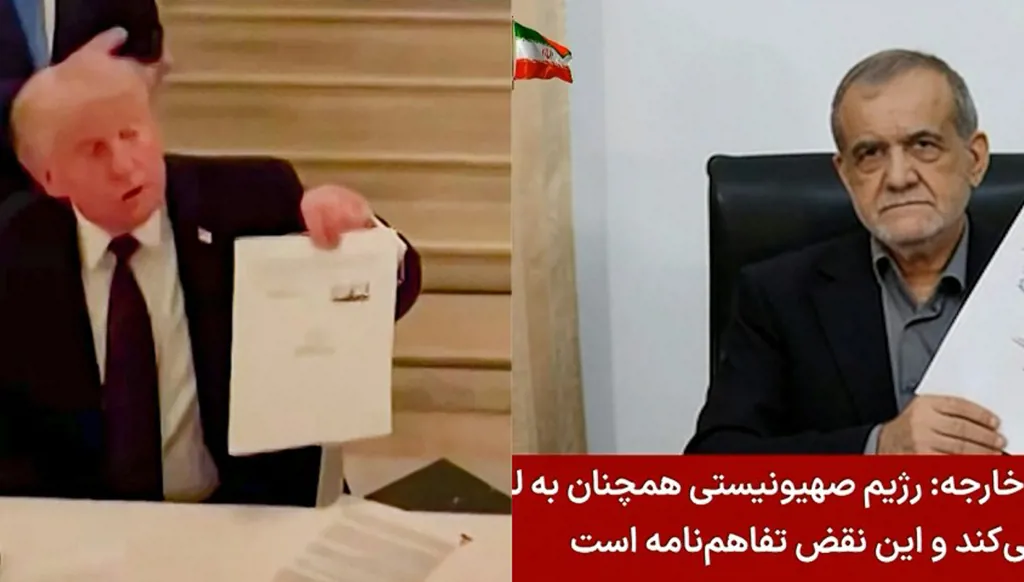


The American and Iranian parties signed a memorandum of understanding to halt the war between them and allow navigation in the Strait of Hormuz for 60 days, during which the parties (along with mediators) are expected to finalize an agreement that will put a permanent end to the war.
Thus, we are at the end of the second round of the US-Iran war, which began in late February, with active involvement from Israel. The first round took place in June last year, making it difficult to predict whether the current truce will lead to a third round of war or a permanent and final agreement.
Notably, each clause of the memorandum of understanding hinges on Iran's compliance with US conditions, particularly those related to halting the Iranian nuclear program and opening the Strait of Hormuz as an international transit zone.
Balance of Profit and Loss
In assessing the losses and gains on both sides of the war, it can be noted that both parties attempted, through the wording of the memorandum, to present the outcome as one in which each side achieved certain gains or obtained what it wanted. However, this impression involves deception and a departure from reality.
Iran has suffered significant losses across both rounds, including human and material losses that have affected its nuclear facilities and infrastructure sectors. Furthermore, restrictions on Iran’s navigation in the Gulf were countered by a strict US blockade on its ports, alongside the largest US military buildup in the region.
Among the losses is also the result of initial US strikes that eliminated the first and second tiers of Iranian leadership, including Supreme Leader Ayatollah Ali Khamenei, and destroyed Iran’s naval and air military capabilities, thereby breaking the image promoted by the Iranian leadership of Iran as a strong regional power.
However, the most significant loss in the two mentioned rounds of war has been the retreat of Iran’s regional influence and its withdrawal behind its borders. This will eventually extend to Lebanon as well, since the clause in the current memorandum concerning Lebanon’s inclusion in the ceasefire does not imply Iran’s unrestricted influence there as before, especially through Hezbollah.
Instead, it represents an attempt to find a suitable solution for the Iranian leadership, depending on the agreements reached in the next 60 days, particularly in light of another bilateral Lebanese-Israeli negotiation track under US auspices.
Despite all the losses in this temporary deal, there are also gains for Iran. The Iranian regime has reaffirmed its presence within Iran and demonstrated that its decision to use the closure of the Strait of Hormuz as leverage effectively pressured the United States and its allies, leading to an agreement that may eventually result in the lifting of maritime blockades, military threats, and economic sanctions on Iran.
Among these gains is also the United States’ failure in its overt attempt during this war to topple the Iranian regime, even though it succeeded in altering the image of the Iranian leadership.
Conversely, the United States, which was not directly affected by the war, achieved its main objectives: depriving Iran of nuclear capability, destroying most of its military arsenal—both air and naval—and inflicting significant infrastructure losses, while also diminishing Iran’s regional standing. Through this war, the US reaffirmed its position as a dominant global and regional power in security, economic, and political fields.
Two points remain unaddressed in the memorandum: the first concerns Iran’s ballistic missile program, and the second relates to Tehran’s support for militia forces affiliated with the Iranian Revolutionary Guard in Arab Mashreq countries.
The absence of these issues may be interpreted as a foregone conclusion following the blows Iran received against its military facilities across the country, its retreat from regional influence abroad, and the erosion of its support networks, especially after Syria exited the “resistance and opposition” alliance following the collapse of the Syrian regime in late 2024 and changes in Iraq. It may also be explained by the fact that these issues are now contingent upon what Iran will do to demonstrate its commitments in the final agreement.
In short, everything depends on what happens in the next two months, particularly regarding the plans of both Iran and Israel.