

Lebanon: A Country in displacement
In Lebanon, displacement is no longer only about leaving home. it is about lives put on hold, dreams carried away or frozen in place, and a nation still searching for a way back to itself.



 Messenger
 Whatsapp
 Threads
 Email
Email
 Print
Print
 X
X
 Facebook
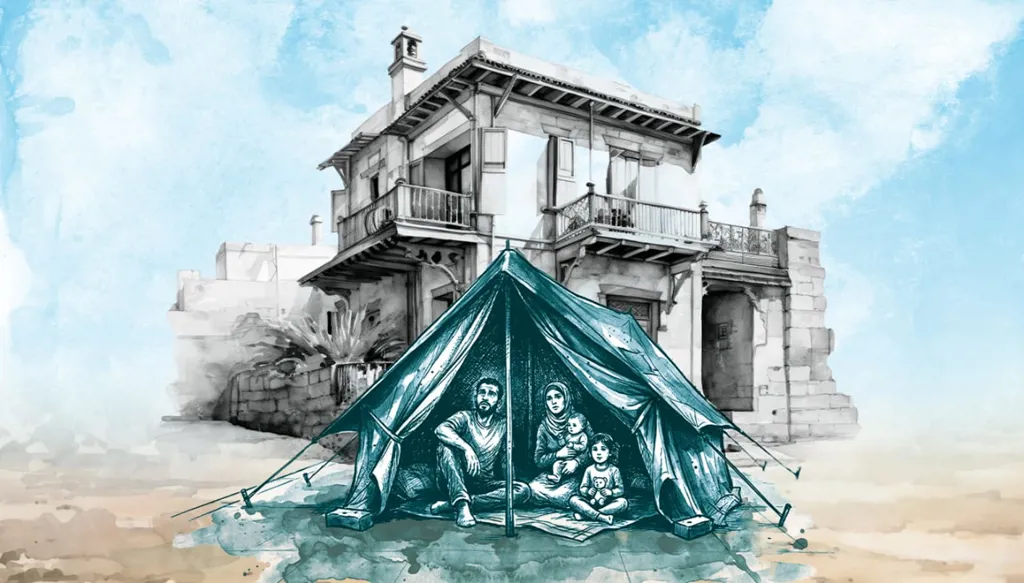


This issue is not only about those who left their homes.
It is about a country that has lived for decades to the recurring pattern of displacement.
About families who packed their bags and left, and about others who stayed where they are, but whose dreams have drifted away or come to a standstill.
In Lebanon, a person does not always need to leave their home to become displaced.
We too have been displaced.
Our projects were displaced before our homes were.
Our plans were displaced before families carried their suitcases.
Reassurance was displaced from our daily lives, trust from our future, and certainty from our choices.
How many Lebanese have never left their home, yet feel they have become distant from the life they once imagined for themselves?
How many young people have postponed their projects?
How many mothers have delayed their children’s future?
How many families now live in a state of waiting?
That is why displacement is not just numbers and statistics.
It is a national condition.
A collective state of anxiety that defines an entire country.
A country that, for years, has been searching for delayed stability, delayed opportunity, and delayed relief.
For decades, the same scene has repeated itself.
A new war, new displacement, new losses, and new promises of reconstruction.
As if the Lebanese are condemned to circle within the same loop, while buildings, the economy, trust, and human life continue to decline.
As if Lebanon itself has become displaced.
Moving from one crisis to another, from one war to another, from one waiting period to another, without ever reaching the place its people deserve.
In this issue, we try to tell the story of those who were displaced from their homes.
But we also tell the story of a country trying to find its way back to itself.
Because Lebanon does not only need the displaced to return to their homes; it needs hope to return to its people, trust to return to its youth, and the belief that the future can be here, not elsewhere.
From this conviction, our partnership in this issue with the United Nations High Commissioner for Refugees (UNHCR) emerges. Major humanitarian issues cannot be reduced to a passing news item or a painful image; they require space for understanding, documentation, and testimony. They need to be told through the voices of those who live them, and to remain present in the public consciousness so that numbers do not become just another set of numbers in a memory weighed down by loss.
In the “Issue of the Displaced,” you will notice that articles have themselves been displaced in parts, as have images and headlines, in a creative message suggesting that journalism plays a pivotal role in times of crisis. It is a message that says that in an entire country, even what is essential is no longer where it belongs.
But salvation is not born from wars.
Wars produce more displaced people, more losses, and a heavier memory.
Salvation is born from the state,
from institutions, from the rule of law, from development, from the ability to protect people in their land, their homes, and their future.
Salvation is born from peace that allows people to plan their lives instead of planning their escape.
A home is not only walls.
A nation is not only borders.
A nation is a place where a person does not have to carry a suitcase every time the balance of war shifts.
It is a place where one can build a life, not postpone it,
and dream of a future, not search for it elsewhere.
Explore our World Refugee Day dossier and related stories below.
- Uprooted at home: Why Lebanon’s Displaced need sustained solidarity now
- The hidden cost of displacement: When privacy becomes a luxury in Lebanon’s shelters