

The hidden cost of displacement: When privacy becomes a luxury in Lebanon’s shelters
Behind the statistics of war and displacement, families in Beirut's shelter centers face an overlooked struggle: living without personal space, dignity, or a door to close.




 Messenger
 Whatsapp
 Threads
 Email
Email
 Print
Print
 X
X
 Facebook
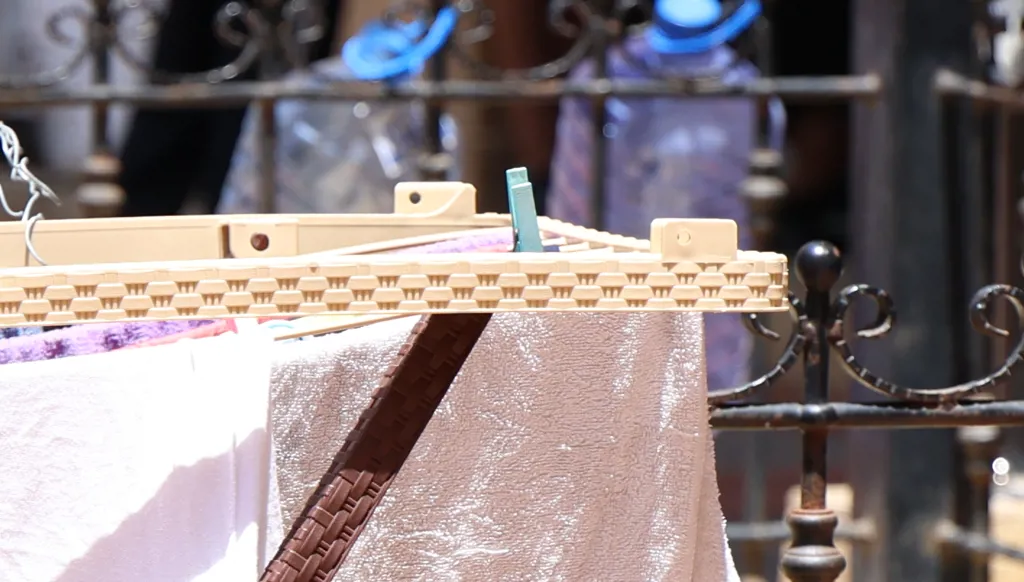


Inside the halls of the Azarieh building, which shelters around 150 families—approximately one thousand displaced people—families are separated only by tarps or blankets hung within a shared space. Each floor has its own story and unique struggles, yet everyone gathers daily at the same time to receive lunch at three in the afternoon. Despite their different circumstances, they share one common feeling: there is no privacy in the shelter centers.
The queues in front of the bathrooms, the stifling overcrowding, the incessant noise of children, and the difficulty of finding a small corner to sit or spend a quiet night are details that seem ordinary under normal circumstances, yet become unattainable luxuries during displacement.
In wars, there are silent losses that are rarely discussed, foremost among them the loss of privacy. Thousands of families suddenly found themselves in overcrowded schools, halls, or shared homes, forced to redefine the simplest details of daily life—from sleeping and changing clothes to bathing, making phone calls, and finding a moment of solitude away from the eyes of others.
This is confirmed by Fatima, a displaced person and volunteer at the Azarieh building. "When bathing, sleeping, or even changing clothes becomes a daily challenge, the basic requirements of life become temporary luxuries," she says.
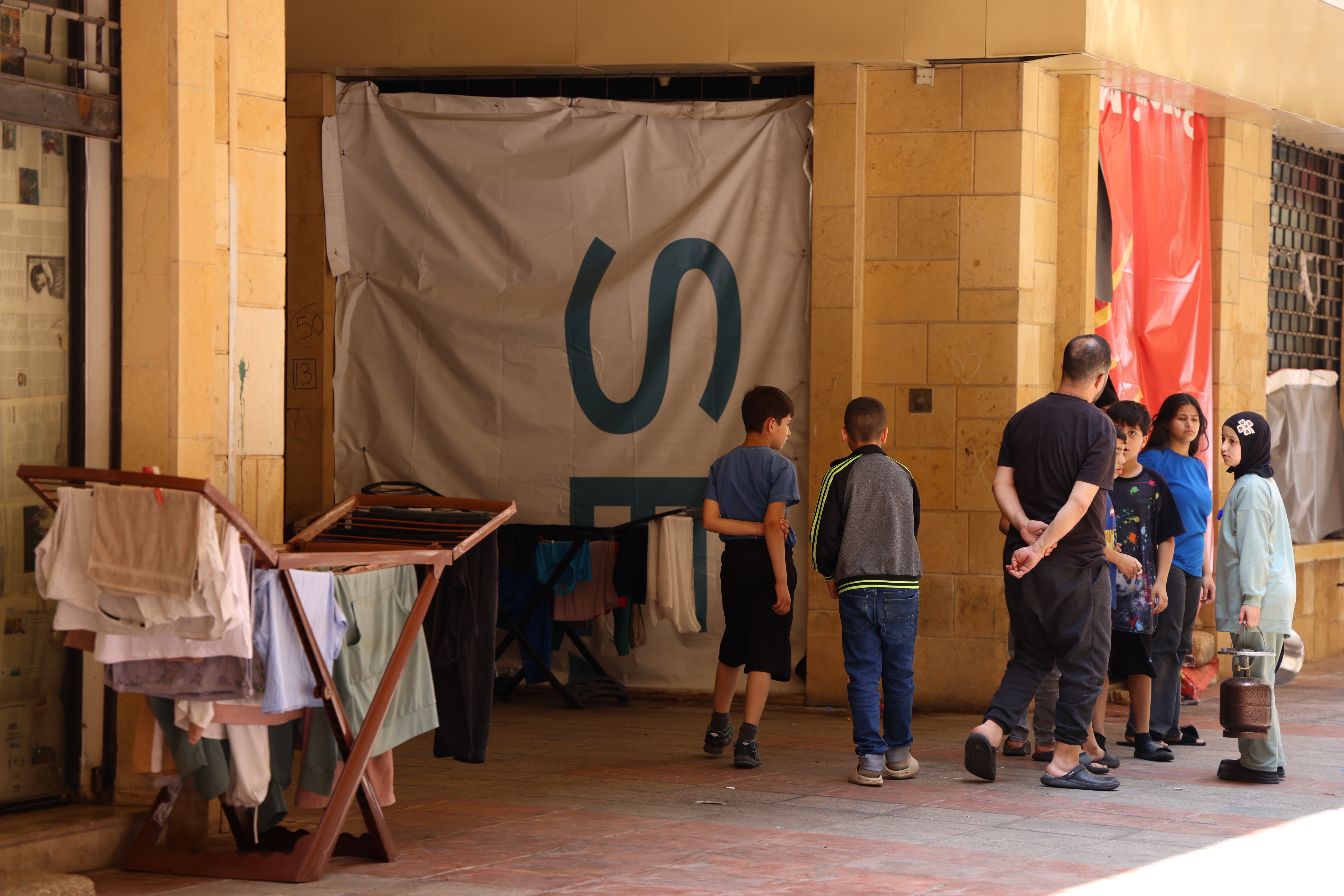
Fatima admits that the first days of displacement were the hardest for everyone. The center experienced severe overcrowding, exposing a hidden crisis no less difficult than the displacement itself. The problem was not just losing our homes," she explains.
"It was also the pressure and tension that came with sharing a single space. Families who did not know each other suddenly found themselves forced to live together and adapt to a new reality imposed on them overnight." What caused the greatest stress, however, was the limited number of bathrooms and their distance from the living areas compared to the number of residents in the center.
Fatima acknowledges that "using the bathroom, something that seems completely normal under ordinary circumstances, became a constant source of anxiety." The center has only five bathrooms for women and five for men, forcing residents to wait in long queues or leave a chair to reserve their place in line for a chance to shower.
Securing a turn to shower was not the only challenge. In addition to the long queues, water cuts and the occasional lack of hot water created further obstacles, compounding the daily hardships faced by displaced families in the shelter. "The issue goes beyond a single problem," Fatima says. "We are talking about a whole set of basic necessities that people have lost or must make a tremendous effort to obtain. The simplest aspects of daily life, from bathing to sleeping and resting, become small battles we fight every day."
In her own home, Rawan—whose name has been changed at her request to protect her privacy—used to start her day peacefully. She would prepare her coffee in the kitchen, shower whenever she wanted, and go about her daily life without much thought. But since she and her family were displaced to a shelter center following the war, everything has changed. "The hardest part about displacement is losing your privacy completely," she says. "There is no door to close behind us anymore."
For Rawan, life has become permanently exposed. She shares her living space with two other families, alongside nine children and several adults, making any private moment nearly impossible. "It feels like everyone knows the details of your life or is watching them," she says. "There is no place where you can isolate yourself or preserve your privacy."
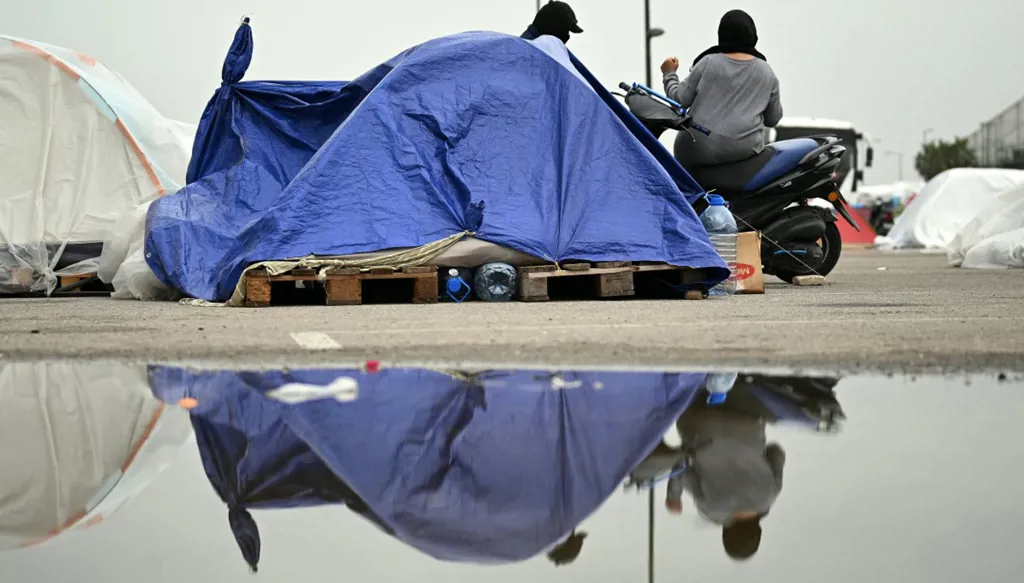
Recalling some of the most difficult moments she experienced, Rawan says, "We used to wait in line for our turn to shower. Once, I waited more than an hour and a half just to bathe my son. We had to reserve a spot in advance or lose our chance. I no longer shower when I want, but when I can."
At times, she had to go to her sister's house to bathe herself and her nine-year-old daughter away from the crowds and queues. She remembers one particularly difficult moment: "I had to heat water in the room to bathe my children."
Yet the greatest challenge for Rawan, as for many displaced women, has been the loss of personal space. In rooms shared by dozens of people, basic tasks such as changing clothes or maintaining personal hygiene become complicated and often embarrassing. "I can no longer remove my hijab or change my clothes whenever I want," she says. "I have to ask people around me to make space or wait until I find a suitable moment to pray or change. Simple things that were completely normal before have become a constant concern."
In these crowded environments, noise adds another layer of psychological pressure. There is no organized routine or discipline, and chaos often shapes emotions and behavior, especially among children. "Sometimes I have to shout at my hyperactive son just so other children can sleep or play," Rawan explains. "Everyone has their own rhythm and way of doing things, and not everything can be controlled. That has caused many problems between me and other displaced families in the center."
These testimonies reveal another invisible face of displacement. When people lose their sense of safety and control over the simplest details of daily life, they become constantly exposed to others.
Explore our World Refugee Day dossier and related stories below.