

The US-Iran Memorandum of Understanding: a deal that leaves the region in suspense
Despite ending the immediate state of war, the agreement sidelines key regional security issues and postpones their resolution indefinitely.



 Messenger
 Whatsapp
 Threads
 Email
Email
 Print
Print
 X
X
 Facebook


No lasting results will emerge from the provisions of the US-Iranian memorandum of understanding before a period passes during which the world, and especially the Middle East, will discover the actual effects of what was agreed upon between the United States and Iran without taking into account the interests of the countries of the region.
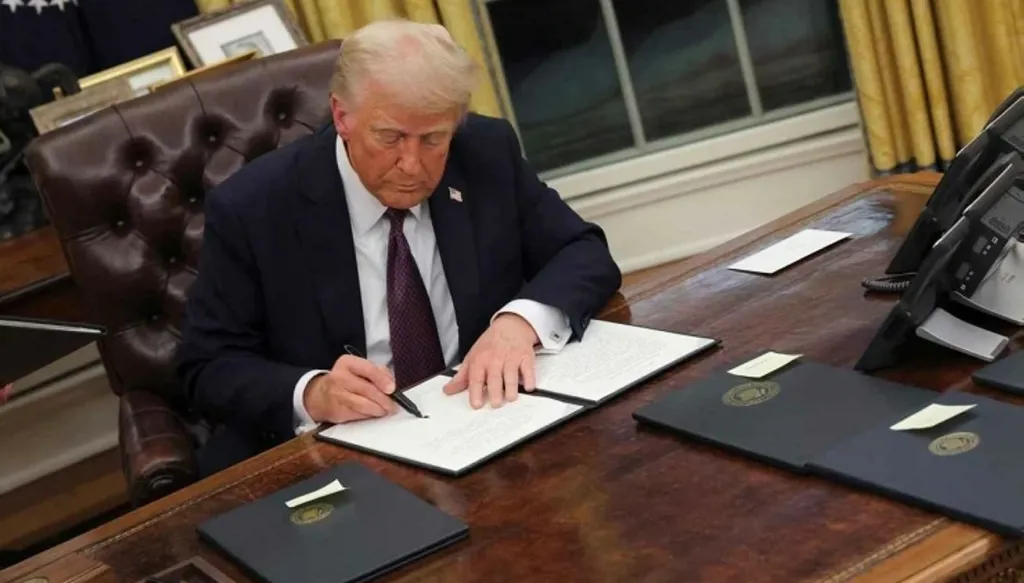
The text revealed by the White House on Wednesday was drafted in 14 provisions written in general language in the form of headlines, all of which can be interpreted in more than one way and are open to multiple interpretations. This is Donald Trump’s formula for closing the chapter of war with Iran. In reality, it reflects his desire to get rid of a war that he saw as politically costly for him, especially in an election year.
More importantly, Trump, who always speaks in the language of quick financial gains, said in a press conference in the French city of Évian where the meeting of the Group of Seven industrialized countries was held, that “Iran is where the money is.” This means that he is not speaking in geopolitical terms but rather prioritizing the idea of making money quickly.
However, he leaves the region in a state of shock by excluding all the main provisions that formed the basis for his decision to go to war, leaving behind an ambiguous clause subject to negotiation, namely the Iranian nuclear program, while financial flows were immediately opened to Iran.
All the risks posed to the region by the Iranian regime were almost completely ignored, and Trump effectively removed himself from a war involving his partner Israel, which is now facing American pressure to withdraw from southern Lebanon and transferring the responsibility for disarming Hezbollah to the new Syrian government. This means that Trump came to the region and set it ablaze, then departed without extinguishing the fires he left behind.
First, ending the Iranian nuclear program.
Second, imposing major restrictions on the ballistic missile program that threatens the region and even Europe, with a range of up to 4,500 km in a circular radius, as well as long-range drones that threaten areas up to 3,000 km.
Third, cutting the arteries of Iran’s relations with its regional proxies in favor of strengthening the countries of the region.
And finally, pushing the Iranian regime to change its behavior internally after the massacre it committed in January across dozens of cities throughout Iran.
Based on the above, we say it is too early to talk about a good agreement for one fundamental reason: all the main issues that matter to the region and whose resolution is essential for its stability remain suspended indefinitely.
Disclaimer: The opinions expressed by the writers are their own and do not necessarily represent the views of Annahar.