

Gaza’s tent cafés keep World Cup spirit alive amid war and blackouts
Amid displacement, destroyed infrastructure, and power cuts, Palestinians in Gaza gather in makeshift tent cafés to watch the World Cup—holding on to football as a rare moment of shared life and escape.



 Messenger
 Whatsapp
 Threads
 Email
Email
 Print
Print
 X
X
 Facebook
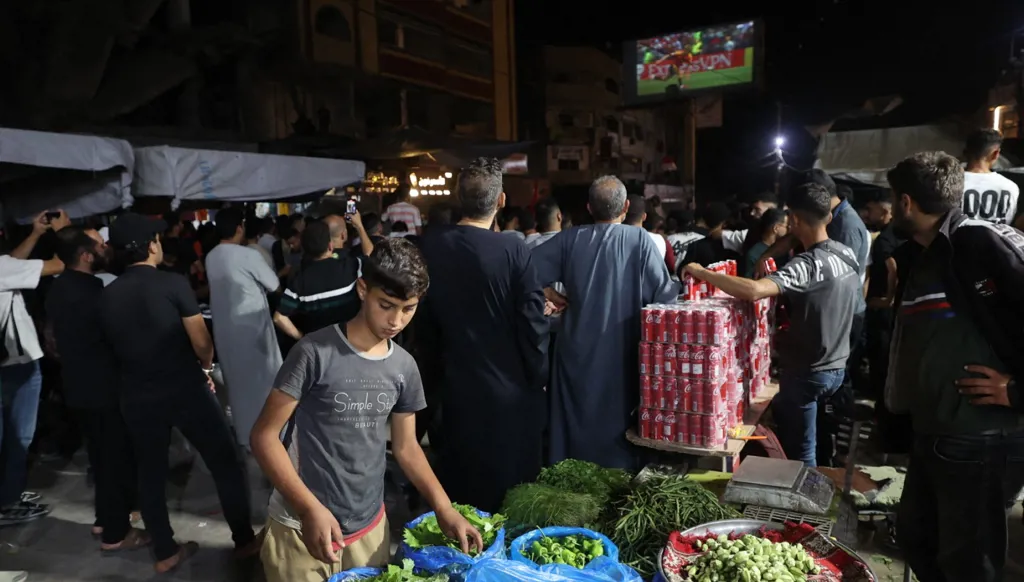


Small, newly established cafés have recently spread inside refugee tent camps in Gaza, thriving since the start of the FIFA World Cup, as football-loving Palestinians gather to watch matches together.
In the impoverished, besieged territory emerging from a devastating war lasting over two years between Israel and Hamas, subscribing to private television channels to watch the World Cup is no longer possible. Frequent power outages also make it difficult to follow the matches.
Marwan Al-Sheikh, 30, living in a dilapidated tent in western Gaza City, recalls that he watched the last World Cup held in Qatar in 2022 with friends in different cafés across Gaza, saying, “We felt joy.”
He adds, “I no longer feel this enthusiasm. I watch the matches in a tent café. We are now miserable… Our perspective has changed on everything, not just football.”
Since the fragile truce in October, some café owners have reopened modest tent cafés in displacement camps, sometimes offering free internet to patrons. These cafés now screen some World Cup matches.
On the first two nights of the tournament, groups of Palestinians, mostly men of various ages, gathered in these cafés to watch matches on small screens.
In a tent café in Gaza City, young men serve cups of tea and coffee to customers, while others eat nuts placed in plastic bowls on stones used as makeshift tables.
Broadcasts are frequently disrupted due to power cuts and fuel shortages for generators. Workers repeatedly restart the generator as customers express frustration.
The café tent is dimly lit, with visible wires running from a small generator in a neighboring tent, appearing worn out. Viewers’ comments on the match blend with the noise of the generator and the constant buzz of Israeli drones overhead.
Beach Cafes
In a modest tent café in the town of Zawayda in central Gaza, Abdullah Al-Attar says he tries to recreate the football atmosphere “beloved by both old and young” in Gaza.
He adds, “I have never attended World Cup matches in stadiums,” continuing, “We in Gaza are deprived of attending matches in any stadium (abroad) because of the oppressive siege, occupation, and war.”
In 2022, large screens were set up in football fields such as Palestine Stadium and Al-Yarmouk Stadium in Gaza City, where thousands of fans gathered to watch matches at night, leaving the city’s streets empty.
During every World Cup, Gazans have typically followed the tournament through local TV channels rebroadcasting live transmissions from beIN SPORTS, or in cafés once widespread along Gaza’s seashore, where people sipped tea and coffee. These included the famous Istanbul Café, which used to host hundreds of fans nightly, their cheers and applause echoing after every goal.
These cafés no longer exist along Gaza’s coastline, most reduced to rubble due to battles and Israeli bombardments.
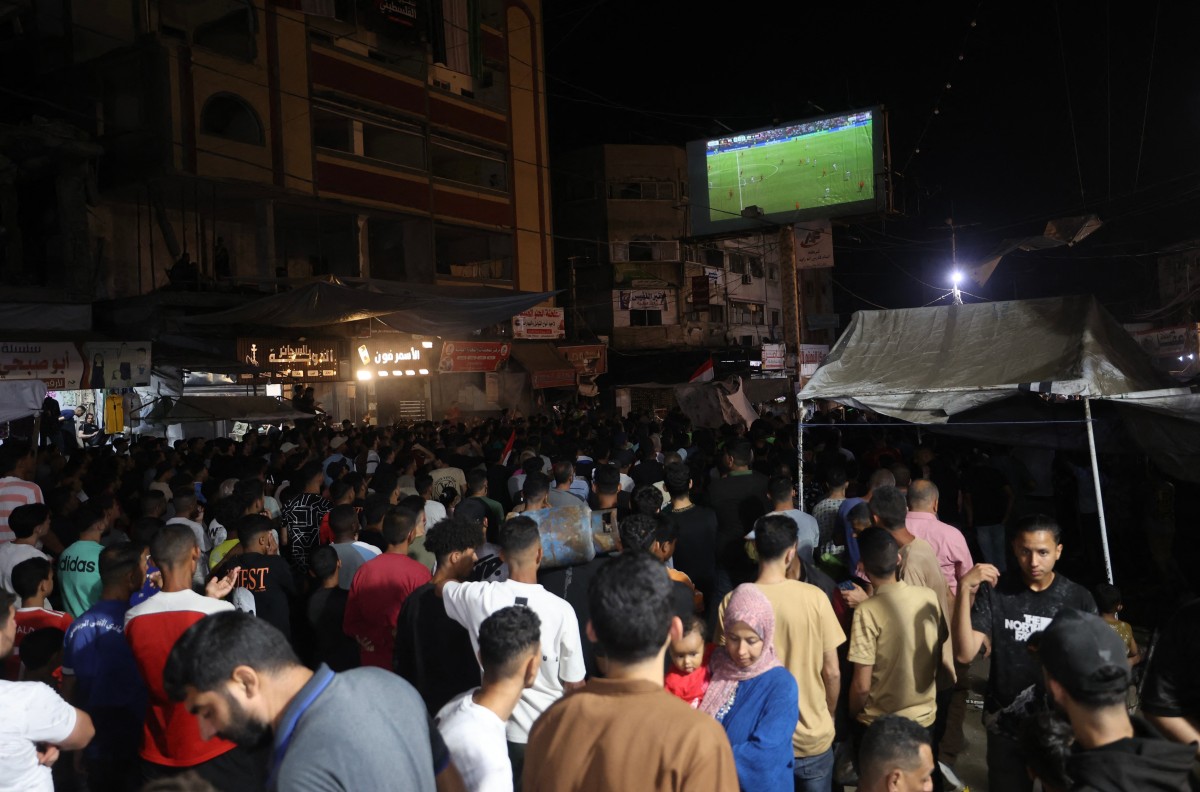
"Feeling of Oppression"
Coach Mohammed Salama says, “The whole world is watching World Cup matches, and we in Gaza are deprived of everything, even watching a football match,” adding that they cannot travel to attend matches abroad because crossings are closed.
Salama notes that the war destroyed all infrastructure, including stadiums and sports facilities.
While he continues to train a children’s football team, he points to the inability to provide equipment or even proper training grounds. Still, he explains World Cup matches to his young players.
In Gaza City, Mazen Al-Ghoul, 27, expresses his frustration at watching the World Cup opening.
He says, “The world lives and enjoys reality, and we are deprived even of a house to live in, a school, or electricity to watch the matches.”
Mohammed Fehjan hopes to watch the World Cup “without wars, suffering, or displacement,” adding, “We love football, we love life, but sadly, suffering continues and life is tough.”