

Trump’s Iran gamble: Can economic incentives succeed where war failed?
A landmark U.S.-Iran understanding aims to avert economic turmoil, revive diplomacy, and reshape the Middle East—but the nuclear question remains unresolved.



 Messenger
 Whatsapp
 Threads
 Email
Email
 Print
Print
 X
X
 Facebook
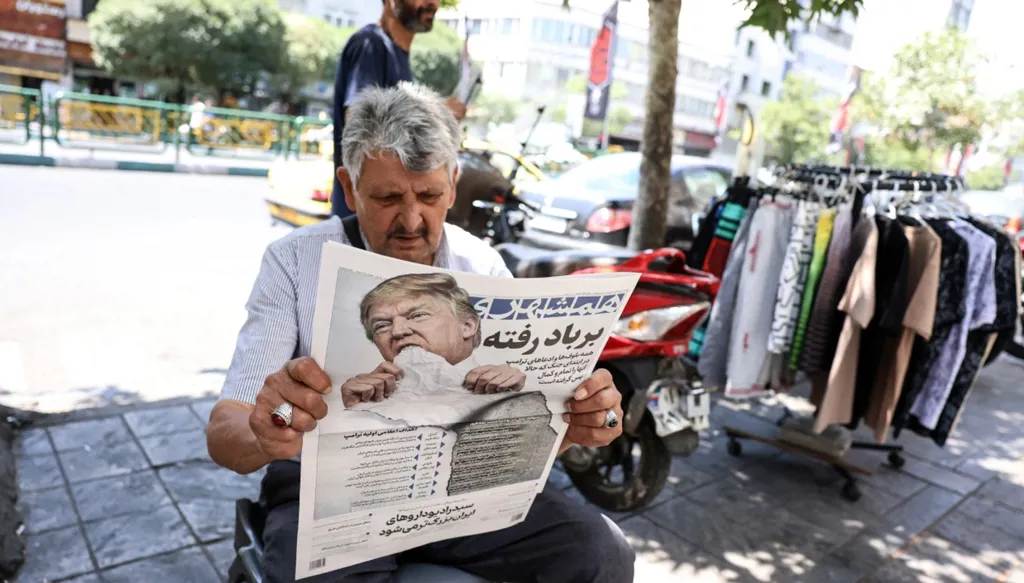


The U.S.-Iranian memorandum of understanding was supposed to take effect immediately upon its electronic signing by Presidents Donald Trump and Masoud Pezeshkian on Wednesday. The first round of negotiations between American and Iranian delegations is scheduled for Friday in Switzerland, with Pakistani and Qatari mediators in attendance.
Prior to the signing, Trump spent three days vigorously defending the memorandum, categorically denying that he was moving toward a final agreement with Iran similar to the one signed by former President Barack Obama in 2015.
His remarks were aimed at the "hawks" within his administration and Congress, as well as Israeli Prime Minister Benjamin Netanyahu, all of whom remain concerned about any agreement that provides financial incentives to the Tehran regime.
Economic Incentives: An Alternative to Sanctions Relief?
Trump opted for a loophole-based approach to incentives, deciding to exempt Iranian oil sales from sanctions immediately after the memorandum was signed and to release frozen Iranian assets during the 60-day renewable negotiation period on the nuclear program, subject to approval by both sides. In addition, the United States committed to establishing a $300 billion investment fund that would move forward after a final agreement is signed, without direct U.S. participation.
Defending these measures, Trump said on the sidelines of the G7 Summit in Evian, France, that the amount allocated to the fund was insignificant compared to the more than $2 trillion in losses Iran suffered during the war.
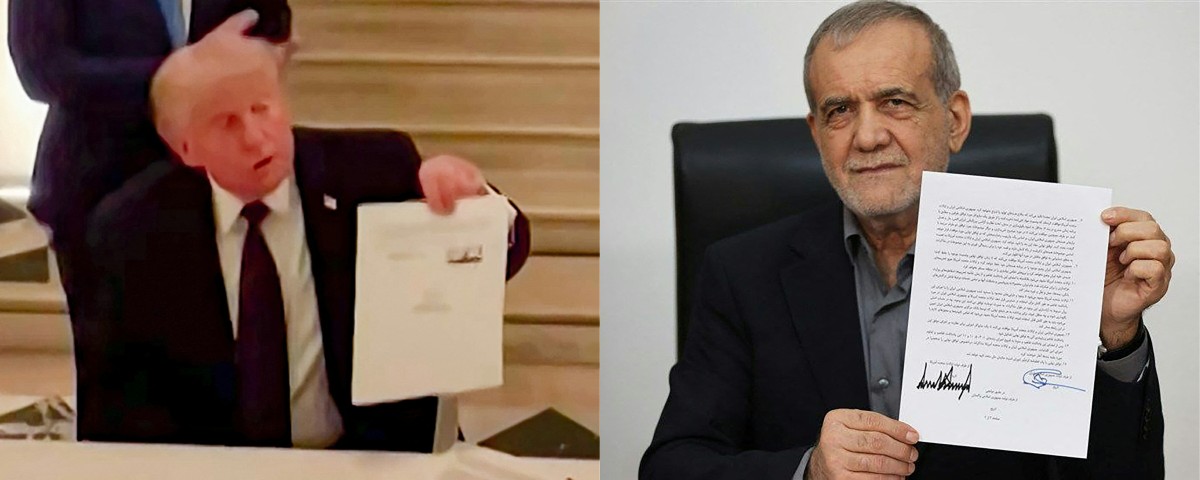
From the Symbolism of Versailles to the Hormuz Issue
Trump's decision to sign the memorandum ahead of schedule was partly driven by the symbolism of the Palace of Versailles, where Germany signed its surrender following World War I in the Hall of Mirrors. At the outset of the American-Israeli war on February 28, Trump had demanded Iran's "surrender."
Yet today's reality extends beyond symbolism. For the first time, Trump acknowledged that he had been motivated to sign the memorandum in order to avert a global economic disaster that could have resulted from Iran closing the Strait of Hormuz. He openly stated that he did not want to be compared to Herbert Hoover, whose presidency coincided with the Great Depression of 1929.
This rare admission by Trump regarding the reasons behind the memorandum had an immediate positive impact. Markets and stock exchanges were the first to react to the improved atmosphere, while oil prices returned to their pre-war levels.
Trump managed to reassure both the markets and his electoral base represented by the MAGA movement, which opposes war because it conflicts with the "America First" doctrine. In doing so, he risked his relationship with the hawks and with Netanyahu in an effort to spare the Republican Party an electoral setback in the November 3 midterm elections.
Seeking to project an image of victory, Trump also recalled his decision to assassinate Quds Force commander Qasem Soleimani in 2020 during his first term, asserting that he was the only American president who had done what his predecessors should have done 47 years earlier.
The Crucial Test for the Agreement
This brings us to the major challenge: reaching a final agreement with Iran that addresses the central issue that led the United States and Israel to go to war—the Iranian nuclear program.
In essence, Trump is now offering economic incentives to the Iranian government in exchange for freezing uranium enrichment for no less than 20 years and handing over the "nuclear dust" for enrichment reduction from 60 percent, whether inside Iran or in the United States, under the supervision of the International Atomic Energy Agency.
The key question remains: Is the Iranian regime prepared to trade its nuclear program for economic incentives, especially now that it possesses another deterrent card—the Strait of Hormuz—which it could once again close and use to disrupt the global economy if subjected to another war?
In this context, it is worth recalling French President Emmanuel Macron's skepticism that the memorandum does not resolve all outstanding issues, including the nuclear file, and that the agreement could ultimately collapse.
He also expressed concern about Israel's war on Lebanon and Iran's potential ability to impose tolls on tankers passing through the Strait of Hormuz. Consequently, the search for alternatives to the strait featured prominently on the G7 agenda.
What began as an "understanding" between the United States and Iran could ultimately serve as a foundation for something much broader: a new reshaping of the Middle East.