

G7 Lebanon debate deepens as Trump pushes controversial Syria role in Hezbollah conflict
Evian summit discussions on Lebanon take a sharp turn amid U.S. calls for Syrian involvement, Israeli strikes in the south, and rising regional tensions over Hezbollah’s future.



 Messenger
 Whatsapp
 Threads
 Email
Email
 Print
Print
 X
X
 Facebook


It was not “bad news” for Lebanon that its situation and reality permeated the internal discussions and public positions of the G7 summit held in Evian, France, alongside the U.S.-Iran settlement file and the Strait of Hormuz.
The summit concluded its final statement with a paragraph expressing “support for an immediate ceasefire in Lebanon, and for the efforts of the Lebanese leadership aiming to confiscate weapons from the hands of the state and disarm ‘Hezbollah’.”
However, what has raised and continues to raise questions, suspicions, and growing apprehension is the persistent insistence of U.S. President Donald Trump on a stance that is, by all realistic standards, unusual and provocative to the Lebanese and its legitimate authorities, as he repeatedly called on Syrian President Ahmad Al-Sharaa to intervene in Lebanon “to confront Hezbollah.”
Noteworthy in this discordant stance is that it carried a set of regional and Lebanese messages conveyed by the American president, whether through his insistence on “reprimanding” Israeli Prime Minister Benjamin Netanyahu for not completing the elimination of “Hezbollah,” or by urging the Syrian president to do what Israel failed to do, or through his approach to the Lebanese authorities as if ignoring their existence and overlooking all previous “verbal” support for them.
However, it was also difficult to ignore the implications reflected in the abstention of three countries, for various motivations and relations with Trump, from responding to his unilateral stance, which reinforces the perception that there is no serious practical outlook, even if the countries concerned by Trump’s messages avoid straining their relations with him.
The new surprise revealed by Trump was his announcement yesterday evening that Lebanese President Joseph Aoun will visit Washington within two weeks, and he again spoke of Syrian intervention, saying that the Syrian president “would like” to go to fight “Hezbollah” in Lebanon.
Trump also said again yesterday: “I spoke with Syrian President Ahmad Al-Sharaa about confronting Hezbollah.” He had previously suggested to Israel to leave Syria to handle “Hezbollah” because, in his view, they would do it better.
He added that Sharaa “managed to organize matters in Syria with astonishing speed. He is very competent and has been very good with me and implemented what I asked of him.” He continued: “If Israel can’t complete the mission without killing everyone, Syria will do the job.”
It is likely that Trump’s stance and its complexities will be among the topics discussed in Prime Minister Nawaf Salam’s meetings in Paris, where he arrived yesterday for a two-day visit following the G7 summit, to review what transpired regarding the Lebanon file.
Salam will also hold a series of meetings with senior Arab and foreign officials, most notably Emir of Qatar Hamad Al Thani and French President Emmanuel Macron, to gather the latest available information regarding regional conditions, including Lebanon.
Lebanese Preparations for New Round of Negotiation
Lebanese preparations for the fifth round of negotiations in Washington have gained more critical importance following the Iranian propaganda offensive on the Lebanese file and the deliberate linkage with the Iranian settlement with the United States.
This is reflected in President Joseph Aoun’s position yesterday, as he announced: “The confirmations we received and what we insist on is that Lebanon’s path is independent in negotiations, even though we are certainly with the ceasefire and any state that helps us, including Iran.” He stressed that “the state of Lebanon is conducting the negotiations and is sovereign in its decisions, and no one is taking its place, which has become a conviction for everyone.”
Aoun assured the Lebanese that “no one connects us to any other state, and any settlement will be through us, not at our expense.” He further emphasized that “there is no fear of civil peace, and the Lebanese should not be frightened by this. Those who threaten it have become weak, aiming to scare those different from them to remain present.”
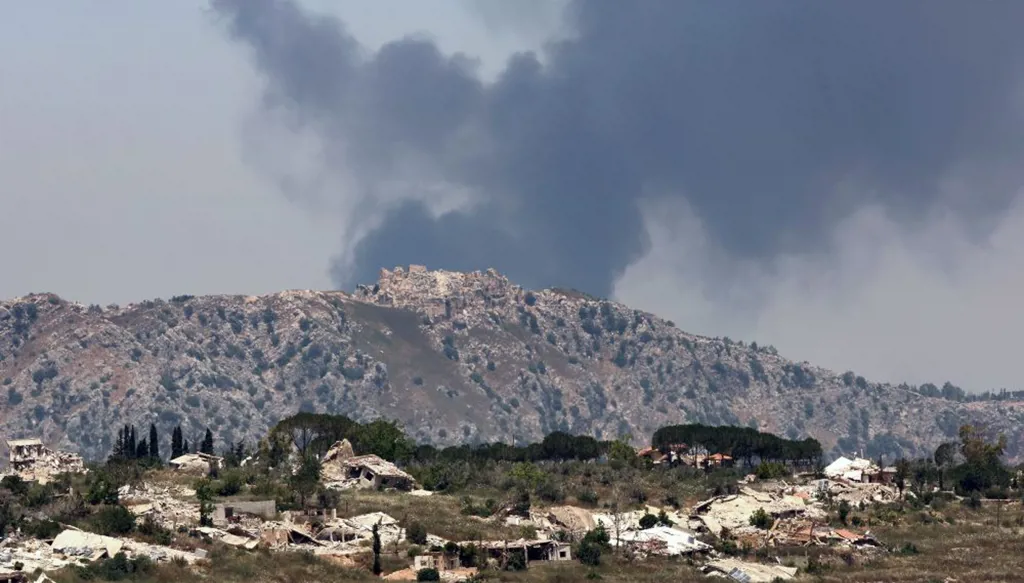
In the countdown to publishing the final official text of the U.S.-Iranian agreement and clarifying the ambiguities regarding its implications for Lebanon, areas in southern Lebanon, particularly around the city of Nabatieh and Iqlim al-Tuffah, witnessed mock air raids. The outskirts of Nabatieh were subjected to concentrated artillery fire.
While drones did not leave the entire Lebanese sky, Israeli warplanes targeted the town of Nabatieh al-Fawqa with an airstrike and also struck the eastern outskirts of the town of Kfartibnit, while another raid targeted the area of Zafata–al-Mansoura near the town, with reports of an Israeli attempt to advance through Kfartibnit in the Nabatieh district. An Israeli drone also targeted Ansariyeh.
Israeli machinery advanced toward the town of Haddatha. Israeli drones launched three raids on the towns of Mansouri and Aazieh in the Tyre district, causing injuries. A drone also targeted the town of Braachit in the Bint Jbeil district. On the other hand, five Israeli soldiers in the south were reportedly injured in a drone attack by “Hezbollah.”
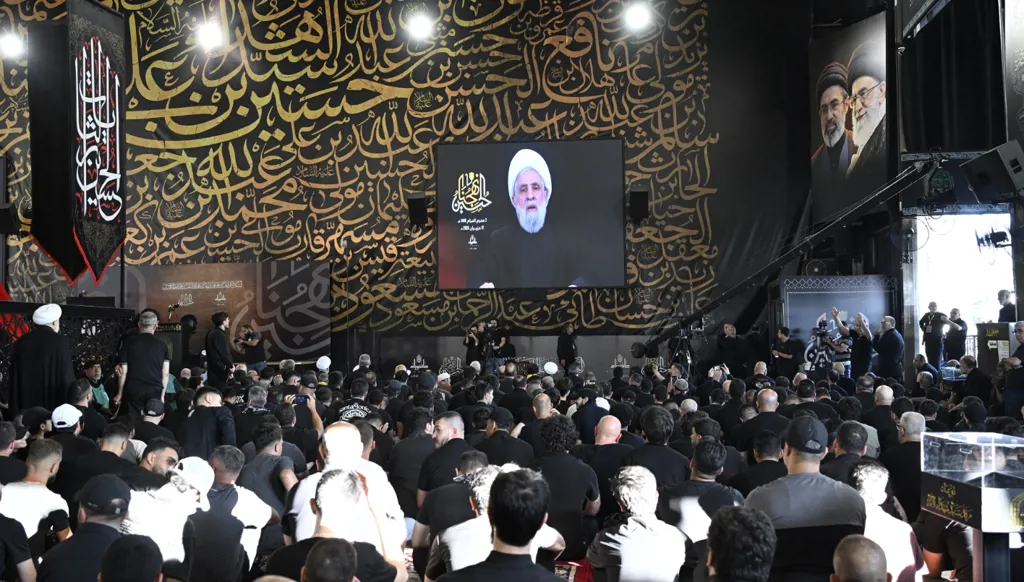
In this context, Hezbollah Secretary-General Sheikh Naim Qassem delivered a defiant speech last night, thanking Iran and asserting what he described as the coercion of Israel into halting its aggression and breaking the American project, overlooking the severe disaster the party caused for the south and Lebanon.
In Israeli positions, Israeli Energy Minister and member of the security cabinet in Benjamin Netanyahu’s government, Eli Cohen, affirmed that “Israel will respond forcefully to any attack launched from Lebanese or Syrian territory,” warning that “Beirut and the southern suburbs are not off the target list if Israel is subjected to missiles, drones, or shells.”