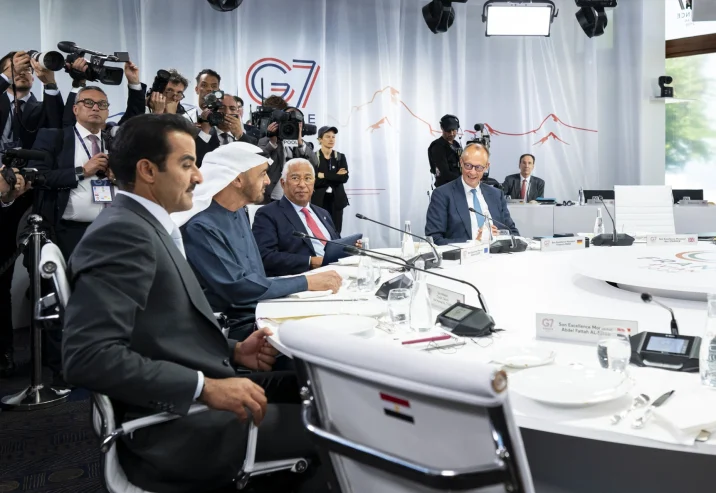
US-Iran understanding raises regional stakes amid Israeli alarm
Leaked provisions suggest sanctions relief and economic reintegration for Iran, while Israel warns that the deal overlooks missiles and regional proxy networks, heightening fears in Washington and Tel Aviv.



 Messenger
 Whatsapp
 Threads
 Email
Email
 Print
Print
 X
X
 Facebook
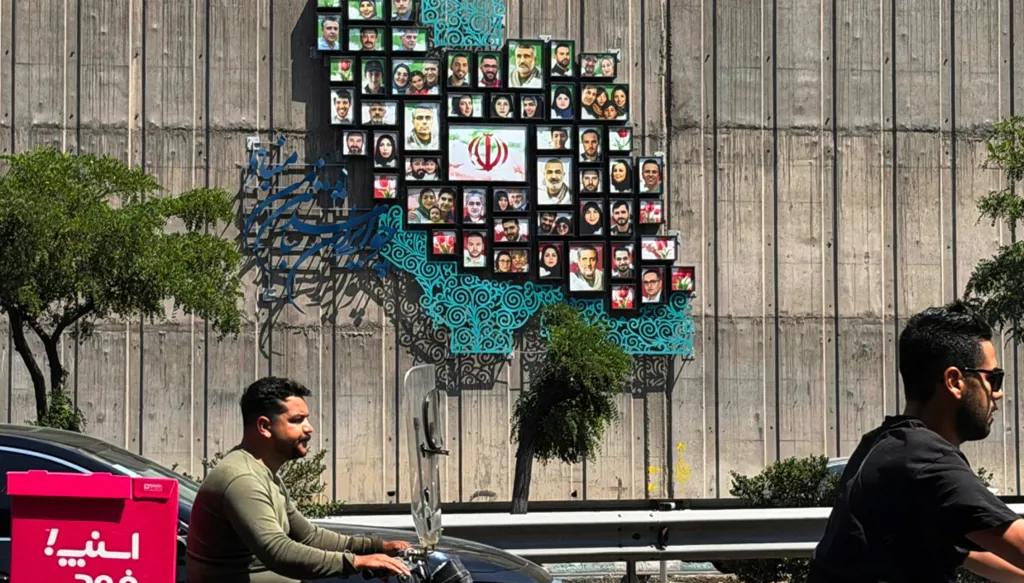


Two days before the official signing of the memorandum of understanding between the United States and Iran at the mountain resort of Bürgenstock in Switzerland, three oil tankers loaded with Iranian oil set sail under the watch of the US Navy, which has been enforcing a blockade on Iranian ports since April 13.
That was a goodwill gesture from US President Donald Trump, who did not wait for the official signing of the memorandum to lift the naval blockade, in exchange for Iran opening the Strait of Hormuz to international navigation, and then launching negotiations on the nuclear file over a period of two months.
These are not the first nuclear negotiations between Washington and Tehran, but they are the first to take place after a second US Israeli war on Iran within eight months, and on them depends whether an agreement will be reached or a return to a gray zone in anticipation of another war.
Who is entering the negotiations from a stronger position?
The United States and Iran both say they are entering these negotiations this time from a stronger position. The head of the Iranian negotiating team, Speaker of Parliament Mohammad Bagher Qalibaf, says his country has taken a major step toward final victory. Trump, meanwhile, says, “I think the Iranians have had enough,” referring to two waves of US strikes ten days earlier, and added, “We were preparing for the bigger event, and then we reached a deal after that.”
US Defense Secretary Pete Hegseth echoed Trump’s remarks, saying that former US President Barack Obama “begged the Iranians to reach a deal, whereas we bombed Iran and then imposed a blockade on it.” He stressed that US forces will remain in their positions until Iran’s compliance with its commitments is confirmed.
Some argue that despite heavy military and economic losses, and the loss of the first and second tiers of Iranian leadership, including Supreme Leader Ali Khamenei, Iran is going into the negotiations armed with stronger cards than it had in the last round of talks held in Geneva between Foreign Minister Abbas Araghchi and US envoys Steve Witkoff and Jared Kushner, mediated by Oman.
The Iranian regime believes it has survived the worst, namely the US Israeli war on February 28, and did not collapse, but instead expanded the conflict horizontally, closed the Strait of Hormuz and caused major paralysis in the global economy, activated the Lebanese front, and exerted pressure on Trump to limit Israeli military operations in the southern suburbs of Beirut and in southern Lebanon, reviving what became known as the “Unification of the arenas.”
Trump praises the “pragmatism” of the new generation of Iranian leadership, while his relationship with his war partner, Israeli Prime Minister Benjamin Netanyahu, has reached its lowest point.
What does the memorandum of understanding stipulate?
Before entering the negotiations, according to what Bloomberg reported as being leaked from the text of the memorandum of understanding, the United States commits to exempt Iranian oil and banking services related to it from sanctions.
It also commits to cooperating with regional partners to rehabilitate Iran and support its economic development. This confirms the planned establishment of an investment fund with capital of 300 billion dollars.
In addition, the United States commits to releasing frozen Iranian funds and assets. In return, Iran reaffirms that it will never produce nuclear weapons.

This contradicts Trump’s assertions that Iran will not receive any funds from the United States before it demonstrates compliance with what has been agreed upon.
Israeli concerns about the next phase
It does not appear that US reassurances are being taken seriously by Israel. Israeli journalist Ronen Bergman wrote in Yedioth Ahronoth on Tuesday that Israeli experts are warning with serious concern that Iran “may exploit” the sixty-day period starting Friday, “in which there is no supervision and movement is prohibited,” to progress toward building a nuclear bomb.